
In SLO County, verdicts are easy. Bridges are hard | Opinion
There is a moment in every small-town argument when you can feel the temperature change.
It starts as disagreement, becomes performance, then identity. People stop asking, “What happened?” and start asking, “Which side are you on?” Civic life stops being a community project and becomes a contact sport.
Our local paper’s Editorial Board could cool that moment, not feed it.
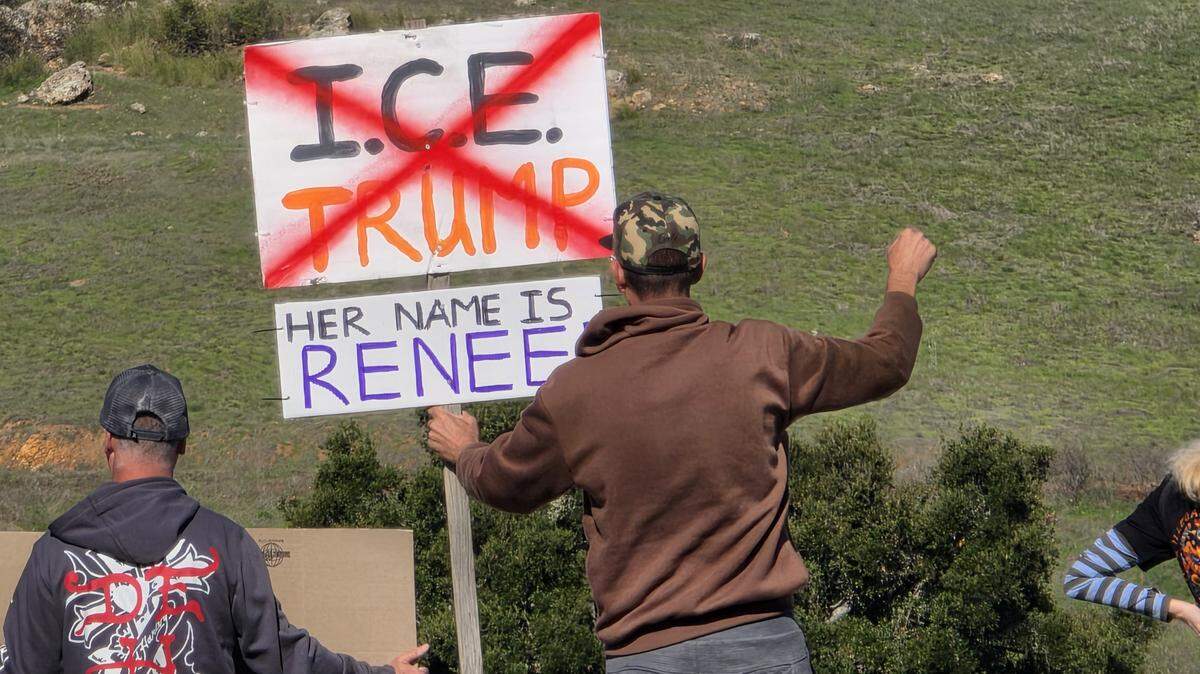
Instead, in a recent editorial about SLO County DA Dan Dow and the Minnesota ICE shooting, The Tribune does what it increasingly does in these situations. It doesn’t report a dispute and invite grown-ups to wrestle with it. It prosecutes. It declares villains. It tells you what to think with the moral certainty that would make the Inquisition blush.
It calls Dow “far right MAGA.” Asserts he is “exploiting” tragedy. That “the only ones jumping to conclusions are Dow and other like-minded individuals.” Then, in abject irony, the editorial itself leaps from a fast-moving, contested incident to sweeping claims about a “poorly trained army of federal agents” and demands ICE be banned from county property.
That is not a search for truth. That is a press release with better punctuation.
To be balanced, Dow’s posts were political and motive-guessing. As the top prosecutor, he should know his words are not just “opinions.” They are signals, and signals inflame.
Alas, The Tribune responds to political heat with a flamethrower of its own.
Black Lives Matter protests and Tiana Arata
We have seen this movie in SLO County before. During the 2020 BLM protests, The Tribune wrote the verdict first, then went shopping for facts to match it. Messy details that complicated the morality play were downplayed as tear gas became proof of wickedness and cars became proof of evil.
Then came the Tianna Arata saga, where The Tribune Editorial Board repeatedly argued for specific outcomes, including urging Dow to drop charges and calling the case bungled or botched. Whatever one thinks of Arata or Dow, that is a posture of advocacy, not just clarification.
Over the last few years, the paper’s voice has increasingly treated local conservatives as a species to be diagnosed rather than neighbors to be persuaded. It uses rhetorical shortcuts like ‘MAGA’, ‘Orwellian’, ‘far right’. Then wonders why the people it is describing stop listening.
This is where the sins of omission and selection matter. When a newsroom chooses which facts to foreground and which caveats to bury, it can create a story that feels morally clean while being empirically messy. It hardens the very tribalism dividing the community the paper is here to serve. This is the Rashomon problem of modern media. Good people can watch the same event and walk away with very different truths. In moments like that, certainty should arrive late, not first.
History is full of leaders who understood something modern commentary culture has forgotten. Being right is not the same as making a difference.
Abraham Lincoln did not end the Civil War by dunking on the South. He ended it by making space for a future, “with malice toward none.” He understood the point was not to win an argument. It was to keep a country.
Nelson Mandela did not dismantle apartheid by making his opponents feel morally subhuman. He did it by building a bridge sturdy enough for enemies to cross without losing face.
Statesmanship is knowing when to condemn and when to cool. Demagoguery is chasing the next righteous sentence.
How to serve the entire community
To be clear, I don’t think that is anyone’s intent. It is an easy drift in this business, especially when the loudest feedback comes from the most enthusiastic supporters. But if we agree the goal is a calmer, more usable public square, there is another way.
Lead with what is known and what is not, especially when video and timelines are contested. Use fewer labels, because name-calling closes minds faster than any argument opens them. Every now and then, make the page a civic table. Run a real point-counterpoint, where each side has to steelman the other, so readers get clarity rather than combat. Sometimes the job isn’t to win the argument. It’s to stop the place catching fire.
Some will say this column is part of the same heat it criticizes. Fair enough. The difference is that this is an opinion column, not an institutional editorial speaking for the paper.
A local paper isn’t meant to be a feelings amplifier for one tribe. It’s meant to be the town’s kitchen table, where we argue, then pass the salt. If it exists mainly to help one faction feel morally superior, it just mimics Facebook with better spelling.
For The Tribune to serve the whole community, it could lean more into its role as a newspaper, rather than a participant in the political scrum. SLO County needs clarity and proportion, not more moral posturing from any side.
When the local paper becomes another tribe, it stops building community. It starts breaking it.
Clive Pinder hosts “CeaseFire” on KVEC 920AM and 96.5 FM and writes at clivepinder.substack.com. He thinks outrage is a currency and too many people are counterfeiting it.