
There is one democratic solution to redistricting Congress in California | Opinion
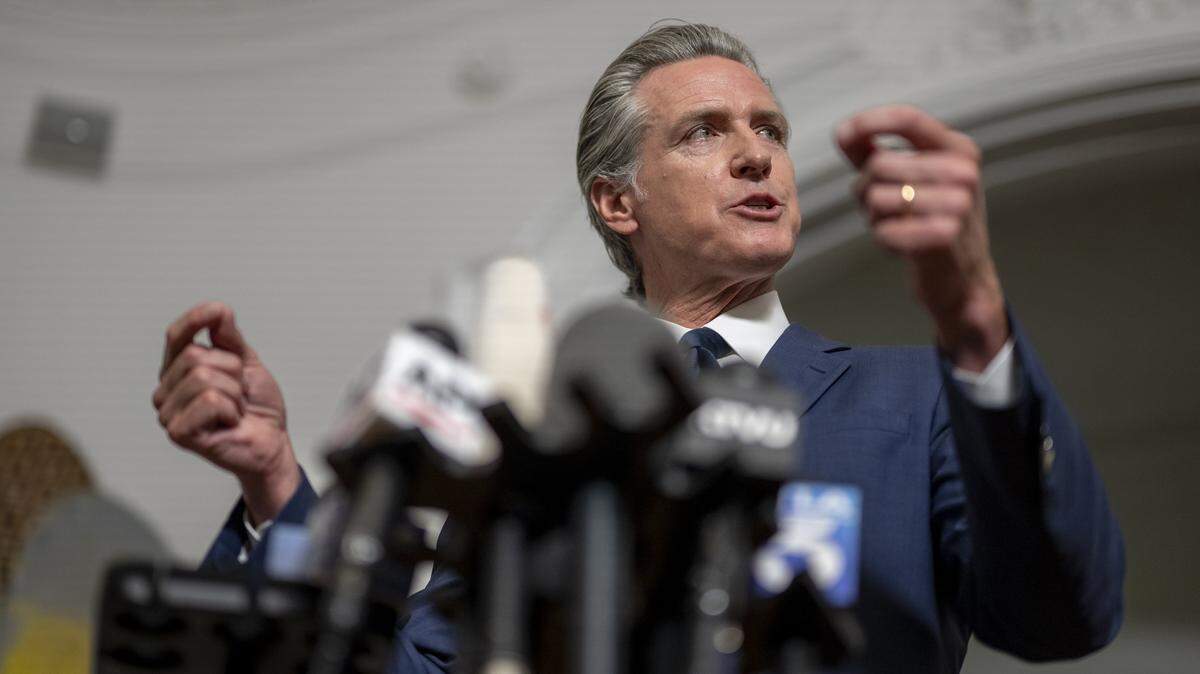
Gov. Gavin Newsom’s launching of a November election to redraw the lines of California’s congressional seats to favor Democrats has created an ethical quandary within an unprecedented action. State voters already approved a less partisan way of drawing congressional borders. But now, to combat a Texas plan to redraw congressional lines to favor Republicans, Newsom is asking Californians to fight back by creating more congressional districts that favor Democrats.
We’ve never been here before. Combating undemocratic actions with more undemocratic actions is a political version of “burning down a village to save it.”
Letting voters decide this, however, may be the most democratic of the bad options before California and the nation.
Newsom had given President Donald Trump a manufactured deadline of this week to back down on his plans to gerrymander congressional seats in Republican-leaning states like Texas. Trump wants to maintain control of the House of Representatives in the 2026 midterm elections and redraw the line in Texas to create more Republicans to insulate him from the will of voters. Trump missed that deadline, triggering Newsom’s announcement Thursday in Los Angeles.
The deadline, like many things Newsom, was somewhat contrived. The California Legislature does not return from its summer recess until Monday, when it takes up unfinished legislation as well as this new proposal to place redrawn maps before voters this November.
But Newsom is onto something. There is an important difference between what lawmakers are doing in Texas versus here. A handful of residents of the Lone Star state — the Republicans serving in the Texas Legislature — would redraw those lines.
In California, millions of voters will decide whether to maintain existing boundaries or respond to partisan redistricting elsewhere with an equally partisan maneuver here.
Even before Trump’s baldly partisan and undemocratic move in Texas, the playing field was not level nationally. Only eight states, California among them, draw these districts through as fair a system as humanly possible, an independent commission. The varying levels of involvement by legislatures in the other 42 states create boundaries that are mildly to wildly unrepresentative of their electorate at large.
Why this is a California voter decision
It was California voters in 2008 who wisely sought to strip legislators of this redistricting power and place it in the hands of an independent commission. Because voters via the initiative process made this move, only California voters can change it.
That is why Newsom and the California Legislature must call for a special November election and place these new maps before voters. They would stay in effect until the 2030 census, and its recalibration of the nation’s population will require new boundaries in all 50 states. Then, California’s independent commission would do its work and redraw those boundaries.
Trump has set in motion a dangerous devolution of the integrity of our elections by seeking to make them as undemocratic as possible in states with electorates favorable to him. It is left to other states like California to decide whether to stay as democratic as possible, a form of unilateral disarmament, or “fight fire with fire,” as Newsom is known to say.
The California Legislature, which is not representative of this state or even its Democrats, is not the body to ultimately decide this matter. And fortunately, it cannot legally. This will be rightfully the public’s choice. There are heated and passionate views. Those of outrage by the state’s Republican leadership, because they are not largely directed at the instigator of this in the White House, ring hollower by the day.
Our voters have a pretty good track record of making the right call on initiatives come election time. Whatever the decision, it will deserve legitimacy.
BEHIND THE STORY
MOREWhat are editorials, and who writes them?
Editorials represent the collective views of the editorial boards of McClatchy Media’s California opinion teams.
They do not reflect the individual opinions of board members or the views of reporters in the news sections of The Sacramento Bee and its sister publication, the San Luis Obispo Tribune. Reporters do not participate in editorial board deliberations or weigh in on board decisions.
In Sacramento, the board includes Executive Editor Chris Fusco, California Opinion Editor Marcos Breton, opinion writers Robin Epley, Tom Philp, LeBron Antonio Hill, Cathie Anderson and op-ed editor Hannah Holzer.
In San Luis Obispo, it includes Opinion Editor Stephanie Finucane.
We base our opinions on reporting by our colleagues in the news section, and our own reporting and interviews. Our members attend public meetings, call people and follow-up on story ideas from readers just as news reporters do.
Read more by clicking the arrow in the upper right.
Tell us what you think
You may or may not agree with our perspective. We believe disagreement is healthy and necessary for a functioning democracy. If you would like to share your own views on events important to California, you may write a letter to the editor (150 words or less) using this form, or email an op-ed (650-750 words) to opinion@sacbee.com. Due to a high volume of submissions, we are not able to publish everything we receive.
This story was originally published August 14, 2025 at 1:56 PM with the headline "There is one democratic solution to redistricting Congress in California | Opinion."