
Sacramento man: Jimmy Carter’s decisions on Iran altered the course of my family’s history | Opinion
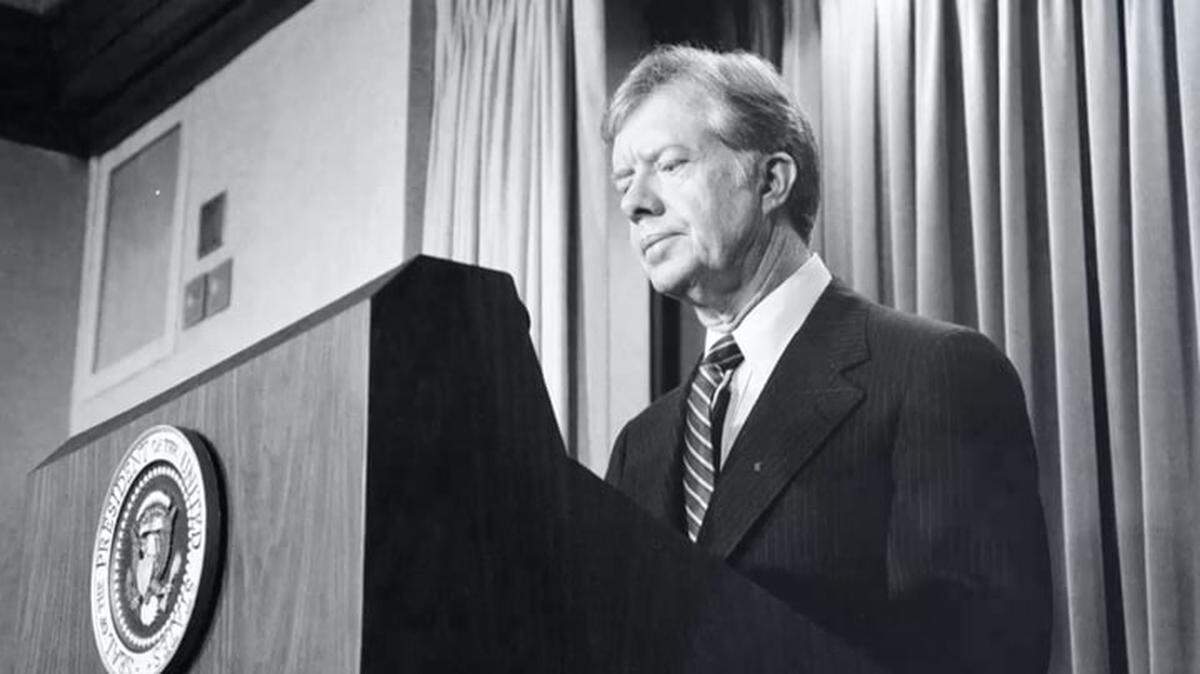
For many Americans, President Jimmy Carter’s legacy is one of compassion and moral integrity. But for me and countless other Iranian families — scattered across the globe as dissidents or living under the yoke of the Islamic Republic — his presidency is a painful reminder of how noble intentions can lead to devastating consequences.
Prior to the late 1970s, Iran was ruled by Shah Mohammad Reza Pahlavi, a constitutional monarch who pursued rapid modernization, including expanded women’s rights, mass education and secular reforms. Already opposed by certain nationalist factions and the USSR-backed Communist Party, these efforts further alienated Islamists, who viewed the changes as threats to traditional values and religious authority.
Ayatollah Khomeini, an exiled cleric, capitalized on widespread discontent by portraying the Shah as an authoritarian dictator and promoting his vision of an Islamic Republic as a just alternative. After the 1979 revolution, Khomeini established a theocracy characterized by mass executions, the suppression of women’s rights and the elimination of political opposition, ushering in decades of repression under the Islamic Republic.
I am a first-generation Iranian American, and my family’s story is deeply intertwined with Iran’s political history. My father, Sadegh Hatefi, is a celebrated Iranian writer and director who is now a prominent member of the Sacramento Iranian community. My uncle, Rahman Hatefi, a revolutionary journalist and editor for Kayhan, a Tehran-based Persian-language newspaper, fought for justice during Iran’s tumultuous revolution, only to be arrested and executed by the new regime. My other uncle, Rahim Hatefi, met a similar fate.
I grew up under the oppression of the Islamic Republic regime until targeted persecution reached unbearable levels, forcing my family and I to leave. Like so many others, my family was pushed into exile, its members now scattered across the globe.
Today, I channel my commitment to justice and progress as the vice chair of the rural and environmental caucuses for the California Young Democrats and as a professional working to advance clean energy policy in California. As a political progressive and a member of the Democratic Party, I deeply admire many aspects of Carter’s legacy. Yet, his decisions regarding Iran remain an indelible mark on his presidency — one that altered the course of my family’s history and that of millions of others.
Carter is rightly remembered for his achievements on the global stage. His role in brokering the Camp David Accords remains a milestone in the pursuit of Middle East peace, and his post-presidency humanitarian work demonstrates his enduring commitment to human rights and social justice. As someone who shares many of these values, I want to celebrate Carter’s unwavering dedication to peace and justice.
But Carter’s approach to Iran in the late ’70s was fraught with dangerous miscalculations. Faced with mounting protests against the Shah’s authoritarian regime, Carter sought to align with the momentum of change. Rather than merely distancing himself from the Shah, Carter’s administration engaged with Ayatollah Khomeini through diplomatic channels. Some of Carter’s advisors viewed Khomeini as a stabilizing figure and an ally to American interests — a catastrophic misjudgment. Encouraged by their trusted American counterparts to avoid bloodshed, Iran’s military declared neutrality in the Revolution and cut ties with the Shah’s government, paving the way for Khomeini’s takeover.
This decision not only sidelined the secular and leftist factions that had broader public support, it empowered the Islamist faction to consolidate control. The result was a theocratic regime that quickly turned against its people and its supposed American allies. For my family and many others, the aftermath of the revolution brought unthinkable losses — tens of thousands were killed, and countless families, like mine, were forced into exile.
The death toll has only risen over the last 40 years, with the regime’s support of Hamas and Hezbollah, and its crackdowns on domestic protests and political activism.
Carter’s compassion and his desire to be on the “right side of history” may have been admirable, but these traits led him to decisions that condemned thousands to torture, death and exile. His presidency illustrates a tragic truth: noble intentions, without the strategic insight to implement them effectively, can yield catastrophic outcomes. Had the U.S. not meddled with Iran’s armed forces to avoid bloodshed, it is unlikely that they would have declared neutrality, making Khomeini’s consolidation of power implausible.
As an Iranian American, I struggle to reconcile Carter’s virtues with his failings. He was both a man of great moral conviction and a leader whose misjudgments changed the course of my homeland forever. His legacy is a dual one: defined by his commitment to peace and marred by the unintended consequences of his misguided actions.
Perhaps the most important lesson of Carter’s legacy for progressives like myself is that good intentions are not enough. Leadership requires not only character and morality but also the wisdom to anticipate and navigate the consequences of one’s decisions. Carter’s legacy shows us that leaders must not only have moral conviction but also the insight and courage to balance idealism with the realities of the world stage.
This story was originally published January 19, 2025 at 5:00 AM with the headline "Sacramento man: Jimmy Carter’s decisions on Iran altered the course of my family’s history | Opinion."