Worried about bird flu? You aren’t alone — especially in hard-hit California | Opinion
In much of California, bird flu has been flying under the radar, but that changed this week when Gov. Gavin Newsom declared a state of emergency.
It’s about time.
California has been the hardest hit state in the nation, and it’s been obvious for weeks that the problem is growing.
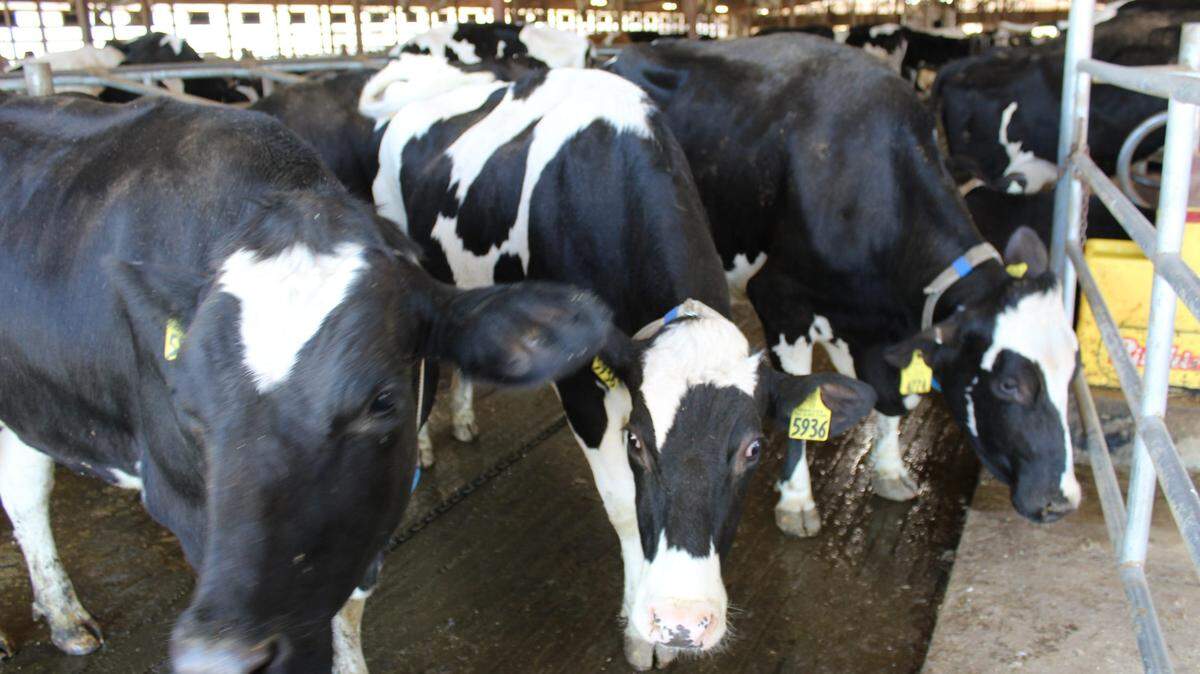
U.S. Department of Agriculture statistics show that over the past 30 days, 266 new cases in cattle have been reported in California, all in dairy cows. Nevada and Texas were the only other states reporting new cases — each with one.
Plus, more people are getting sick.
Cases in the U.S. increased from 18 in October to 61 as of Dec. 18, according to the Centers for Disease Control. More than half — 34 — were reported in California, with the majority of those occurring in the Central Valley. All but one were traced to contact with dairy cows; the origin of another case is unknown.
Most cases have been mild, but in Louisiana, a patient developed a severe case requiring hospitalization. According to the Associated Press, the patient is over 65, has underlying conditions and had been in contact with sick and dead birds.
‘It’s not time to panic’
Public health agencies remain reassuring, reminding us that so far, there has been no person-to-person transmission.
“It’s not time to panic about bird flu,” advises Harvard Health Publishing. “But it is a good idea to take common sense steps to avoid exposure and stay current on related news.”
Still, given that memories of the devastating COVID pandemic are still fresh, it’s not surprising that news of an uptick in cases is unsettling, especially since the medical community doesn’t completely discount the possibility that it could become more serious.
For example, Scientific American recently reported on research showing that the bovine version of the virus only needs “a single mutation to readily latch on to human cells found in the upper airway.”
That “could have major implications for a new pandemic if such a mutation were to become widespread in nature,” the magazine continued.
Add to that the real possibility that Robert F. Kennedy Jr. could head up the Department of Health and Human Services during the Trump administration, despite having unorthodox views about public health — including extreme skepticism about vaccines — and worry seems like a perfectly logical reaction.
Should we be more worried?
Yet many Americans have been taking this in stride. People in other countries, not so much.
The Center for Strategic & International Studies faulted the U.S. for “lagging data, incomplete surveillance, sluggish coordination, considerable mistrust and insufficient planning and stockpiling of vaccines and therapies.”
An opinion writer for the French publication La Monde was even more strident: “America’s handling of the bird flu crisis is putting, and will continue to put, the entire world at risk.”
So here’s a question: Are we the bad guys this time?
What’s being done to prevent spread?
- Because the virus has been detected in raw milk, state and federal governments have stepped up testing of raw milk and have recalled products from farms that tested positive.
- The California Department of Public Health is supplying personal protective equipment — gloves, caps, goggles, face shields and respirators — to dairy and poultry workers; an agency notice posted online indicates that “limited PPE” will be shipped to affected farms until Jan. 15, 2025.
- Health agencies are running more public service announcements, including ads on Spanish-language radio, to educate farmworkers about bird flu. They also are increasing testing of workers.
- On the vaccine front, Moderna was awarded $176 million in June to develop a “prepandemic” vaccine against bird flu. There already is a “limited supply” of two bird flu vaccine “candidates,” according to NBC News, but the Food and Drug Administration must authorize their use — and that decision will likely fall to the Trump administration.
‘The government stood still’
Meanwhile, Newsom is promising to strengthen the state’s “robust response.”
“This proclamation is a targeted action to ensure government agencies have the resources and flexibility they need to respond quickly to this outbreak,” he said in a prepared statement.
Let’s hope that’s the case, because so far it appears there have been gaps — and that’s putting it mildly — in the response.
NPR found that some dairy workers in the Central Valley have been reluctant to report illnesses out of fear that they will lose pay.
The Los Angeles Times provided a harrowing report of a bird flu testing lab so short-staffed that workers were stressed, exhausted and struggling to complete assignments. One recalled making a mistake that required her to repeat an entire batch of tests.
“We are stretched so thin that mistakes can happen,” she told The Times. “I was so tired and mentally drained.”
As for the the federal response, Vanity Fair reported that the USDA sat on the information when when bird flu was first detected in cattle.
“Nobody came,” one veterinarian told Vanity Fair. “When the diagnosis came in, the government stood still. They didn’t know what to do, so they did nothing.”
While it may be premature to point fingers, it is not too much to expect government agencies charged with protecting public health to respond quickly, appropriately and transparently.
The experts at Harvard got it right. This is not the time to panic.
But until public officials demonstrate that they have the situation under control, it most definitely is time to worry.