
Move over, Punxsutawney Phil: Maybe tarantulas can forecast weather
When one looks at the latest weather models generated by super-computers that can crunch gigantic amounts of atmospheric and oceanographic data and perform trillions of calculations per second, it’s easy to forget that it wasn’t all that long ago when everybody relied on natural events or the Farmer’s Almanac for long-range weather forecasts.
The Farmer’s Almanac claims that it’s longtime weather forecaster, Caleb Weatherbee (a pseudonym analogous to Punxsutawney Phil); can predict weather 16 months in advance for seven U.S. climate zones.
According to the Farmer’s Almanac Web site, Weatherbee utilizes a top secret mathematical and astronomical formula that relies on sunspot activity, tidal action, planetary position and many other factors. In other words, the first model to couple atmospheric, ocean and space weather together.
The formula is locked up in a black box, much like the secret recipe for Kentucky Fried Chicken.
Quoting the Web site, since 1818 this carefully guarded formula has been passed along from calculator to calculator and has never been revealed. Many meteorologists are skeptical, but the almanac sells nearly 4 million copies per year, and does have a large climate database, so it can be a great tool in knowing when to plant your garden.
Back East in Pennsylvania a hairy weather prophet, Punxsutawney Phil, emerges from his hole to predict how much longer winter will last. Groundhog Day is celebrated on the festival of lights, which marks the halfway point between winter solstice and the spring equinox.
According to legend, if this husky rodent sees his shadow, winter will last six more weeks. If he doesn't see his shadow, spring will come early. Unfortunately, like flipping a coin or spinning a roulette wheel, Phil is only accurate about half the time in foretelling the end of winter's chill. The hog has celebrated this holiday since 1886 in Gobbler's Knob in west-central Pennsylvania.
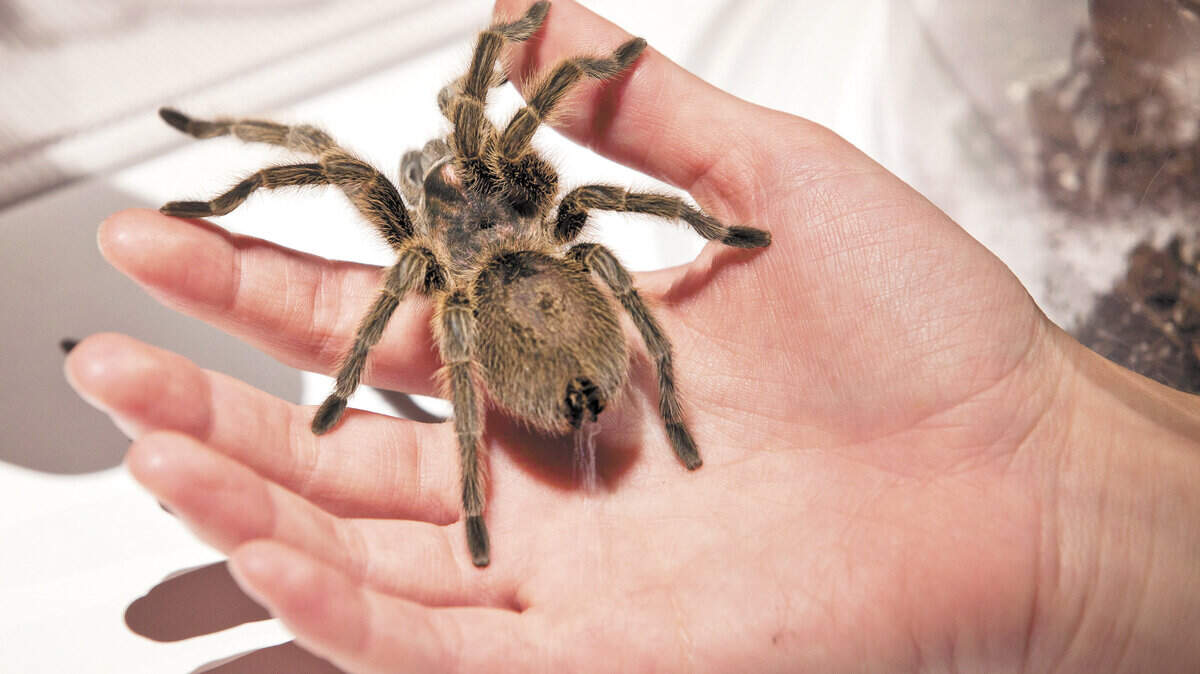
Along the Central Coast, another big and beefy hairy prognosticator of weather has been on the move this month — tarantulas. Judging by the number of emails and phone calls that I have received, the most in years!
These male eight-legged invertebrates have spent five to eight years in their lair feeding on insects, frogs and even small mammals like mice. After a life in solitary, they have reached maturity and can be seen in broad daylight but mostly at dusk in a once-in-a-lifetime search for the silk-lined burrows of female tarantulas in San Luis Obispo County.
The female spiders can live 25 years or longer in the wild. Unfortunately, the males are often eaten by their suitor right after they mate or die about six months later.
If these generally gentle arthropods feel threatened, they will flick hairs from their abdomen with their hind legs. These barbed-like hairs can cause irritation or rashes. If they do bite, their venom is weaker than a honeybee sting.
Popular lore has it that rain will occur when tarantulas are seen.
“When you see tarantulas in the late summer, you can usually count on rain within six weeks,” said Donna Mathewson, who lives east of Paso Robles. “We have been keeping track of this activity for the past five or six years, and have noted surprising accuracy!”
Donna is certainly not the only one. Paul Parrish who lives between Morro Bay and the Atascadero has also noted this coincidence.
The last time I saw tarantulas in the wild was on Highway 58 outside of Santa Margarita back in October 2010. That December we received over 12 inches of rain at Cal Poly!
Safety is at the heart of everything that PG&E employees do. To learn about electric and gas safety to protect yourself and your family, please visit www.pge.com/safety.
This story was originally published September 13, 2014 at 6:34 PM with the headline "Move over, Punxsutawney Phil: Maybe tarantulas can forecast weather."