
Dry January erases huge head start to rain season. What will February and March bring?
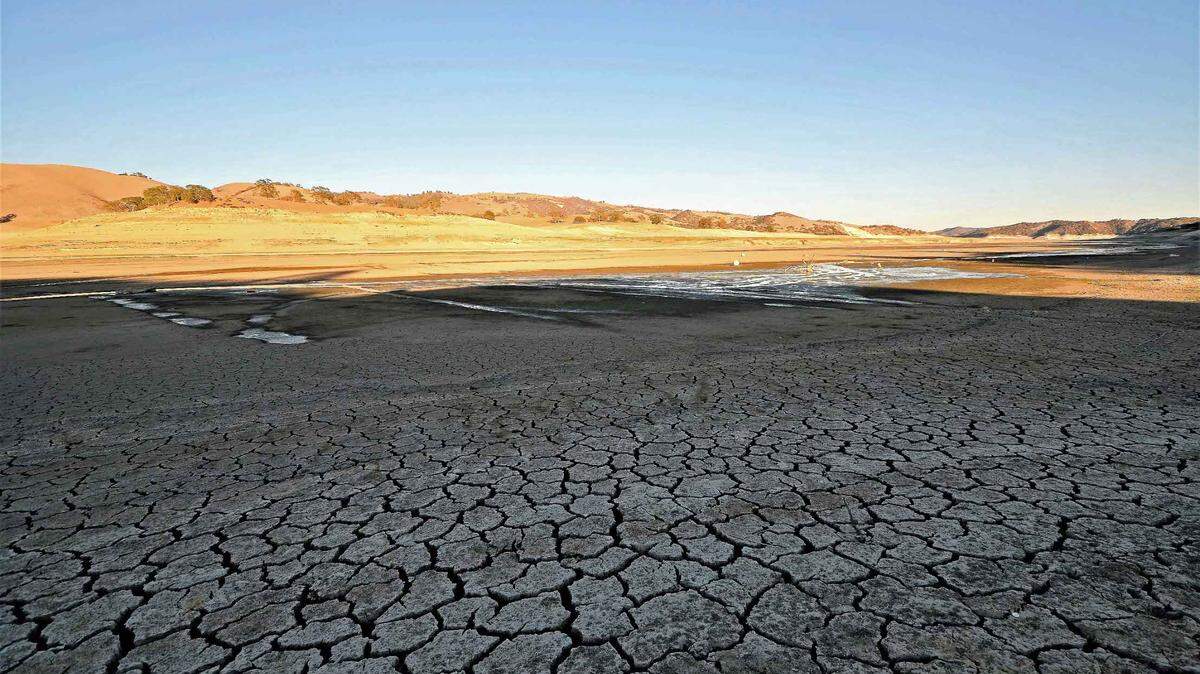
At the end of last month, the plentiful rain and snow of December decreased the drought severity throughout California.
In fact, the U.S. Drought Monitor dropped the entire Central Coast to D1 (Moderate Drought) from D2 (Severe Drought) according to the U.S. Drought Monitor Map. The map is updated weekly and is a joint effort by the National Drought Mitigation Center (NDMC) at the University of Nebraska-Lincoln, the National Oceanic and Atmospheric Administration (NOAA), and the U.S. Department of Agriculture (USDA).
Unfortunately, the Eastern Pacific High off the California coastline has locked the storm door to Central California for January. It has forced the upper-level winds and the storms they bring into the Pacific Northwest in a classic La Niña pattern.
In January, the only rain recorded for the Central Coast occurred on the 17th as an upper-level low-pressure system moved northward over San Luis Obispo and Santa Barbara counties from the southwest.
On that day, the Paso Robles Airport reported 0.22 of an inch of rain, and the Santa Maria Airport saw 0.17. Many other locations in the coastal regions only saw trace amounts to one-hundredth of an inch of precious rain. The San Luis Obispo Airport and Cal Poly only saw one-hundredth of an inch. The National Weather Service requires at least two-hundredths of an inch to be classified as measurable rain.
Overall, this was one of the driest January’s ever seen. The last time Cal Poly’s Irrigation Training & Research Center saw so little rain was back in 1975. On a hopeful note, after reviewing 153 years of rainfall records from Cal Poly, there has never been a back-to-back dry January followed by a parched February.
I hope this trend continues, as the long-range models indicate dry weather through the first half of February, the peak of our rainfall season. I don’t think I’ve ever seen both the European and American numerical models indicate arid conditions for most of California at this time of the year through middle February.
Thankfully, the extraordinarily wet December has kept most of the Central Coast at average rainfall despite the dry January. The Paso Robles Municipal Airport has recorded 7.4 inches of rain, or 110% of typical this rain season. Much like the Paso Robles Airport, the Santa Maria Airport has reported about 6.3 inches of rain, slightly below the 6.7 inches of rain we would generally see by the end of January.
San Luis Obispo County Regional Airport is at 12.3 inches, exactly 100% of average. However, it was 170% of normal at the end of December.
There have been La Niña years that have seen well-above-average rainfall for unanticipated and quickly changing atmospheric conditions.
A split in the polar jet stream can develop. If it does, the southern branch of the polar jet stream can extend far out over the Pacific toward the coast of California. That river of air in the upper atmosphere can steer moist, subtropical air toward California and can bring days of rain.
If you remember, last year at this time, the time-lapse radar presentation from Jan. 27 and 28 looked like somebody was holding a water hose somewhere far out over the Pacific Ocean and washing down Central California with a stream of fluid aimed primarily at Cambria. An atmospheric river stalled over Cambria and retrograded northward toward Big Sur before moving southward into southern San Luis Obispo County and northern Santa Barbara County.
Dawn Dunlap lives above Cambria on the Walter Ranch at 1,250 feet of elevation in the Santa Lucia mountains. She told me, that storm produced more than 17 inches of rain over 54 hours.
Of course, there is plenty of time for the storm door to open again and bring precipitation to the Central Coast. The month of March is famous for storms that produce miracle amounts of rain and snow.
PG&E center monitors natural disasters
PG&E has expanded the scope of the Wildfire Safety Center and it is now called the Hazard Awareness & Warning Center, or HAWC.
This center will monitor a broader range of natural disasters, including wildfires, land movement (such as debris flows and slope failures), earthquakes, tsunamis, flooding and avalanche hazards.
To learn more, please visit www.pgecurrents.com/