
Polar push warmed Alaska, then brought record Sierra snow and deluge to Central Coast
Last week, a vast 592-decameter upper-level high-pressure system developed about 2,200 miles west of Washington state. I have been forecasting since 1991, and I do not recall such a mighty ridge in that area during winter.
It diverted the upper-level winds (jet stream), like a boulder in a fast-moving stream, northeastward over the Aleutian Islands into Alaska. These upper-level winds brought a relatively warm and moist air mass to American’s northernmost state.
According to a tweet from the National Weather Service Alaska region on Dec. 25, 2021: “The Kodiak Tide Gauge station recorded an amazing 67°F yesterday. This is a new statewide temperature record for December. The Kodiak Airport recorded 65°F. This broke their monthly record by 9°F! The weather balloon launched at the same time confirms these amazing readings.”
Not only did this warm and moist air mass break temperature records, but also precipitation milestones. You see, for or every degree Fahrenheit the air warms; it can hold about 4% more water.
December 25 saw nearly 2 inches of liquid-equivalent precipitation in Fairbanks, the town’s wettest December day ever recorded.
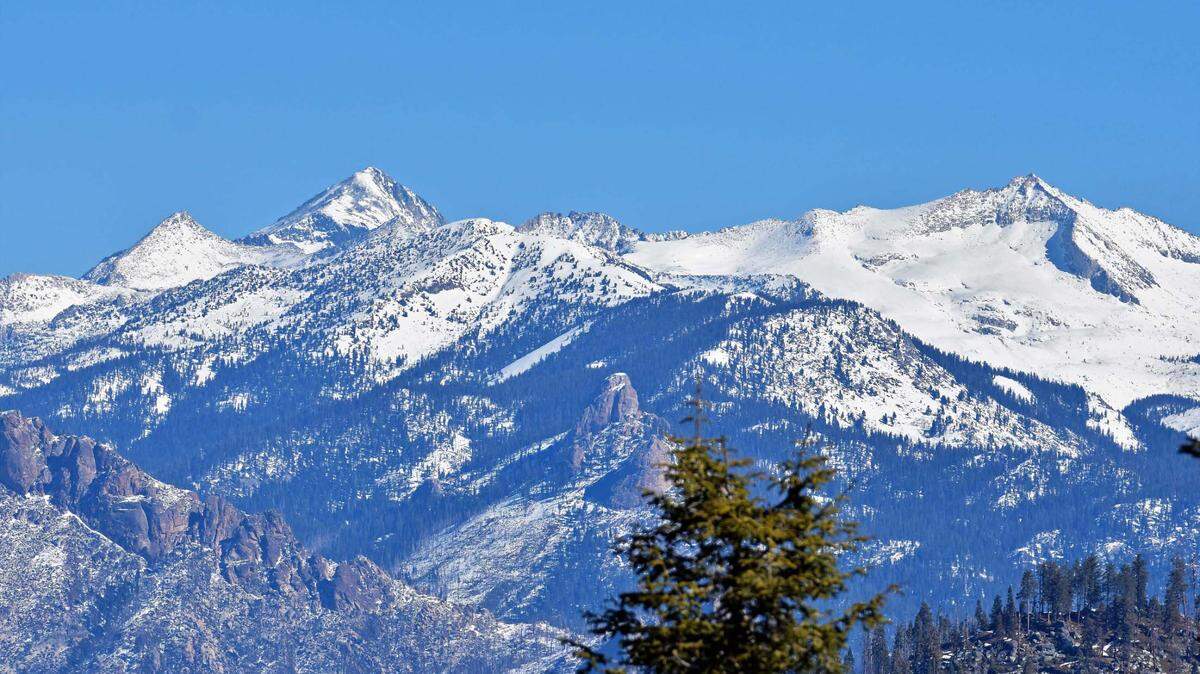
After the polar jet stream left Alaska, it traveled directly southward along the West Coast of the United States. It brought record amounts of December snow to the Sierra Nevada.
The UC Berkeley Central Sierra Snow Lab at Donner Pass reported 212 inches, or nearly 18 feet, of snow for December 2021. This was the snowiest December ever recorded at that location.
In Atascadero, John Neil of the Atascadero Mutual Water Co. saw 8 inches of rain, the sixth-wettest December on record. As of Dec. 30, Rocky Butte has recorded more than 26 inches of rain, more than half its seasonal (July 1 through June 30) average of 40 inches. In fact, many Central Coast locations have already recorded more rain this rain season than all of last year’s season.
This December, rain and snow have substantively reduced California’s drought severity from “D4 exceptional” to “D2 severe/D3 extreme” levels. The Central Coast went from “D3 extreme” to a “D2 severe” classification.
Unfortunately, the Eastern Pacific High is forecast to move off the Central California coastline next week. It will force the upper-level winds and the storms they bring into Northern California, Oregon and Washington for much of the first half of January.
A significant oceanographic event will take place on Saturday, Sunday and Monday: the King Tides. These tides are some of the highest and lowest of the year, separated by less than 12 hours. On Sunday at 8:38 a.m., the high tide is predicted to reach 7.1 feet at the Port San Luis tide gauge near Avila Beach. This is the highest predicted tide that I have ever seen. This high tide will be followed by a low tide of 1.9 feet at 4:10 p.m., a whopping 9-foot sea-level change in less than 8 hours!
If you recall from my column in late November, there can be a big difference between predicted and actual sea levels when the sea is not at rest or when seawater temperatures are warmer or cooler than usual.
PG&E safety message
If you head to the ocean to observe these tides, please be careful and remember the cardinal rule, never turn your back to the sea.
Dangers associated with heavy snow accumulation include high avalanche danger, cold temperatures, travel risks over mountain passes and highways, and danger from snow loading that can cause downed trees and power lines.