
‘Bomb cyclone’ is bringing big waves to Central Coast. What caused this weather phenomenon?
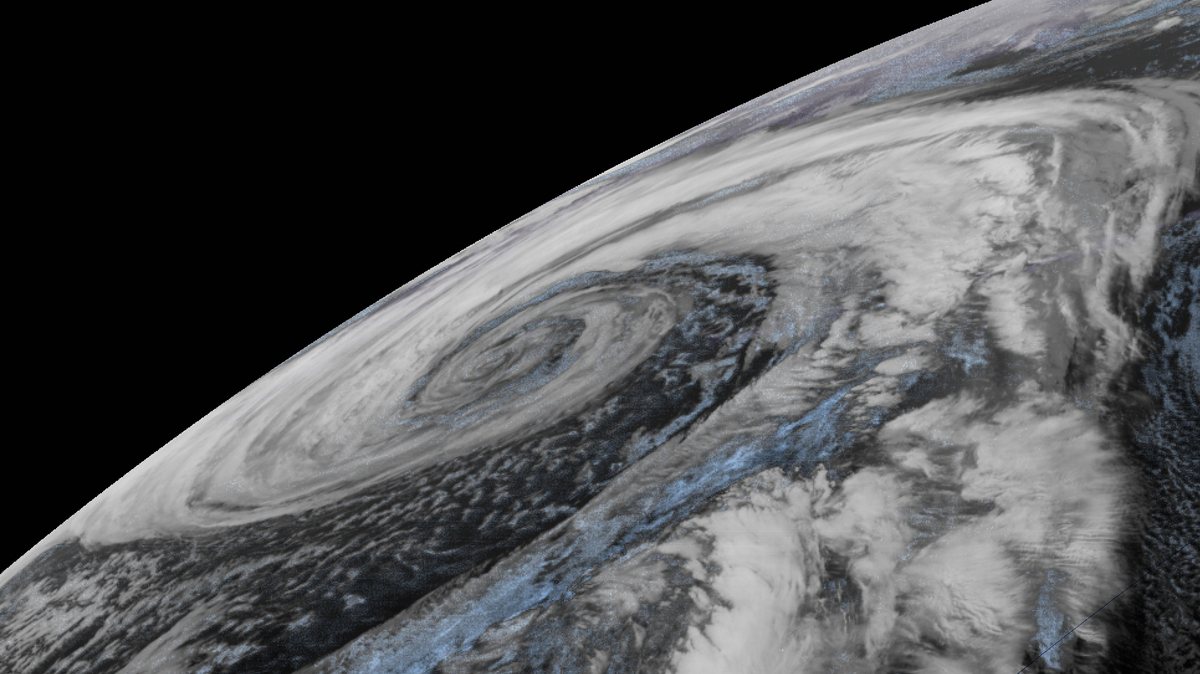
2020 ends with another weather record.
Over the years, North Pacific cyclones have become more intense. We measure the intensity of a storm by its atmospheric pressure. Generally, the lower the atmospheric pressure within the tempest, the stronger the storm.
Previously, two storms held the record for the lowest atmospheric pressure readings in the North Pacific Ocean.
A cyclone from Typhoon Nuri’s remnants intensified to 924 millibars in the Bering Sea back in November 2014.
Not to be outdone, another powerful 924-millibar storm developed along the Aleutian Islands in December 2015 and generated huge seas. In fact, the National Oceanic and Atmospheric Administration’s Central Aleutians Marine Buoy (No. 72), 230 nautical miles southwest of Dutch Harbor, reached 54 feet with a 19-second period before the buoy was lost.
The previous record that stood for decades was 925 millibars recorded at Dutch Harbor in October 1977. These barometer readings rival that of hurricanes.
This year, on New Year’s Eve, a 921-millibar storm developed near the Aleutian Islands.
The polar jet stream brought glacial air from Siberia west-southward toward the western Pacific.
In contrast, relatively warm air at the Earth’s surface from the south moved northward, producing a cyclonic wind shear.
Like two hands going in opposite directions as they roll a pencil between them, these intersecting air masses liberated unfathomable amounts of latent heat as water vapor condensed into clouds and precipitation. This heat caused surface air to expand and quickly rise into the sky, which decreased air pressure.
Meteorologists refer to this explosive development as bombogenesis, or, “bomb cyclone.” The term is used to describe a rapidly intensifying low-pressure system over a 24-hour time frame.
To be classified as a meteorological bomb, a storm needs to lower 24 millibars in 24 hours.
The New Year’s Eve low-pressure system dropped a whopping 71 millibars in 24 hours.
Long-period waves, also called forecast forerunners, from this storm with intervals of more than 28 seconds will arrive along our coastline Sunday night, increasing to 10 to 12 feet (with an 18- to 20-second period) on Monday. This swell will peak at 13 to 15 feet (with a 16- to 18-second period) on Tuesday.
Locally, an interesting way to measure climate change is to study wave data from the Diablo Canyon Power Plant’s Waverider Buoy. You can view the historical wave data archive from Diablo Canyon and other stations at the CDIP database at cdip.ucsd.edu.
As the atmosphere warms, it’s able to hold more water vapor. When this water vapor condenses over the Pacific Ocean, it liberates incredible amounts of latent heat and causes a rapid and sharp drop in air pressure that can create storms with hurricane-force winds. The lower the pressure, the stronger the winds that blow across the Pacific, and the higher seas they generate that eventually become the longer-period swell trains that reach our coastline.
In the 36-plus years that the Waverider buoys have been deployed off the Pecho Coast, the wave data archive indicates a 5% increase in longer-period wave events, linked directly to lower air pressures in North Pacific region storms.
Regrettably, we continue to dump millions of tons of carbon dioxide into the atmosphere every hour from fossil fuels burning and rising temperatures.
To learn more about climate change and how you can reduce your carbon footprint, visit PG&E at www.pge.com, The Central Coast Climate Science Education at www.centralcoastclimatescience.org or Climate Central at www.climatecentral.org.
This story was originally published December 31, 2020 at 12:49 PM.