
SLO County’s April has been wetter than usual — and more rain is still on the way
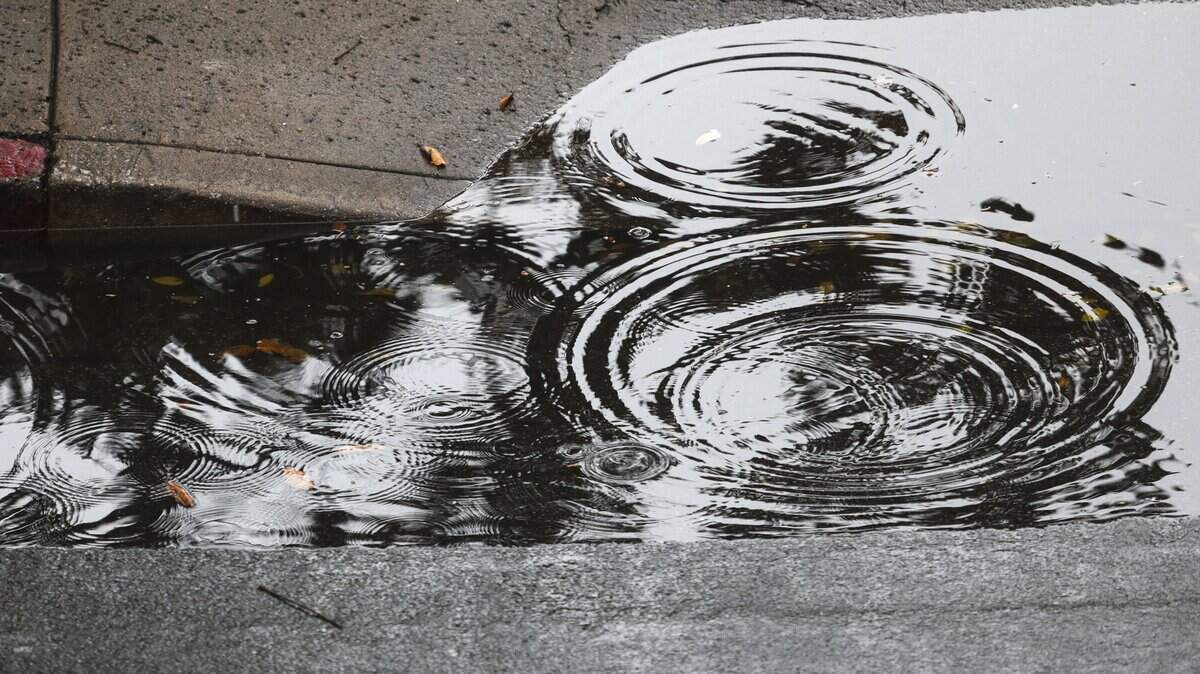
This April has been wetter than normal across the Central Coast.
So far, the San Luis Obispo County Regional Airport has recorded about 1.5 inches of rain — well above its typical April total of around 1 inch.
The Paso Robles Municipal Airport has received about 0.9 inches, roughly one-third of an inch above average, while the Santa Maria Airport has measured about 1 inch, or a tenth of an inch above normal for the month.
Rainfall totals could climb a bit higher as a weak system moves through the Central Coast late Saturday into Sunday morning, bringing a chance of light rain. Another chance of precipitation is possible Wednesday through Thursday.
A weak 555 decameter, upper-level, low-pressure system, centered about 200 miles west of the Central Coast, will drift southeastward, bringing moderate to fresh (13 to 24 mph) westerly winds, increasing clouds and areas of drizzle or light rain across San Luis Obispo and Santa Barbara counties from Saturday afternoon through Sunday morning.
This system is expected to produce less than a tenth of an inch of rainfall, if your location is fortunate enough to receive measurable precipitation.
During this period, daytime highs will top out in the mid-60s across the inland valleys, including Paso Robles, and in the low to mid-60s for coastal valleys such as San Luis Obispo. Along the beaches, temperatures will generally range from the upper 50s to the lower 60s.
Fresh to strong (19 to 31 mph, with gusts up to 35 mph) northwesterly winds will develop Monday through Tuesday, accompanied by clearing skies and slightly warmer conditions.
Another late-season, upper-level, low-pressure system will bring increasing clouds and scattered rain showers from Wednesday afternoon into Thursday morning. This system is expected to produce less than two tenths of an inch of rainfall.
By Thursday afternoon through next Sunday, a 1,020 millibar, Eastern Pacific, high-pressure system will strengthen about 800 miles west of Cape Mendocino, creating a steep pressure gradient along the California coastline.
This pattern will generate fresh to strong (19 to 31 mph, with gusts up to 40 mph) northwesterly winds during the afternoon and evening hours. Winds will ease overnight and during the morning hours, allowing areas of low marine clouds to redevelop along the coast.
Surf report
A 3- to 5-foot westerly (275-degree, deep water) sea and swell (with a 7- to 17-second period) is expected this Saturday through Monday morning.
Increasing northwesterly winds along the California coastline will generate 4- to 6-foot northwesterly (300-degree, deep water) sea and swell (with a 5- to 13-second period) on Monday afternoon and night, decreasing to 3- to 4-feet (with a 7- to 11-second period) on Tuesday into Wednesday morning.
Gusty northwesterly winds will produce a 4- to 6-foot northwesterly (305-degree, deep water) sea and swell (with a 5- to 15-second period) on Wednesday afternoon through the following weekend.
Seawater temperatures are expected to range between 54 and 56 degrees through next weekend.
On this date in weather history (April 26)
1834: Killer frosts were reported in the Deep South. The frost was quite severe around Huntsville, Alabama, and highlighted a backward spring in the south that year. (David Ludlum)
1987: Twenty-two cities in the central and western United States reported new record high temperatures for the date. The afternoon high of 83 degrees at Astoria, Oregon, smashed their previous record by 13 degrees. Sacramento, California, hit 94 degrees. (The National Weather Summary)
1988: Rochester, Minnesota, was blanketed with 13.7 inches of snow, establishing a single storm record for the month of April. Meanwhile, Minneapolis, Minnesota, just 90 miles away, got only rain. (Storm Data) (The National Weather Summary)
2006: The Diablo Canyon Ocean Lab recorded 4.43 inches of rain with 14 days of precipitation, marking a record month for the Diablo Canyon nuclear power plant since it started keeping weather records in 1976.
2021: An anemic cold front dissipated as it moved southward through San Luis Obispo and Santa Barbara counties with areas of mist, drizzle and light rain. Guitar Man in Grover Beach reported the most rainfall with 0.25 of an inch, followed by Hog Canyon in northern San Luis Obispo County at 0.16 of an inch, while Morro Bay and Los Osos reported 0.05 of an inch. Most other locations reported trace amounts of precipitation.
This week’s temperatures
LOWS AND HIGHS, PASO ROBLES
SUNDAY: 47, 66
MONDAY: 41, 71
TUESDAY: 43, 74
WEDNESDAY: 46, 72
THURSDAY: 49, 69
FRIDAY: 47, 76
SATURDAY: 48, 78
SUNDAY: 50, 76
LOWS AND HIGHS, SAN LUIS OBISPO AND COASTAL VALLEYS
SUNDAY: 51, 64
MONDAY: 46, 68
TUESDAY: 48, 71
WEDNESDAY: 50, 68
THURSDAY: 52, 65
FRIDAY: 48, 71
SATURDAY: 49, 72
SUNDAY: 52, 71
John Lindsey is a retired PG&E marine meteorologist. Email him at JohnLindseyLosOsos@gmail.com or follow him on X @PGE_John.