
SLO County defied La Niña with above-average rainfall this season. Will it last?
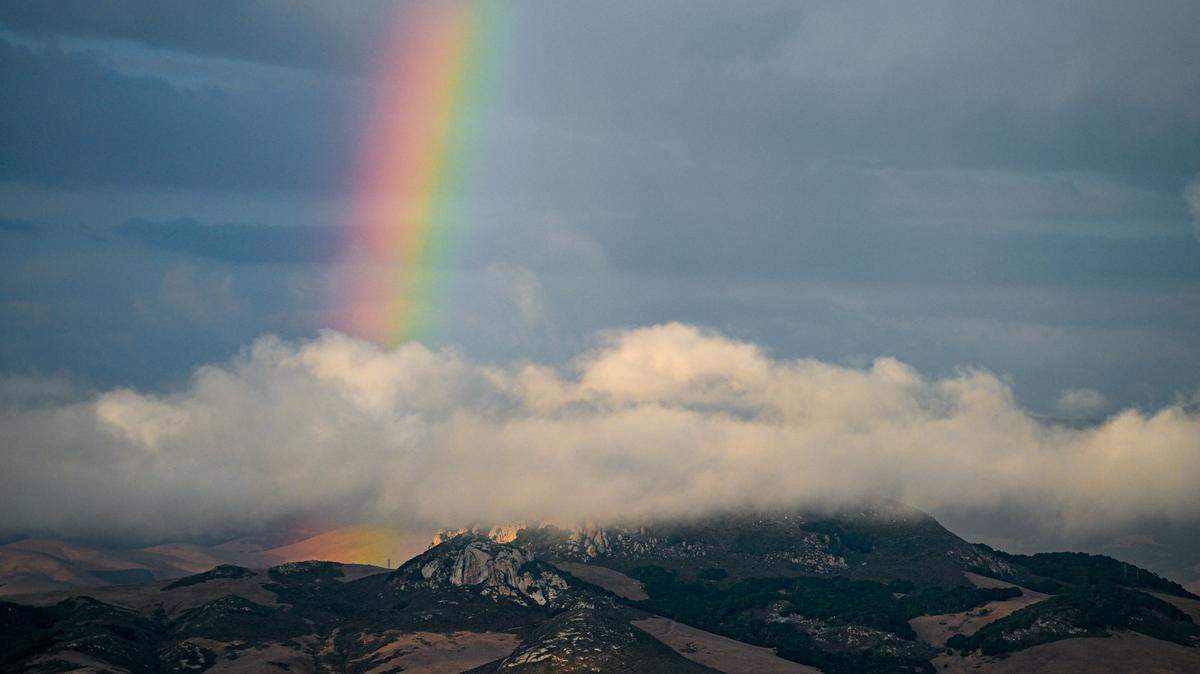
This winter has been quite interesting.
Despite it being a La Niña year, which typically drives the storm track to the north, resulting in below-average rainfall for the Central Coast, a series of cut-off, low-pressure systems produced heavy rain in mid-November and again around Christmas.
The New Year’s Day storm was an upper-level low that moved northward from Baja California.
All of these systems were relatively warm, with minimum temperatures at my Los Osos weather station only dropping into the mid- to upper 50s. These storms approached from the south, and while they generated gale-force southerly winds, there was very little post-frontal northwesterly flow, the type of wind that promotes upwelling and, in turn, cooler sea surface temperatures.
The mid-February storms were a different story.
Originating from the Gulf of Alaska, they were much colder, with minimum temperatures ranging from the mid-to-upper 40s. They brought significant snowfall to the Sierra Nevada Mountains and even a dusting of snow to some of the higher peaks along the Central Coast.
These storms pushed rainfall totals across the Central Coast above normal at the end of February. However, if we continue to see dry conditions through the end of March — which is a possibility — a few locations, such as San Luis Obispo, could drop to below normal.
Furthermore, this winter has also been marked by well-above-average sea surface temperatures, primarily due to a lack of northwesterly winds. For most of December, January and February, temperatures remained around 60 degrees, which is about 3 to 5 degrees above normal.
The recent return of moderate to strong (19 to 31 mph) northwesterly winds along much of the California coastline has resulted in significant upwelling, bringing much colder water to the surface.
Consequently, sea surface temperatures at the Diablo Canyon nuclear power plant’s Waverider Buoy decreased this week. Now, the temperature lies between 52 and 54 degrees, when the average sea surface temperature at this station in March is 53.8 degrees.
Meanwhile, the European Centre for Medium-Range Weather Forecasts advertised the possibility of a “Super El Niño” later this year, which would cause significantly warmer-than-normal sea surface temperatures off the coast of Ecuador.
While this is certainly within the realm of possibility, I prefer to get past the “spring predictability barrier” before drawing any conclusions, as climate models are notoriously unreliable during March and April.
A mighty 1,036 millibar Eastern Pacific High off the Northern California coast will push the storm track into British Columbia, Washington, Oregon and Northern California, keeping the Central Coast dry this week.
A high-pressure area over the Great Basin will bring moderate to fresh (13 to 24 mph), sometimes gusty, Santa Lucia (northeasterly) winds through Monday morning.
These offshore winds will create clear skies and warm weather.
Highs will range from the high 70s to low 80s across the Central Coast. Overnight lows will drop to the mid-40s in inland valleys (Paso Robles) and low 50s in coastal valleys (San Luis Obispo) and along beaches.
A dry cold front will move over San Luis Obispo and Santa Barbara counties later Monday, with variable mid-to-high level clouds. In its wake, strong to gale force (25 to 38 mph) northwesterly winds and areas of low marine clouds will develop over coastal regions on Monday afternoon into Tuesday.
A classic spring weather pattern of moderate to fresh (13 to 24 mph) Santa Lucia winds developing during night and morning, shifting out of the northwest and increasing to fresh to strong (19 to 31 mph) levels during the afternoon, will start on Wednesday and continue through Friday.
Another round of gale-force northwesterly winds is expected next Saturday and Sunday.
Looking ahead, a Gulf of Alaska storm with an associated cold front could bring rain to the Central Coast and snow to the Sierra Nevada Mountains next Thursday, March 19.
If this system produces precipitation, rainfall totals are expected to remain below half of an inch.
Surf report
This weekend’s 3-to 5-foot northwesterly (285-degree, deep water) swell (with an 8-to 14-second period) will continue through Monday morning.
Gale-force northwesterly winds along the California coastline will generate 6-to 8-foot northwesterly (300-degree, deep water) sea and swell (with a 5-to 11-second period) on Monday afternoon through Tuesday.
A 4-to 6-foot northwesterly (295-degree, deep water) sea and swell (with a 7-to 12-second period) is forecast on Wednesday through Friday, increasing to 5 to 7 feet next Saturday and Sunday.
Seawater temperatures will range between 52 and 54 degrees through Sunday, decreasing to 50 and 52 degrees on Monday through Wednesday. Seawater temperatures will warm to 51 to 53 degrees on Thursday through next Sunday.
On this date in weather history (March 8)
1717: After a massive snow storm, people discovered that 1,200 sheep had been buried under a snow drift on Fishers Island in New York for four weeks. When finally uncovered, 100 sheep were still alive.
1989: While arctic cold gripped the northeastern United States, unseasonably warm weather prevailed across the southwestern states. Albany, New York, reported a record low of 2 degrees below zero. Tucson, Arizona, reported a record high of 90 degrees.
2016: A storm swept across the Central Coast, dumping 6.67 inches of rain at Walter Ranch in the Santa Lucia Mountains near Cambria and 5.79 inches at Rocky Butte.
This week’s temperatures
LOWS AND HIGHS, PASO ROBLES
SUNDAY: 42, 79
MONDAY: 44, 79
TUESDAY: 45, 75
WEDNESDAY: 44, 78
THURSDAY: 47, 80
FRIDAY: 47, 80
SATURDAY: 46, 75
SUNDAY: 45, 74
LOWS AND HIGHS, SAN LUIS OBISPO AND COASTAL VALLEYS
SUNDAY: 50, 81
MONDAY: 53, 80
TUESDAY: 53, 75
WEDNESDAY: 52, 79
THURSDAY: 56, 81
FRIDAY: 55, 80
SATURDAY: 56, 76
SUNDAY: 55, 73
John Lindsey is a retired PG&E marine meteorologist. Email him at JohnLindseyLosOsos@gmail.com or follow him on X @PGE_John.