
How could Oregon bomb cyclone storm impact California? See SLO County forecast
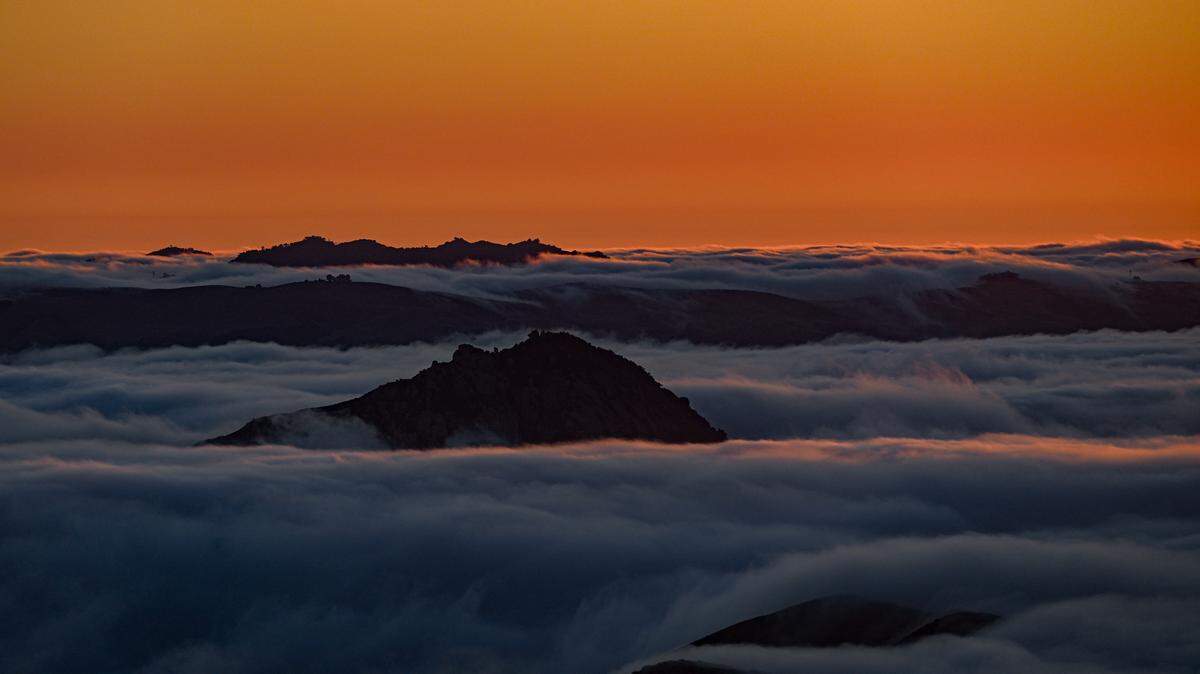
Gusty Santa Lucia (northeasterly) winds brought clear skies and warm temperatures to the Central Coast this weekend.
As these winds ease and shift out of the northwest, the marine layer will rebuild along the coast on Monday morning, pushing inland overnight and into the early morning this week.
A transient 1,023-millibar, high-pressure system over northern Nevada will maintain moderate to fresh (13 to 24 mph) Santa Lucia winds during the night and morning, turning northwesterly in the afternoon through Sunday. This setup will continue to produce clear skies and mild conditions across the region.
Afternoon highs will range from the upper 70s to low 80s in the inland valleys (Paso Robles), mid-70s in the coastal valleys (San Luis Obispo) and the low to mid-70s at the beaches.
By Monday, as the high shifts east, a trough of low pressure will develop along the California coast. This will weaken the pressure gradient statewide, leading to gentle to moderate (8–18 mph), west to northwesterly onshore winds through Friday.
These conditions favor the return of the marine layer, with low clouds and patchy fog or drizzle forming along the coast and spreading inland at night and in the morning.
Skies will generally clear by late morning across the inland and coastal valleys, though clouds will linger longer along the beaches before partial afternoon clearing.
High temperatures during this period will hover in the upper 70s in the inland valleys, low 70s in the coastal valleys and low to mid-60s along the beaches from Tuesday through Friday.
Meanwhile, the Gulf of Alaska is becoming increasingly active, with a series of powerful storms tracking from west to east. One of these systems is expected to rapidly intensify — dropping more than 24 millibars in 24 hours — qualifying it as a bomb cyclone.
By late Saturday, this storm will make landfall along the Oregon coast at 966 millibars, bringing near-hurricane-force winds and heavy rainfall to Oregon and Northern California.
As the associated cold front moves south, it will weaken before reaching the Central Coast late Saturday night into Sunday (Oct. 25 and 26), bringing moderate to fresh (13 to 24 mph) southerly winds and periods of rain.
Current projections indicate between 0.33 and 0.5 of an inch of rainfall across San Luis Obispo and northern Santa Barbara counties.
Looking ahead, the following week appears mostly dry.
Surf report
A sequence of intense storms in the Gulf of Alaska will produce a series of long period swells along the Central Coast this week.
A 4-to-6-foot northwesterly (290-degree, deep water) swell (with an 8-to-14-second period) is forecast along our coastline on Sunday.
A 5-to-7-foot northwesterly (295-degree, deep water) swell (with an 11-to-18-second period) is forecast along our coastline Monday and will remain at this level through Friday.
Seawater temperatures will range between 59 and 61 degrees through Friday.
On this date in weather history (Oct. 19)
1844: The famous “Lower Great Lakes Storm” occurred on Oct. 19 this year. Southwesterly winds were at hurricane-force levels for five hours, driving lake waters into downtown Buffalo, New York. The storm drowned 200 people. (David Ludlum)
1989: Record-breaking levels of snow fell across northern and central Indiana. Up to 10.5 inches of snow were reported at Kokomo, and 9.3 inches were reported at Indianapolis. The 8.8-inch total at South Bend was a record for the month.
Up to 7 inches of snow fell in southern Lower Michigan, and up to 6 inches fell in southwestern Ohio. The heavy, wet snow downed many trees and power lines. Half the city of Cincinnati, Ohio, lost electricity during the morning hours. Temperatures dipped below freezing across much of the Great Plains Region. Twenty cities, including 14 in Texas, reported record-low temperatures for the date. North Platte, Nebraska, reported a record low of 11 degrees. (Weather Summary)
2016: Condor Lookout on top of Hi Mountain reported Santa Lucia (northeasterly) winds of 32 mph sustained with gusts up to 49 mph that morning.
This week’s temperatures
LOWS AND HIGHS, PASO ROBLES
SUNDAY: 49, 82
MONDAY: 49, 81
TUESDAY: 50, 79
WEDNESDAY: 49, 79
THURSDAY: 49, 78
FRIDAY: 48, 78
SATURDAY: 50, 77
SUNDAY: 52, 63
LOWS AND HIGHS, SAN LUIS OBISPO AND COASTAL VALLEYS
SUNDAY: 58, 76
MONDAY: 52, 75
TUESDAY: 53, 72
WEDNESDAY: 52, 72
THURSDAY: 52, 73
FRIDAY: 51, 71
SATURDAY: 53, 70
SUNDAY: 54, 62
John Lindsey is a retired PG&E marine meteorologist. Email him at JohnLindseyLosOsos@gmail.com or follow him on X @PGE_John.