
SLO County could see tropical rain, thunderstorms and then another heat wave
The upper-level, high-pressure system that produced near to record-breaking temperatures across the Central Coast will begin to weaken this week.
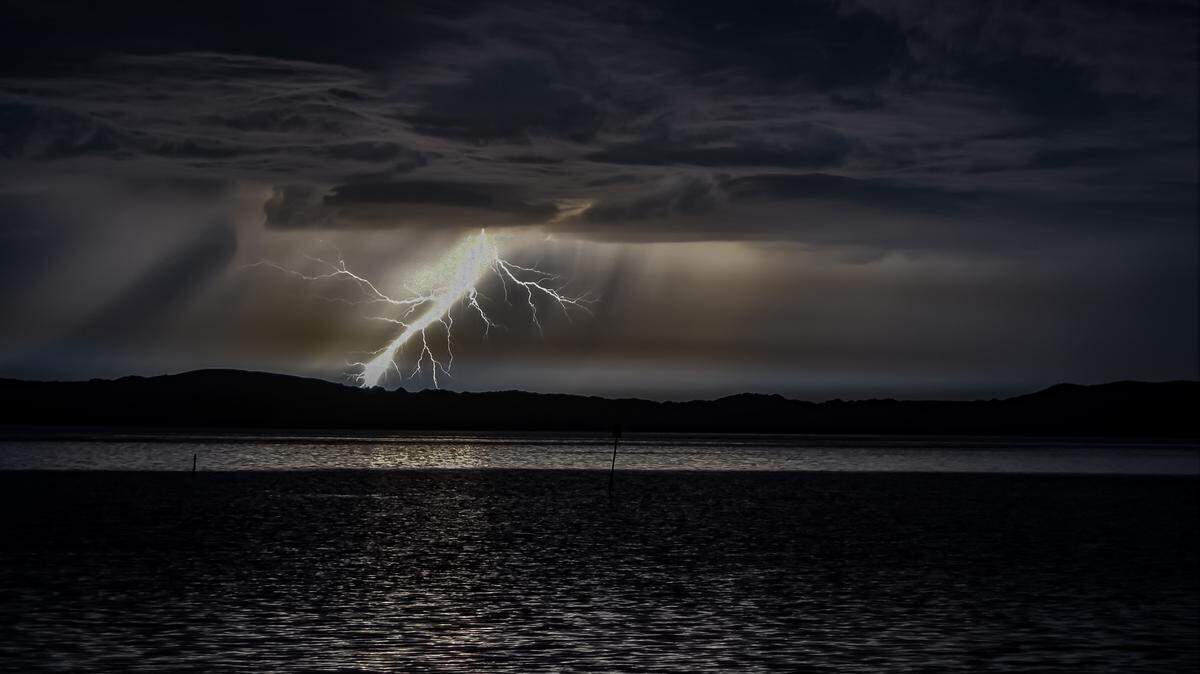
As it does, low marine clouds will return to the coastal regions, along with cooler weather. However, before it does, subtropical moisture will stream over the Central Coast this weekend and will bring muggy conditions and varying amounts of mid- to high-level clouds along with a chance of rain showers and even thunderstorms. The greatest chance of rain will occur on Sunday.
An upper-level, high-pressure system centered over the Four Corners Region produced record-breaking temperatures last week. On Thursday, the San Luis Obispo County Regional Airport reached 95 degrees, shattering the previous daily record of 92 degrees set in 1997. Cal Poly hit 100 degrees for a brief period.
Often in August and September, following a heat wave, subtropical moisture will stream over the Central Coast, pushed northward by an upper-level, high-pressure system over the desert Southwest that created the hot weather to begin with.
This North American monsoon will bring varying amounts of mid- to high-level clouds along with a chance of rain showers and even thunderstorms this weekend. A mix of subtropical mid- to high-level clouds will be present, with varying amounts of low marine clouds along the coastline.
As this area of high pressure weakens during the work week, gentle to moderate (8 to 18 mph) northwesterly winds will develop along the immediate coastline, and the marine layer will deepen and surge inland during the overnight with pockets of fog, mist and even drizzle, clearing to the shoreline by the late morning and early afternoon.
High temperatures in the inland valleys, including Paso Robles, will range from the upper 90s to low 100s this weekend, cooling to the low to mid-90s on Monday through Thursday.
Coastal valleys, such as San Luis Obispo, will hold in the mid- to high 70s, while the beaches will remain in the 60s through Thursday.
Fresh to strong (19 to 31 mph) afternoon northwesterly winds are forecast on Friday, increasing to strong-to-gale-force (25 to 38 mph) levels along the coastline this next Saturday and Sunday. These winds will produce clearing along the coastline.
From Friday to next Sunday, temperatures will increase again to triple-digit levels in the inland valleys and 80s in the coastal valleys. Most beaches will stay in the 60s, though south-facing spots like Cayucos Avila Beach, and Shell Beach could warm into the mid- to high 70s.
Surf report
A 4- to 6-foot northwesterly (290-degree deep-water) swell (with an 8- to 11-second period) will remain at this level through Monday, decreasing to 2 to 3 feet with the same period on Tuesday through Thursday.
Increasing northwesterly winds will generate a 3- to 5-foot northwesterly (310-degree deep-water) sea and swell (with a 5- to 8-second period) on Friday, building to 5 to 7 feet next weekend.
A 1- to 2-foot southern hemisphere (210-degree deep water) swell (with an 18- to 20-second period) will arrive along our coastline on Monday, increasing to 1 to 3 feet (with a 15- to 17-second period) on Tuesday through Wednesday.
Surface seawater temperatures will range between 55 and 57 degrees through Friday ,decreasing to 53 to 55 degrees next weekend.
On this date in weather history (Aug. 24)
2009: The subtropical moisture from Mexico last weekend produced 0.01 inches of rain at the Diablo Canyon nuclear power plant ocean lab rain gauge. A few other rain gauges along the Central Coast recorded between a trace to a couple hundredths of an inch of rain, but many did not record any precipitation at all.
2011: Across 115 years of weather records, the all-time high minimum temperature for Dallas and Fort Worth, Texas, was 85 degrees. Dallas tied or exceeded that record 11 times in 2011.
2015: A weak upper-level ridge of high pressure moved over the Central Coast from the Southwest desert. As a result, the PG&E Black Butte weather station on the Cuesta Ridge reported Santa Lucia winds (northeasterly) of 13 mph sustained with gusts to 17 mph at 6 a.m.
2018: The Southwest Hawaii National Oceanic and Atmospheric Association’s marine buoy #06 was still working in 2018. At around noon on Aug. 23, Hurricane Lane’s eye passed over the buoy and atmospheric pressure dropped to 956.7 millibars. At the same time, significant wave height increased to 31 feet with maximum wave heights reaching 56 feet. A 107-mph wind gust hit the buoy when the eye passed over it.
This week’s temperatures
LOWS AND HIGHS, PASO ROBLES
| SUN | MON | TUE | WED | THU | FRI | SAT | SUN |
| 62, 99 | 60, 95 | 56, 92 | 55, 91 | 54, 92 | 57, 93 | 58, 99 | 58, 101 |
LOWS AND HIGHS, SAN LUIS OBISPO AND COASTAL VALLEYS
| SUN | MON | TUE | WED | THU | FRI | SAT | SUN |
| 59, 78 | 57, 76 | 57, 75 | 56, 75 | 55, 76 | 56, 77 | 58, 80 | 58, 82 |
John Lindsey is a retired PG&E marine meteorologist. Email him at JohnLindseyLosOsos@gmail.com or follow him on X @PGE_John.