
‘Fogust’ no more? SLO County forecast calls for sunny beaches, warm temps
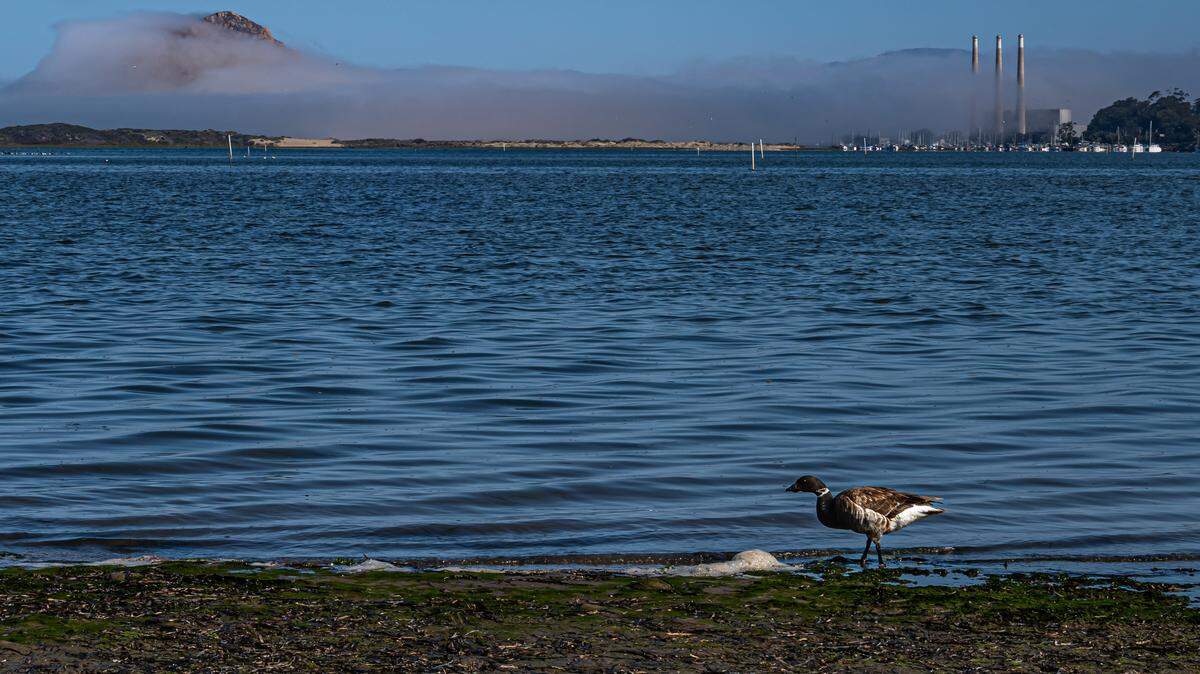
For much of August, a trough of low pressure along the California coastline produced gentle to moderate (8 to 18 mph) northwesterly (onshore) winds, and, in turn, developed a persistent marine layer with pockets of fog and drizzle during the overnight.
Many of the beaches have only seen limited clearing during the day, in a phenomenon some call “Fogust.”
However, a change in this weather pattern is expected this week, as high pressure builds westward from the southwest toward the Central Coast with increasing northwesterly winds, warmer temperatures and a greater amount of clearing along the beaches.
Fresh to strong (19 to 31 mph) afternoon northwesterly winds are forecast on Sunday, increasing to strong to gale-force (25 to 38 mph) levels along the coastline on Monday through Wednesday.
These afternoon winds will help to produce clearing during the afternoon along the coastline, especially from Monday to Wednesday. Moderate Santa Lucia (northeasterly) winds are forecast for Monday morning, which could create warmer temperatures and mostly clear skies along the beaches.
High temperatures in the inland valleys, including Paso Robles, will range from the upper 80s to low 90s through Wednesday before climbing into the triple digits from Thursday through the weekend.
Coastal valleys, such as San Luis Obispo, will hold in the low to mid-70s through midweek, rising to the low 80s Thursday through Saturday.
Most beaches will stay in the 60s, though south-facing spots like Cayucos, Avila Beach and Shell Beach could warm into the mid-70s.
However, if Santa Lucia winds develop Monday morning, many northwesterly-facing beaches, including Los Osos, could see highs in the 70s — temperatures not recorded in many of these communities since April.
Northwesterly winds will ease by Thursday, allowing the marine layer to linger more along the coast, while warmer-than-normal temperatures will develop inland as high pressure moves over California.
Looking ahead, warmer-than-average temperatures are expected inland next week, while low marine stratus clouds could linger along the beaches.
Surf report
A 5-to 7-foot northwesterly (300-degree, deep water) sea and swell (with a 5- to 8 -second period) is forecast through Wednesday, becoming a 3- to 5-foot (290-degree, deep water) swell (with an 8- to 11-second period) on Thursday through next Sunday.
A 1- to 2-foot southern hemisphere (220-degree, deep water) swell (with a 16- to 18 -second period) will arrive along our coastline on Monday, increasing to 1- to 3-feet (with a 15- to 17-second period) on Tuesday through Thursday.
Surface seawater temperatures will range between 54 and 56 degrees through Wednesday, decreasing to 52 to 54 degrees on Thursday through Friday.
On this date in weather history (Aug. 17)
1915: A hurricane hit Galveston, Texas, with a 12-foot storm surge and wind gusts reaching 120 mph. The storm claimed 275 lives, including 42 on Galveston Island, with most deaths caused by drowning. Of 250 homes built outside the seawall (which was constructed after the catastrophic hurricane of 1900), only 10% were left standing.
1969: Camille, the second-worst hurricane in U.S. history, smashed into the Mississippi coast. Winds gusted to 172 mph at Main Pass Block, Louisiana, and reached 190 mph near Bay Saint Louis, Missouri. The hurricane claimed 256 lives and caused $1.3 billion of damage. Several ocean-going ships were carried more than 7 miles inland by the hurricane. The hurricane produced winds up to 200 mph, and a storm surge of 24.6 feet. Complete destruction occurred in some coastal areas near the eye of the hurricane.
2020: The temperature at the Paso Robles Airport soared to 114 degrees the day prior, shattering the previous daily record from 1994 by 4 degrees. Death Valley reached a blistering 130 degrees — a preliminary August record for the entire planet. On this day, Paso Robles hit 111 degrees, breaking yet another daily record. These extreme temperatures were driven by a large, powerful dome of high pressure, rising to nearly 600 decameters over Central and Southern California. Adding to the discomfort, subtropical moisture streamed into the state, bringing higher humidity, shifting high-level clouds, and the potential for rain showers and thunderstorms.
This week’s temperatures
LOWS AND HIGHS, PASO ROBLES
| SUN | MON | TUE | WED | THU | FRI | SAT | SUN |
| 56, 86 | 52, 88 | 52, 92 | 54, 97 | 58, 100 | 60, 104 | 59, 101 | 58, 100 |
LOWS AND HIGHS, SAN LUIS OBISPO AND COASTAL VALLEYS
| SUN | MON | TUE | WED | THU | FRI | SAT | SUN |
| 56, 72 | 58, 78 | 54, 75 | 56, 79 | 59, 83 | 60, 81 | 59, 80 | 58, 79 |
John Lindsey is a retired PG&E marine meteorologist. Email him at JohnLindseyLosOsos@gmail.com or follow him on X @PGE_John.