
SLO County is in for ‘rollercoaster’ spring weather, from rain showers to a lunar eclipse
Get ready for later sunsets: Daylight Saving Time begins on Sunday, with clocks “springing forward” one hour at 2 a.m.
A roller coaster weather pattern will unfold this week.
High pressure over the Great Basin and California will keep conditions dry and clear this weekend, before shifting to windy and wet weather from Monday to Friday morning.
Gentle to moderate (8- to 18-mph) Santa Lucia (northeasterly) winds will develop at night and in the morning, shifting out of the northwest in the afternoon.
This setup will bring chilly mornings, mild afternoons and occasional patches of marine low clouds along the coastline during the afternoon and evening this weekend.
On Monday, an upper-level, low-pressure system located 300 miles off the Central Coast will move southeast toward Southern California.
While this system will remain too far west to produce significant rain locally, it will generate fresh to strong (19-to 31-mph) southerly winds and scattered rain showers from late Monday into Tuesday morning, with heavier rain focusing on Southern California.
Rainfall totals from this system are expected to remain below 0.10 inches.
Morning temperatures will dip into the upper 30s in inland valleys (Paso Robles) and mid-40s in coastal valleys (San Luis Obispo) and along the beaches.
Daytime highs will hold steady in the mid-60s from Sunday to Tuesday.
A much stronger storm system will arrive on Wednesday.
A cold front will bring moderate gale force to fresh gale force (32-to 46-mph) southerly winds and periods of heavy rain Wednesday afternoon and night.
A trailing upper-level trough will move over the Central Coast Thursday morning, producing fresh to strong (19- to 31-mph) southwesterly winds and convective showers.
As the cold front departs, strong to gale force (25-to 39-mph), northwesterly winds and scattered showers will develop Thursday afternoon into Friday morning.
By Friday afternoon, winds will ease to fresh to strong (19- to 31-mph) levels, and rain showers will taper off.
Highs will struggle to reach the mid-50s from Wednesday to Friday with snow levels lowering to 3,500 feet.
Rainfall totals from Wednesday through Friday morning are expected to range between 1 and 2 inches, with higher amounts in the Santa Lucia Mountains.
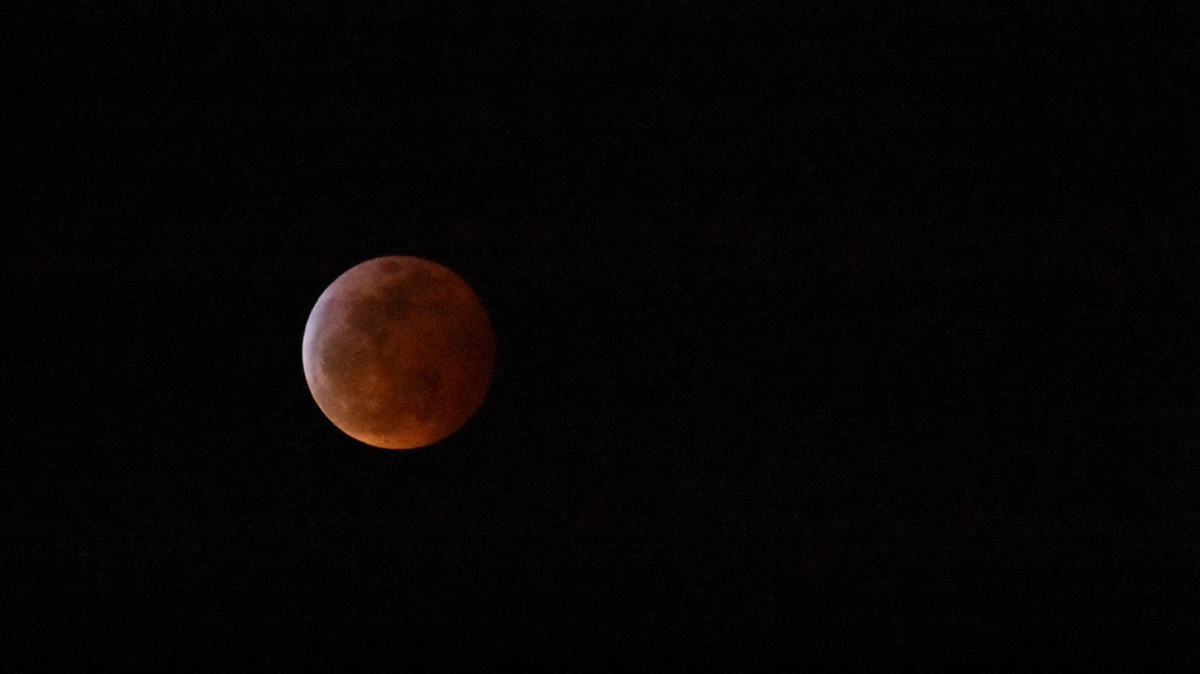
Adding to the week’s weather drama, a Blood Moon will make a fleeting appearance late Thursday night into early Friday morning as breaks in the clouds and rain showers reveal a total lunar eclipse.
This will be the first total lunar eclipse since 2022, beginning at 8:57 p.m., with totality lasting from 11:26 p.m. to 12:31 a.m.
During this phase, the moon will take on a coppery hue as Earth’s atmosphere filters out blue and green wavelengths of sunlight, leaving only red and orange light to illuminate the lunar surface.
Gusty Santa Lucia winds along with dry and warmer weather will develop next weekend as a strong high-pressure ridge develops over California, pushing the storm track to the north.
Besides a slight chance of rain next Monday, the long-range models keep the Central Coast dry through the following week.
Surf report
A 5- to 7-foot northwesterly (290-degree deep water) swell (with an 8- to 15-second period) is forecast on Saturday through Monday morning, increasing to 6- to 8-feet (with a 7- to 14-second period) Monday afternoon through Tuesday morning.
A 5- to 7-foot westerly (270-degree deep water) swell (with an 8- to 13-second period) is forecast on Tuesday afternoon and night.
Gale force southerly winds along the California coastline will generate an 8- to 10- foot southerly (190-degree shallow water) seas and (with a 4- to 7-second period) on Wednesday, followed by a 10- to 12-foot northwesterly (295 -degree deep water) sea and swell (with a 5- to 14-second period) on Thursday and will remain at this level through Friday morning.
This northwesterly sea and swell will lower to 5- to 7-feet (with an 8- to 13-second period) on Friday afternoon into next Sunday.
Surface seawater temperatures will range between 52 and 53 degrees through next Sunday.
On this date in weather history (March 9)
1956: A whopping 367 inches of snow was measured on the ground at the Ranier Paradise Ranger Station in Washington. The snow depth was a state record and the second highest snow record in the United States.
1990: Evening thunderstorms produced severe weather in west Texas. Thunderstorms produced wind gusts up to 71 mph at Lubbock, Texas, and golf ball size hail was reported at several other locations. Strong thunderstorm winds injured two people north of the town of Canyon, Texas. (Storm Data)
2018: A band of rain showers moved through San Luis Obispo County during the evening and early morning with a few hundreds of an inch of measurable precipitation. Red’s house in north Morro Bay had the most, at 0.05 of an inch or rain.
This week’s temperatures
LOWS AND HIGHS, PASO ROBLES
SUN | MON | TUE | WED | THU | FRI | SAT | SUN |
38, 66 | 38, 61 | 41, 63 | 42, 57 | 40, 54 | 38, 58 | 39, 67 | 40, 72 |
LOWS AND HIGHS, SAN LUIS OBISPO AND COASTAL VALLEYS
SUN | MON | TUE | WED | THU | FRI | SAT | SUN |
46, 64 | 45, 60 | 48, 62 | 47, 58 | 46, 55 | 45, 58 | 45, 65 | 48, 70 |
John Lindsey is a retired PG&E marine meteorologist. Email him at JohnLindseyLosOsos@gmail.com or follow him on X @PGE_John.