Hot, dry winds fueled destructive wildfires in Los Angeles. Why was SLO County spared?
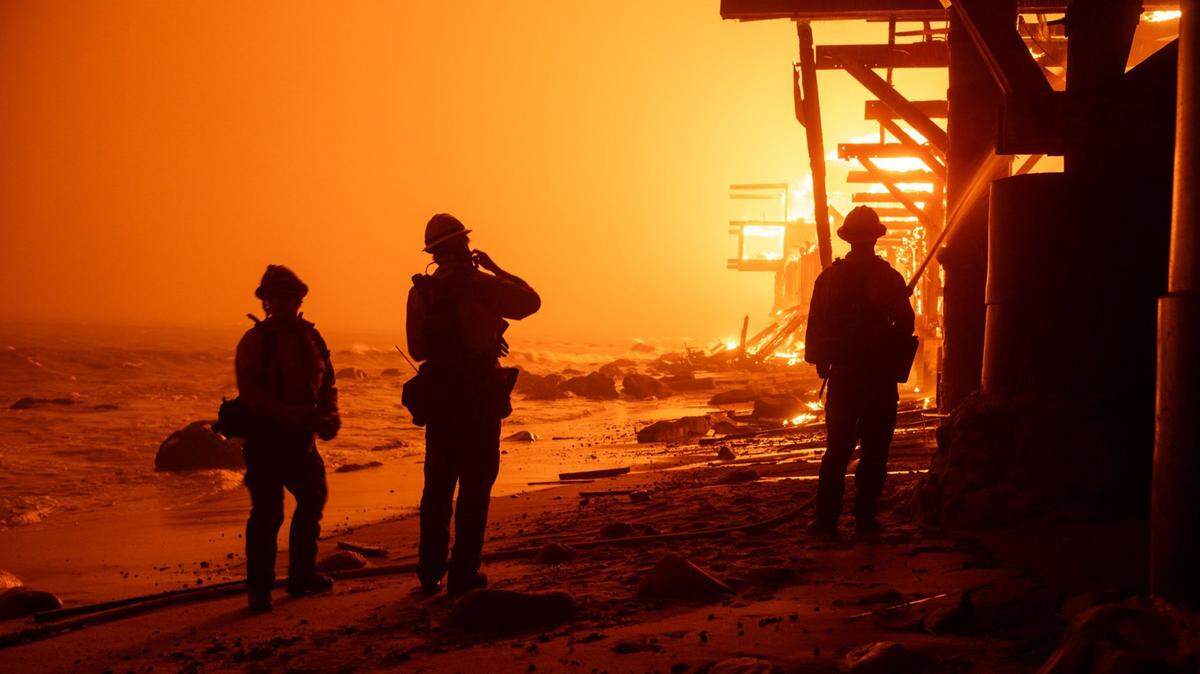
Hot, dry wind fanned the flames of massive wildfires scorching Los Angeles County this week — while San Luis Obispo County remained comparatively safe from fire danger.
The difference in fire danger comes down to the wind, meteorologist John Lindsey said.
The National Weather Service issued a red flag warning for Los Angeles County, the San Gabriel and San Fernando Valleys, San Diego and East Riverside Mountains, Eastern San Diego Valleys, Inland Orange County, Santa Ana Mountains, the Inland Empire and the San Bernardino Foothills from Wednesday to Thursday.
The warning said hot, dry winds combined with low humidity and dry brush “could lead to a fast, uncontrollable wildfire spread,” the Weather Service posted on X.
As of Wednesday, the wildfires had burned more than 1,000 homes and killed five people in Los Angeles County.
Santa Ana winds blow into Los Angeles from the top of the Santa Ana Mountain Range, Lindsey said.
“It’s like a blowtorch,” he said.
Meanwhile, San Luis Obispo County receives Santa Lucia winds, which blow in from the Santa Lucia Mountain Range.
Wind gathers heat and speed as it swoops down a mountainside, Lindsey said.
The Santa Ana Mountain Range is almost twice as tall as the Santa Lucia Mountain Range, so Santa Ana winds often contain more heat and intensity than Santa Lucia winds, he said.
As a result, fire risk is often lower in San Luis Obispo County than in Los Angeles County.
Ultimately, though, San Luis Obispo County has just gotten lucky the past few years.
The times the county has had dangerous fire weather, it hasn’t had the abundance of flammable fuel needed to create conditions for a destructive wildfire, Lindsey said.
“I think we have just been fortunate,” he said.
Meanwhile, Cal Fire and local fire departments have worked hard on prescribed burns and other types of fuel management to reduce wildfire risk, he said.
Though its been safe in the past, San Luis Obispo County could still be struck with wildfire, he said.
He recommended preparing an evacuation plan, a go-bag with prescriptions, water, food, a change of clothes, blankets and cash, and always keep a half-tank of gas.
“We’ve gotta be prepared for the worst,” Lindsey said.