
Look for classic ‘Fogust’ weather this week as marine layer moves into SLO County
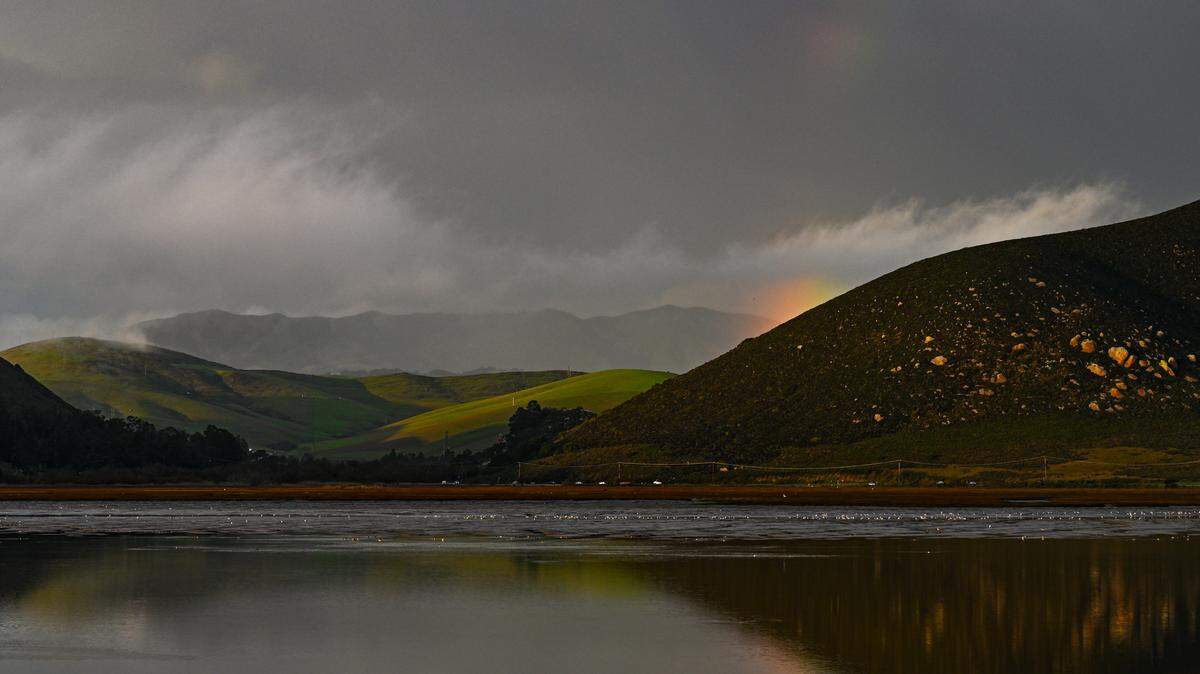
A pattern of gentle to moderate (8 to 18 mph) Santa Lucia (northeasterly) winds developing during the early morning combined with fresh to strong (25 to 31 mph) northwesterly winds in the afternoon will keep the skies primarily clear along the coastline through Monday; however, marine low clouds will develop during the evening and move inland during the night.
A deepening marine layer with pockets of fog and mist will develop on Tuesday and will continue through Saturday in the coastal regions as the onshore winds decrease to gentle levels. South of Point Conception, abnormally warm seawater temperatures will continue to bring sticky and muggy conditions to the coastal areas of Southern California.
An early-season cold front associated with an upper-level low-pressure system off the Oregon coastline produced rain in Northern California Friday night into Saturday.
This low-pressure system will create a steep pressure gradient along the California coastline; consequently, fresh to strong (25 to 31 mph) northwesterly winds will continue to develop along the coastline during the afternoon through Monday. Over this period, an area of high pressure to the east will create gentle to moderate (8 to 18 mph) Santa Lucia (northeasterly) winds during the morning.
This offshore flow will produce mostly clear skies throughout the Central Coast and raise temperatures to the high 90s, maybe even triple-digit levels in the inland valleys (Paso Robles) and mid-80s in the coastal valleys (San Luis Obispo).
Temperatures along the beaches will reach the high 60s, except for Cayucos, Avila Beach and Shell Beach, which will reach the low 80s. Over this time frame, some low marine clouds will develop in the evening and move inland during the night.
Gentle onshore winds are forecast on Tuesday through Saturday. This condition will allow a persistent marine layer to develop in the coastal regions with pockets of fog and mist.
Over this period, many beaches will remain overcast, with afternoon clearing in the coastal valleys — this phenomena is also known in some circles as “Fogust.”
The inland valleys will remain mostly clear except for low marine stratus during the late overnight and early morning. Temperatures on Tuesday through Saturday will be near seasonal norms, with the inland valleys reaching the low 90s and the coastal valleys the low 70s. The beaches will range from the high 50s to the low 60s under mostly overcast skies.
Surf report
A 4- to 6-foot northwesterly sea and swell is forecast along our coastline through Monday, becoming a 2- to 4-foot northwesterly (290-degree deep-water) swell (with an 8- to 11-second period) on Tuesday through Saturday.
Combined with this northwesterly sea and swell, will be a 1- to 3-foot southerly swell (with an 11- to 13-second period) from Hurricane Gilma 800 miles west of Baja California.
Surface seawater temperatures will range between 53 and 55 degrees through Monday, warming to 57 to 59 degrees on Tuesday through Saturday.
On this date in weather history (Aug. 25):
1940: New Jersey experienced its coldest August morning of record, with lows of 32 degrees at Layton and Charlottenburg.
2005: Katrina became a hurricane just before landfall in south Florida between Hallandale Beach and North Miami Beach. Maximum sustained winds at the time of landfall were near 80 mph. There were 11 fatalities in South Florida, including four by falling trees. More than 1.3 million customers lost electrical services, and preliminary insured loss estimates ranged from $600 million to $2 billion in the state of Florida. The storm rapidly intensified after entering the Gulf, growing from a Category 3 hurricane to a Category 5 hurricane in just nine hours. It’s maximum sustained winds reached 175 mph with a minimum central pressure of 902 mbar (26.6 inHg). The pressure measurement made Katrina the fourth most intense Atlantic hurricane on record at the time (Associated Press).
This week’s temperatures
LOWS AND HIGHS, PASO ROBLES
SUN | MON | TUE | WED | THU | FRI | SAT | SUN |
51, 91 | 54, 96 | 58, 100 | 47, 93 | 55, 91 | 56, 92 | 57, 92 | 58, 94 |
LOWS AND HIGHS, SAN LUIS OBISPO AND COASTAL VALLEYS
SUN | MON | TUE | WED | THU | FRI | SAT | SUN |
52, 84 | 54, 82 | 55, 79 | 54, 75 | 54, 74 | 53, 72 | 53, 70 | 55, 73 |
John Lindsey is a retired PG&E marine meteorologist. Email him at JohnLindseyLosOsos@gmail.com or follow him on Twitter @PGE_John.