
Why the SLO County wave event caused so much damage — and what’s ahead in the forecast
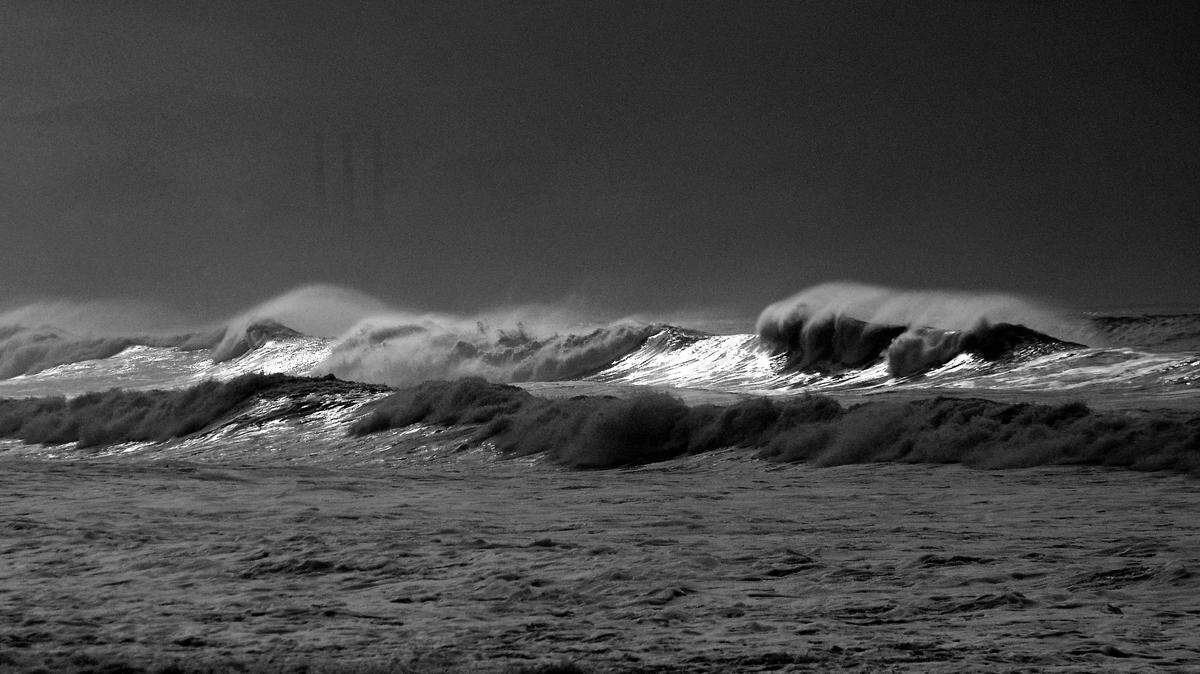
The Dec. 28 wave event that caused so much damage along the California coastline was not the highest wave event ever recorded.
In fact, it didn’t even make the top 20 list of wave events, according to the Diablo Canyon Waverider Buoy that has recorded wave data since June of 1983 when that station was installed.
On Dec. 28, the significant swell height (the average height of the waves in the top third of the wave record) peaked at 18 feet with a 20-second period. The all-time highest swell event at Diablo Canyon occurred on Jan. 11, 2001, when the significant wave height reached 21.3 feet with a 17-second period, followed by the second-highest swell reading of 20.5 feet on Jan. 5, 2008.
So why was the Dec. 28, wave event so damaging?
To use an old cliché, it was a perfect storm of several factors coming together simultaneously.
First, the peak of the swell event occurred when the high tide reached 6.5 feet. The tide/seawater levels were about half a foot higher than predicted because of the thermal expansion of the water column. Seawater temperatures on that day ranged between 62 and 64 degrees, much warmer than the typical 56 degrees during December.
Another factor was the period or wavelength of the incoming swells.
They had a peak period of between 20 and 22 seconds, significantly more potent than 17-second waves, allowing them to surge farther inland on the beaches. Finally, they arrived from a west-southwesterly direction, allowing them to slam into southerly facing beaches, like Cayucos or Avila Beach, which are generally protected from the predominant northwesterly swell trains.
Unfortunately, Pacific storms that generate these massive waves are becoming more intense over time, with stronger winds blowing across the ocean generating more powerful waves due to a hotter atmosphere. Combined with warmer seawater temperatures and increasing sea levels, it will produce more significant challenges for coastal communities in the future.
Weather forecast for SLO County
The month of December saw above-average temperatures and rainfall, with San Luis Obispo reporting an average high temperature of 72 degrees, nearly 8 degrees warmer than usual.
However, it may be time to break out the jackets, sweaters and gloves as temperatures will drop to below freezing in the inland valleys and will struggle to reach the high 50s during the daytime throughout San Luis Obispo county as vigorous upper-level winds bring a cold air mass from the Gulf of Alaska into the region.
An upper-level low-pressure system will move southward over the Central Valley of California and produce scattered rain showers Saturday night into Sunday morning. Total rainfall amounts are expected to remain below a tenth of an inch, with snow levels dropping to 3,500 feet.
Many Central Coast locations will likely not record any measurable rain. The main impact of this system will be strong to gale-force (25 to 38 mph) north to northwesterly winds.
High temperatures will reach the low to mid-50s throughout the region, with overnight lows dropping to the mid-30s in the inland valleys (Paso Robles) and high 30s in the coastal valleys (San Luis Obispo) and along the beaches.
Moderate to fresh (13 to 24 mph) Santa Lucia (northeasterly) winds during the night and morning, decreasing during the afternoon, will produce mostly clear skies during the afternoon on Monday and Tuesday.
A dry cold front will move over the Central Coast on Wednesday into Thursday, producing strong to gale-force (25 to 38 mph) northwesterly winds and partly cloudy skies.
The numerical models indicate a storm reaching the Central Coast later on Friday into Saturday with strong to gale-force (25 to 38 mph) southwesterly winds and moderate to heavy rain. An unsettled weather pattern is expected to continue into the following week.
Surf report
A 9- to 11-foot northwesterly (310-degree, deep-water) sea and swell (with a 5- to 17-second period) is forecast along our coastline on Sunday.
A 6- to 8-foot northwesterly (300-degree, deep-water) swell (with an 8- to 14-second period) is expected along our coastline on Monday, decreasing to 4 to 6 feet on Tuesday.
Strong to gale-force (25 to 38 mph) northwesterly winds will generate an 8- to 10-foot northwesterly (310-degree, deep-water) sea and swell (with a 5- to 15-second period) Wednesday into Thursday.
A 14- to 16-foot west-southwesterly (255-degree, deep-water) sea and swell (with a 7- to 14-second) is expected on Friday into Saturday. Note: This swell will occur with a predicted 6.7-foot-high tide on Friday morning (9:42 a.m.) and a 6.4-foot-high tide on Saturday morning at 10:30 a.m.
Seawater temperatures will range between 59 and 61 degrees through Tuesday, decreasing to 57 to 59 degrees on Wednesday through Saturday.
This week’s temperatures
LOWS AND HIGHS, PASO ROBLES
SUN | MON | TUE | WED | THU | FRI | SAT | SUN |
36, 53 | 29, 54 | 30, 58 | 36, 55 | 33, 54 | 29, 53 | 37, 52 | 32, 54 |
LOWS AND HIGHS, SAN LUIS OBISPO AND COASTAL VALLEYS
SUN | MON | TUE | WED | THU | FRI | SAT | SUN |
38, 56 | 37, 57 | 39, 59 | 43, 59 | 41, 57 | 37, 56 | 42, 55 | 37, 57 |
John Lindsey is a retired PG&E marine meteorologist. Email him at JohnLindseyLosOsos@gmail.com or follow him on Twitter @PGE_John.