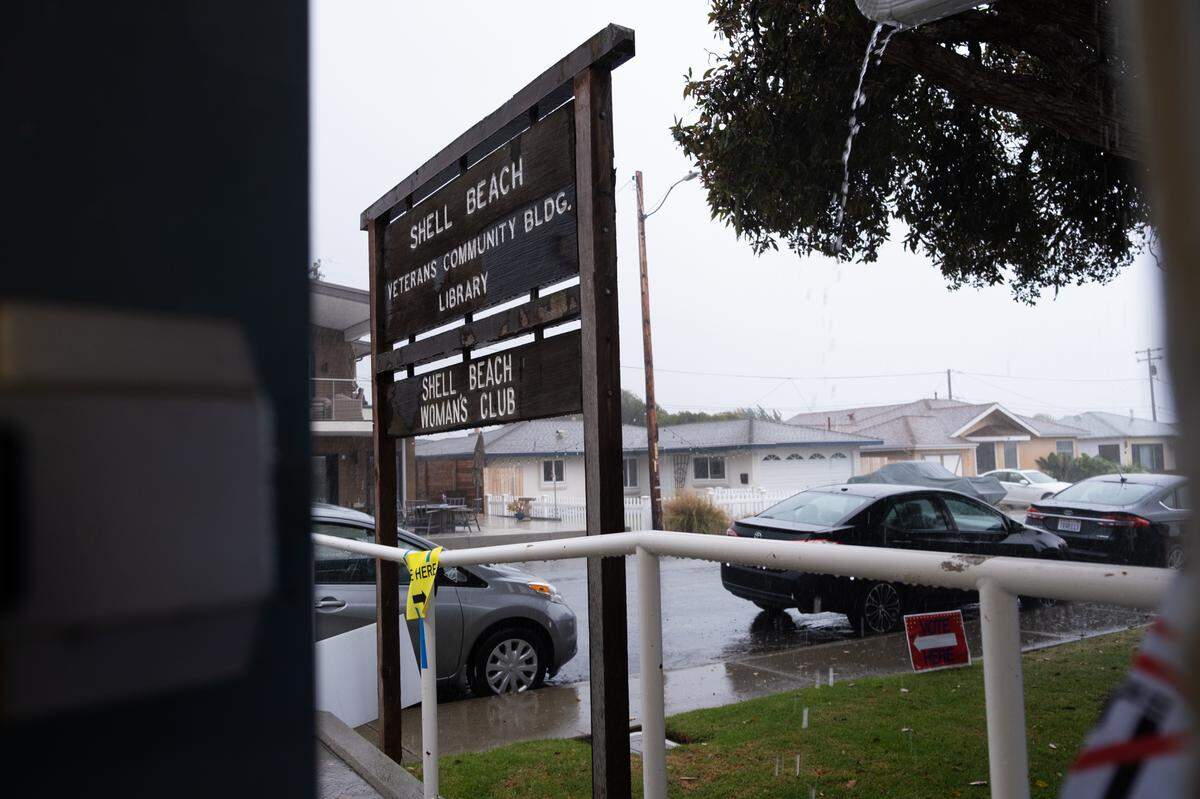
2 stormy days brought much-needed rain to SLO County. Here’s how much your area got
A wet and blustery storm brought a welcome burst of rain to communities around San Luis Obispo County this week.
Whether the rain the region saw on Monday and Tuesday will stave off the extreme and severe drought conditions in the county, however, remains to be seen.
Most areas of the county are still below average rainfall amounts for this time of year, even with this week’s precipitation, according to San Luis Obispo County Public Works and National Weather Service data.
Much of the heaviest rain from the storm system that moved through California over the past two days hit the Los Angeles County region.
Still, many areas of San Luis Obispo County saw steady rain that brought totals to well over an inch, according to the National Weather Service.
From most to least, here’s how rain totals break down by community, according to the Weather Service’s data from Monday through Wednesday morning:
- Rocky Butte northeast of Cambria: 3.58 inches
- Lopez Lake: 2.12 inches
- Santa Margarita: 1.84 inches
- Las Tablas near Templeton: 1.75 inches
- Santa Margarita Lake: 1.62 inches
- Atascadero: 1.46 inches
- Lake Nacimiento: 1.41 inches
- Cambria: 1.36 inches
- La Panza east of Pozo: 1.32 inches
- Arroyo Grande: 1.2 inches
- Los Osos: 1.19 inches
- San Luis Obispo (Cal Poly): 1.16 inches
- Shandon: 1.16 inches
- Oceano: 1.15 inches
- Templeton: 1.11 inches
- Carrizo Plain: 1.02 inches
- Nipomo: 0.92 inches
- Paso Robles: 0.65 inches
- Morro Bay: 0.56 inches

Rain brings SLO County closer to normal averages
The county’s rain year begins on July 1 and lasts through June 30, according to the county Public Works Department. So, that would put us at about a third of the way through the rainy year.
The region remains somewhat below average rainfall for this time of year due to abnormally dry previous months, although the rain on Monday and Tuesday brought us closer to historical normals.
According to the National Weather Service’s data, San Luis Obispo typically receives about 2.48 inches of rain from July 1 through the end of November.
As of Wednesday, it had received 1.59 inches, or about 64% of the normal amount through the date.
Paso Robles on the other hand typically sees about 1.58 inches of rain fall from July 1 through the end of November, according to the Weather Service. As of Wednesday, it had received 1.05 inches, or about 66% of normal through the end of the month.
Those lower-than-normal precipitation amounts are largely due to the complete lack of rain in July, August and October — even though San Luis Obispo County had an unusually rainy September.
The U.S. Drought Monitor categorizes most of San Luis Obispo County as experiencing extreme drought conditions, while the western-most areas are in severe drought, a lower level of drought severity.
The drought much of the western United States is experiencing is the most severe in at least 1,200 years, according to a study by researchers from UCLA. The main driver of the extreme drought is human activities such as the burning of fossil fuels, according to the study.
The U.S. Drought Monitor typically reassess its data every Tuesday, with a new drought map released on Thursdays — so the short-term conditions could shift due to the latest rainfall.
The rest of this week in San Luis Obispo County looks to be forecast as dry and sunny, according to the Weather Service.