
SLO County weather forecast: Expect warm inland, cool beach temperatures
The afternoon northwesterly winds will decrease to gentle to moderate (8 to 18 mph) levels on Sunday into Tuesday as a 1,001 millibar low-pressure system develops over the Central Coast.
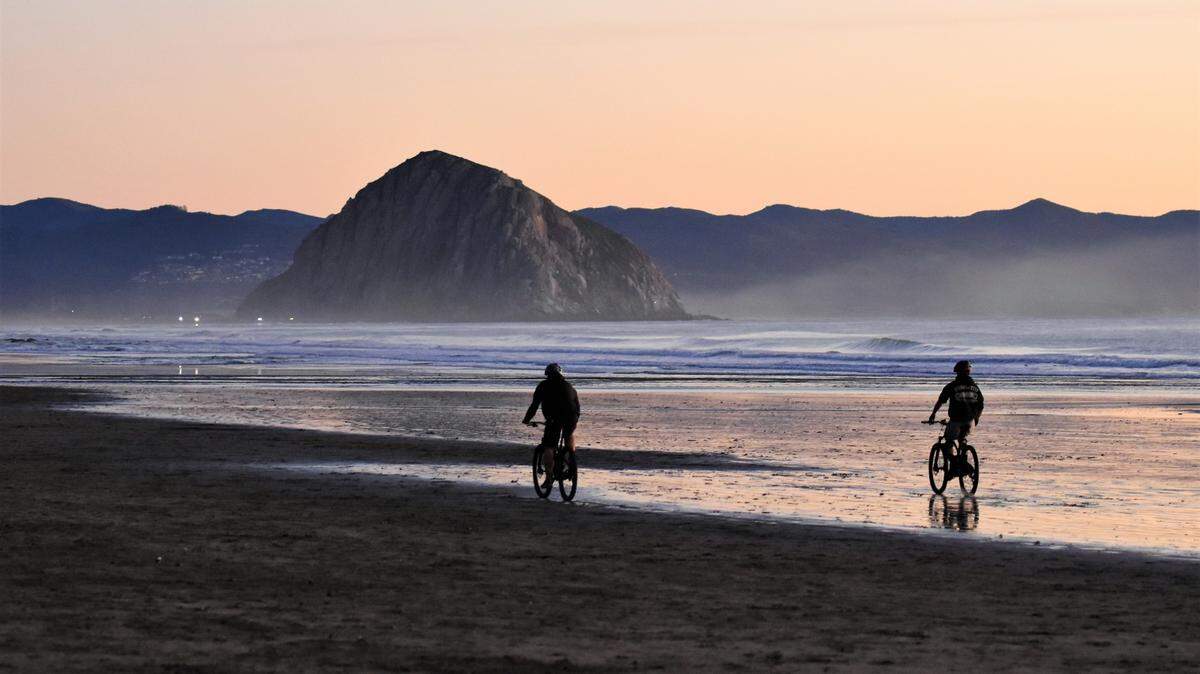
Consequently, the marine layer will be more persistent (No-Sky July) along the immediate coastline with cooler temperatures at the beaches. The marine low clouds will spread inland during the night and morning with areas of fog and pockets of mist, clearing by the afternoon.
High temperatures on Sunday into Tuesday will range from the low-100s in the North County (Paso Robles) and high-70s to the low-80s in the coastal valleys (San Luis Obispo). The beaches will range from the low- to mid-60s.
The afternoon northwesterly winds will increase to fresh to strong (19 to 31 mph) levels on Wednesday into Friday, creating a greater amount of clearing along the beaches during the day and warmer temperatures along the southerly facing beaches of Cayucos, Avila Beach, and Shell Beach. These stronger northwesterly (onshore) winds will allow cooler marine air to filter into the inland valleys and produce slightly cooler temperatures.
By the last week of July, the long-range numerical models — the oracles of long-range weather forecasting — have been advertising the return of monsoonal moisture to the Central Coast.
That phenomenon is part of a seasonal pattern called the North American monsoon. When it occurs, we often experience higher relative humidity levels and plenty of virga — visible streaks of rain that fall from a cloud but evaporate before reaching the ground. In other words, it changes our dry and comfortable climate to a humid, subtropical and sticky one reminiscent of Florida. That condition can also bring rain and thunderstorms to a typically dry time of the year.
Surf report
Sunday’s 5- to 7-foot northwesterly (290-degree, deep-water) swell (with an 8- to 11-second period) will remain at this level into Monday morning, decreasing to 4- to 6-feet Monday afternoon and night. This northwesterly swell will further lower to 3- to 5-feet with the same period on Tuesday into Wednesday morning.
Fresh to strong (19 to 31 mph) afternoon northwesterly winds will generate a 5- to 7-foot northwesterly (300-degree, deep-water) sea and swell (with a 5- to 8-second period) on Wednesday afternoon through Saturday.
A 1- to 3-foot Southern Hemisphere (210-degree, deep-water) swell (with an 18- to 22-second period) will arrive on Sunday and will remain at this level through Monday, increasing to 2- to 3-feet (with a 16- to 18-second period) on Tuesday into Wednesday.
Hurricane Six, centered about 1,200 miles south of Point Conception on Sunday, will produce a 1- to 2-foot southerly (180-degree, deep-water) swell (with a 13- to 15-second period) on Wednesday into Thursday.
Seawater temperatures will range between 55 to 58 degrees through Friday.
This Date (July 17) in Weather History:
1987 - The low of 52 degrees at Bakersfield, CA, was a record for July. Up to eight inches of snow covered the Northern Sierra Nevada Range of California from a storm the previous day. During that storm, winds gusting to 52 mph at Slide Mountain, Nevada, produced a wind chill reading of 20 degrees below zero. Blue Canyon, California, dipped to a July record of 36 degrees, and the high of 44 degrees at Klamath Falls, Oregon, smashed their previous record for July by ten degrees. An upper-level high over the Four Corners region will continue to produce warm to hot temperatures in the inland areas and marine low clouds along the coastline.
1988 - Sweltering heat continued in California, with record highs of 111 degrees at Redding and 112 degrees at Sacramento. Death Valley hit 127 degrees.
2007 - An unusual weather pattern for mid-summer developed over Northern California. A cold front produced rain as far south as the Bay Area.
2018 - Monsoonal moisture streamed over the Central Coast from the southeast. This subtropical moisture dissipated the marine layer. More importantly, it produced scattered rain showers and thunderstorms, including dry lightning in the coastal mountains as most of the rain fell as virga, evaporating before reaching the ground.
This week’s temperatures
LOWS AND HIGHS, PASO ROBLES
SUN | MON | TUE | WED | THU | FRI | SAT | SUN |
63, 102 | 60, 100 | 62, 101 | 61, 99 | 60, 96 | 58, 94 | 59, 95 | 60, 97 |
LOWS AND HIGHS, SAN LUIS OBISPO AND COASTAL VALLEYS
SUN | MON | TUE | WED | THU | FRI | SAT | SUN |
58, 79 | 57, 79 | 55, 80 | 56, 78 | 56, 77 | 55, 76 | 57, 79 | 60, 80 |
John Lindsey is a longtime meteorologist who lives in Los Osos. Email him at JohnLindseyLosOsos@gmail.com.