From homelessness to tourism: 4 takeaways from Paso Robles City Council candidate forum
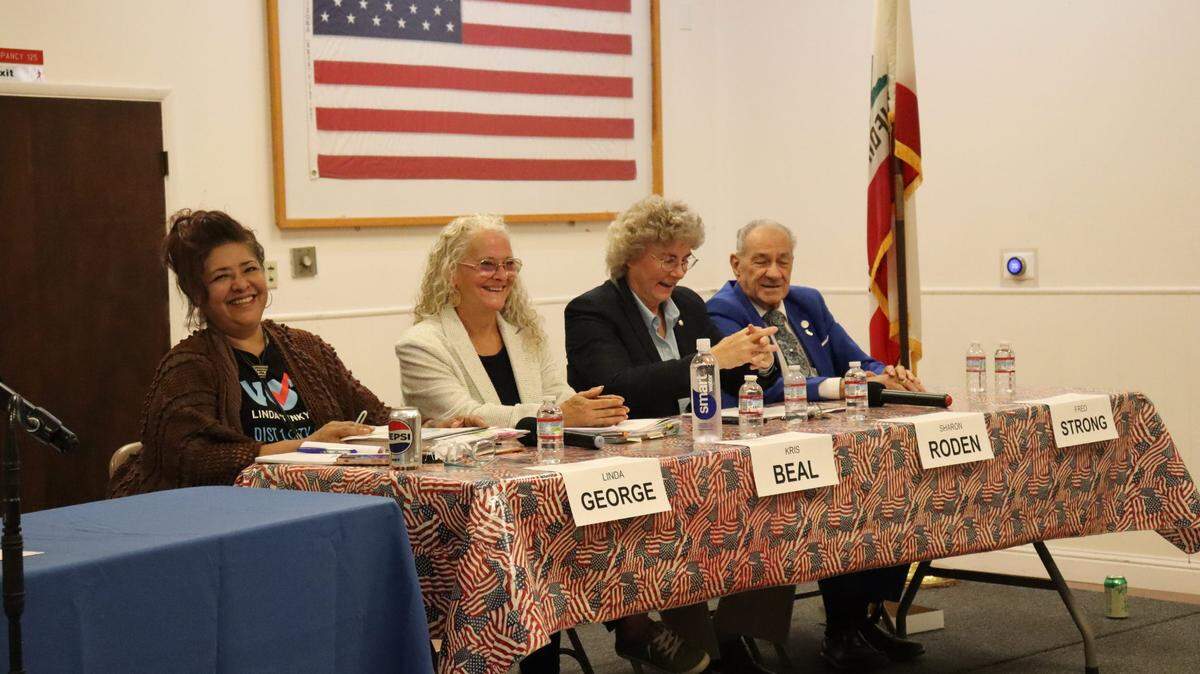
As the Paso Robles City Council race heats up, its seven candidates participated in a forum Thursday night to discuss everything from tourism to homelessness to infrastructure.
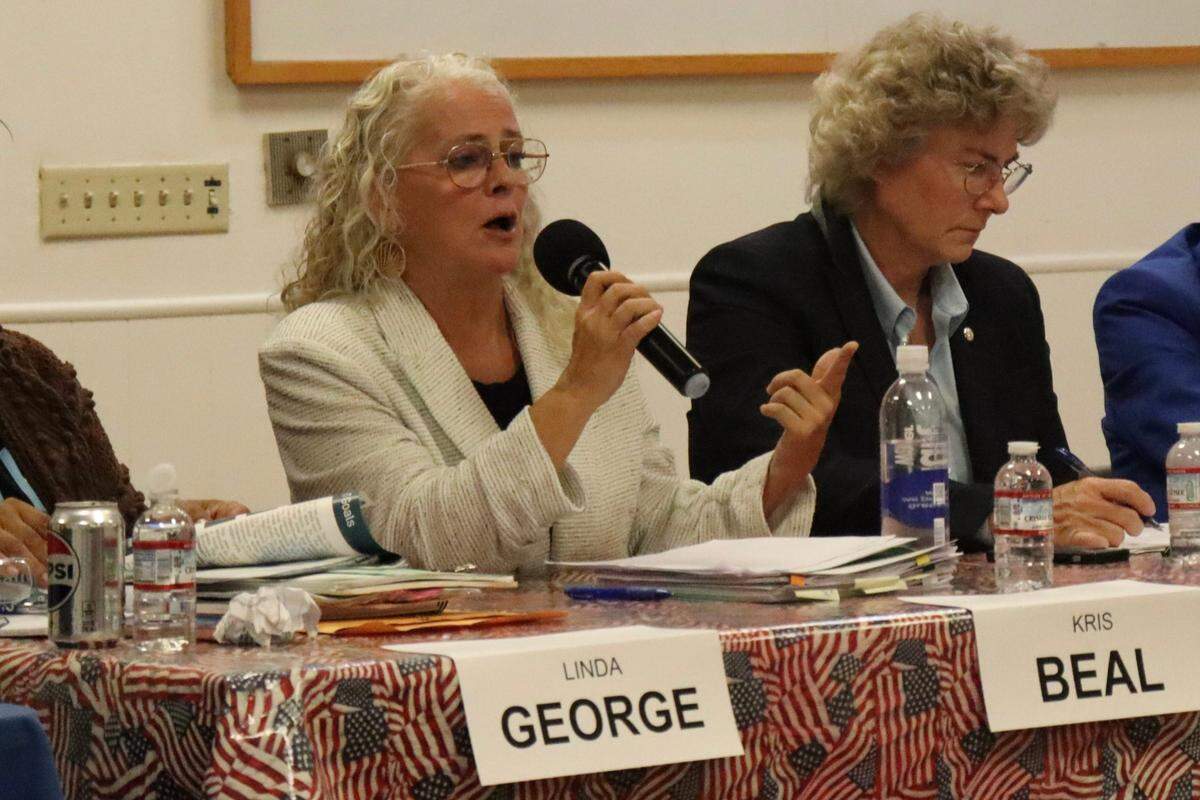
Attendees packed into a conference room at the Paso Robles Elk Lodge, gathering together to meet the City Council candidates, ask questions and learn more about their platforms.
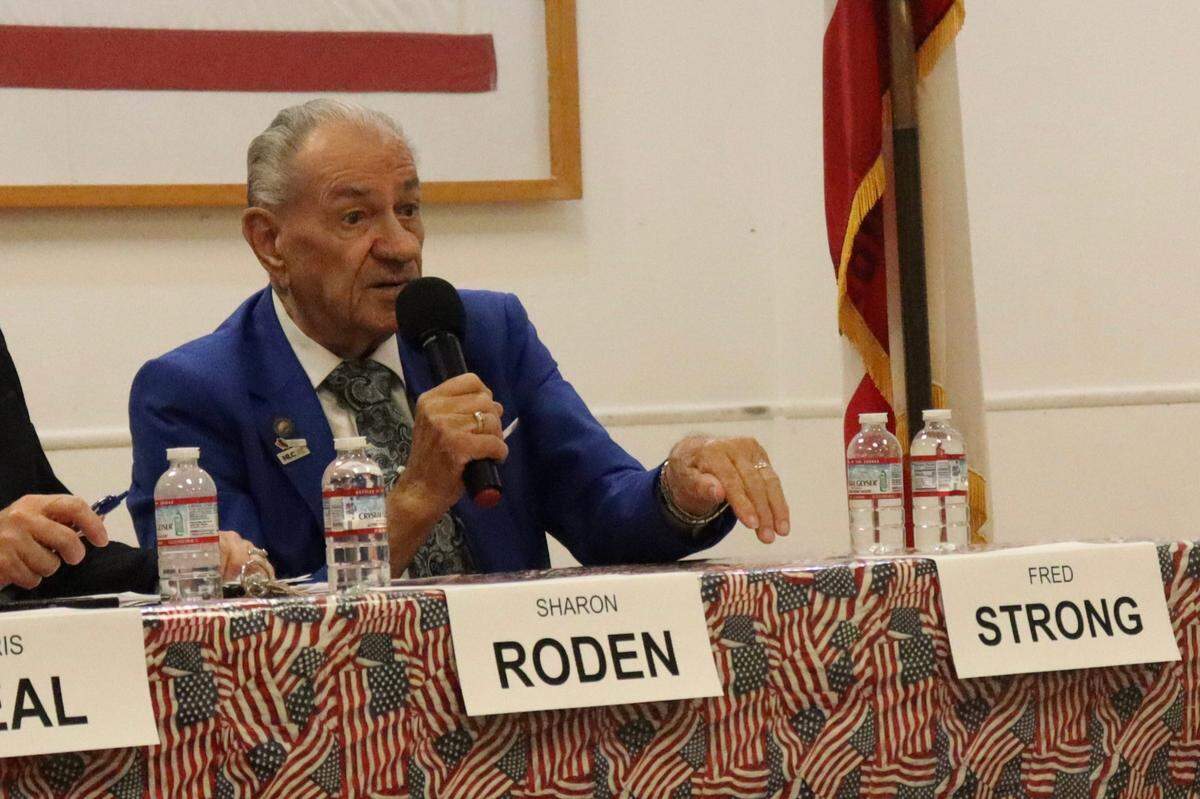
The forum was held in two rounds asking the same set of questions, with the District 1 candidates — Kris Beal, Linda George and Sharon Roden — answering first alongside the unopposed District 4 candidate Fred Strong.
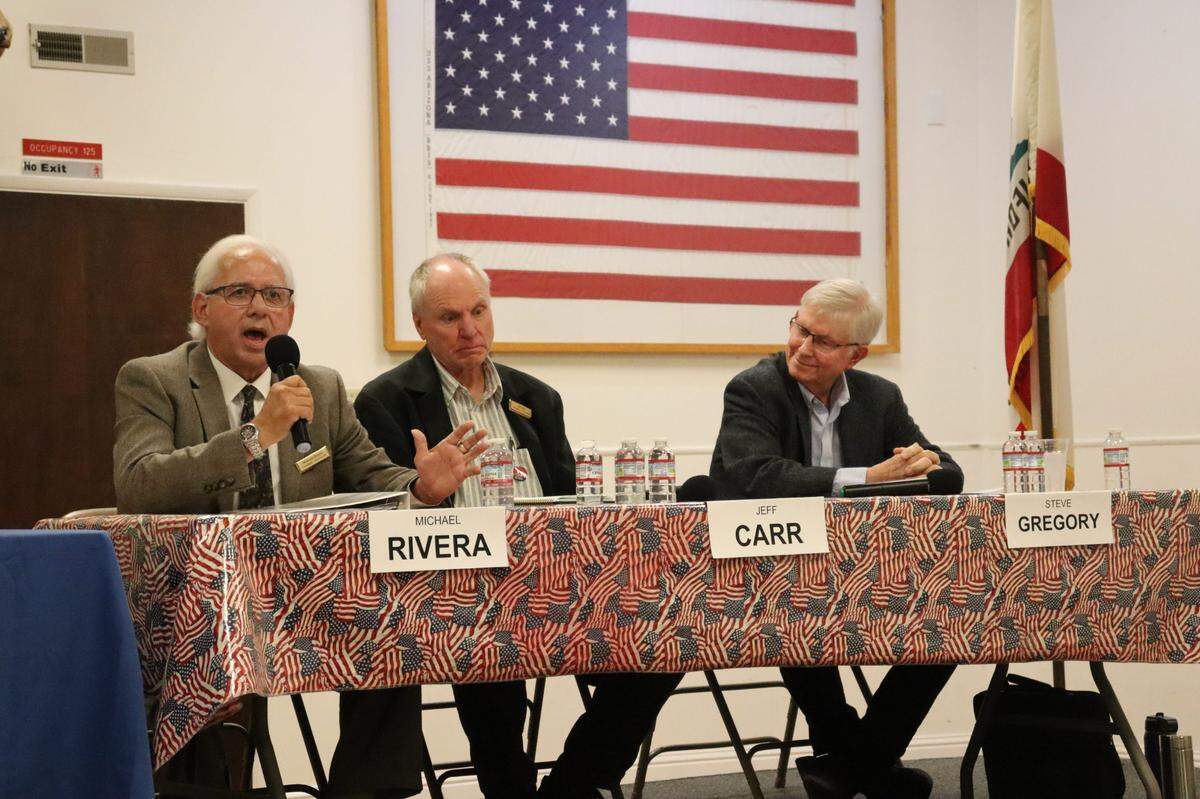
District 3 candidates Jeff Carr, Steve Gregory and Michael Rivera responded in the second round.
The event, hosted by the Paso Robles and Templeton Chamber of Commerce, was live streamed on YouTube for those who could not attend in person.
Overall, the candidates agreed on many of the key policy challenges facing Paso Robles, such as infrastructure improvements, affordable and workforce housing, addressing the needs of the younger population and supporting local businesses.
But they diverged on how best to approach issues like homelessness and specific policy proposals. Meanwhile, some candidates came out stronger than others against issues like short-term vacation rentals and the I-24 tax measure.
Here are four important takeaways from the Paso Robles City Council candidate forum.
District 3 candidates split over ballot measure I-24
The District 1 candidates and Strong all supported the I-24 ballot measure — which would continue and remove the sunset clause on the city’s half-cent sales tax that raises money for road and infrastructure repairs — but the District 3 candidates were not in total consensus.
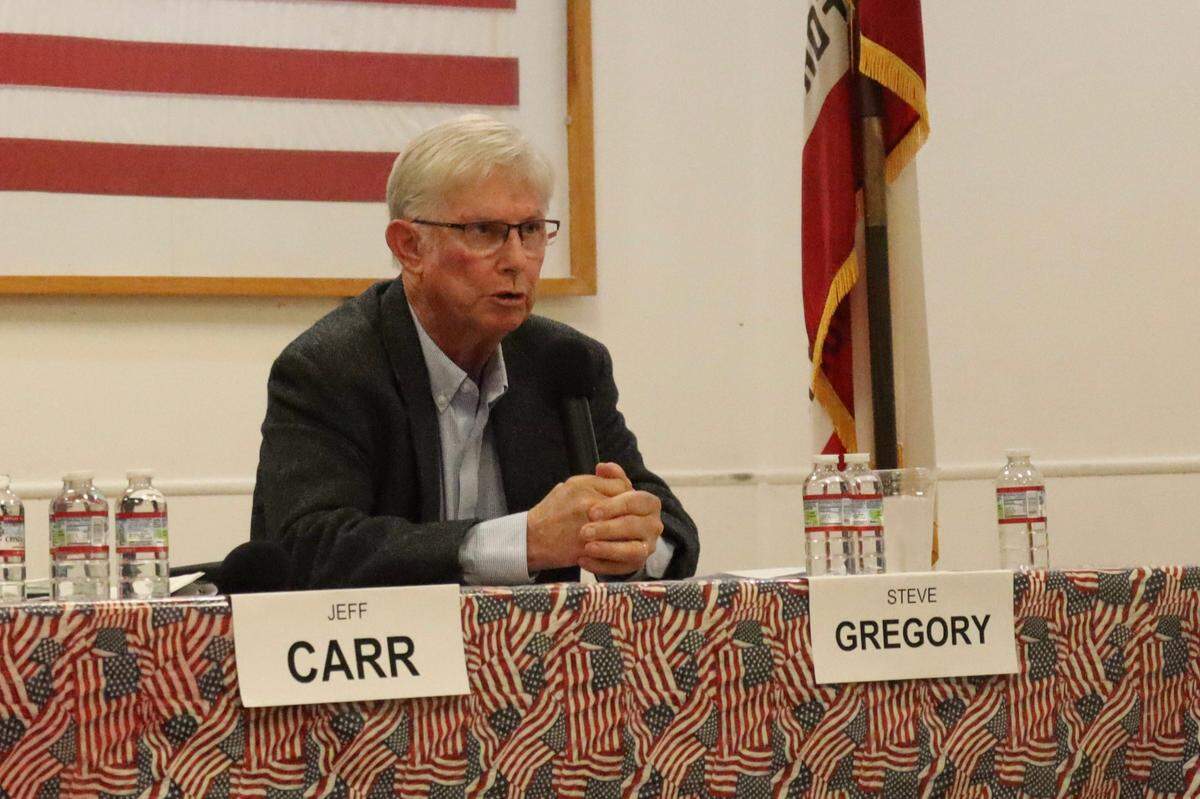
While Gregory fully supported I-24 as a replacement for the E-12 tax, Carr expressed “mixed feelings” about the measure.
He cited the city’s lack of a clear plan for the use of the tax revenues to fix roads.
“The city has presented this in a way that has just put me between a rock and a hard place,” Carr said. “You know, the city needs the revenue, but here they’ve put up something with no plan really ... There’s no guarantee that your road is going to get fixed any faster than it hasn’t been for the last, you know, 20 years.”
He also listed the lack of a sunset clause in his criticisms.
“Even if they had a 25-year plan for the road, put a 25-year sunset on it,” he said. “Don’t just have this forever tax.”
Rivera said he would support I-24 if the revenue was guaranteed to go “100% to roads” but that is not the case given how the measure is currently written. He also brought up the city’s critical debt that could be worsened by the measure.
“We’re $124 million in debt,” he said. “The word has been that we want to leverage these dollars from I-24 to float another $50 or $60 million loan that would put us $180 million in debt ... That’s a bad idea.”
All candidates concerned about economic challenges for younger population
All the candidates touched on the importance of serving Paso Robles’ younger working population in one way or another throughout the forum.
In District 3, Carr identified jobs and housing as the “biggest problems” for the under-50 population.
Similarly, Gregory highlighted the importance of “higher paying jobs” and “affordable housing” for the young workforce and Rivera emphasized the need to create “upwardly mobile employment opportunities” in fields like tech for young people.
Candidates were also in consensus on the need for more workforce housing in Paso Robles, but District 1 candidates George and Beal more heavily emphasized the role that the city needs to play in creating affordable housing options.
“I think that we just need to start looking outside the box and see all the developments that are available, and stop building these hotels and just build places for the residents,” George said.
She specifically focused on employer provided housing for agriculture workers.
“I’m under the persuasion that if you’re going to own a farm ... that you should be providing your workers housing,” George said.
Meanwhile, Strong emphasized that providing workforce housing is primarily the responsibility of the private sector, not the City Council.
Beal made clear her platform is focused on setting up a strong foundation for the younger generations of Paso Robles.
“My concern is that the under 50 age group, who are our hardworking families, the next generation, they are our children and our grandchildren, I really want to make sure that their interests are being represented on the council,” Beal said. “I’m specifically running on housing, job diversity and places and spaces for our youth.”
She suggested reconvening the housing element committee to review and update Paso’s housing portfolio and zoning laws.
“I really think that this is a time that we’re intentional and thoughtful about the kind of community that we want to have in 5, 10, 20 years, right?” Beal said. “If our community is so inaccessible to our families, they won’t be able to stay.”
District 1 candidates split over how to address homelessness
While all agreed it was a pressing concern, Paso Robles’ District 1 candidates diverged on their approaches to tackling the issue of homelessness in the community.
Roden and George in particular held differing opinions over the recent Supreme Court ruling on Grants Pass, which found that city ordinances against camping on public property were constitutional and gives power to the cities to remove encampments.
Roden expressed excitement over the decision to overthrow Grants Pass and supported a ballot referendum that allows for an increased use of law enforcement against homeless individuals.
“Those things are important,” she said. “Those things give the police the ability to do something. Their hands have been tied for a while.”
George, on the other hand, was “not excited about the Grants Pass” decision.
While she thought that it was “inhumane to let people lay around and do drugs in our riverbed,” she also did not believe in clearing encampments with force.
“I don’t believe in policing our homeless,” she said. “That is not humane either.”
George emphasized the need to address the visible issues of drug use and mental illness within the homeless population, suggesting a focus on “harm reduction” approaches would be misguided.
“I don’t think we should be encouraging drug use,” she said.
In contrast, Beal focused more on housing first, highlighting that 60% of the unsheltered individuals in Paso Robles are simply lacking access to affordable housing, rather than grappling with addiction or mental health challenges.
“We could certainly hope the county gets more funds so that we get more than a handful of beds that could treat addiction and mental health issues,” she said. “There’s a 200-person waiting list for Echo. So really, we could be looking at that, looking at the accessibility of housing as a whole.”
Candidates do not support short-term tourism rentals
Another hot button topic at Thursday’s forum was how the increase in tourism via short-term vacation rentals may impact Paso Robles economy and small-town character.
George came out strongly against City Council members owning short-term rentals, drawing a hard line policy that she would plan to implement as a councilor.
“When I get on the council, the first thing I want to say is that if you are actively on the council, you need to relinquish your permit,” she said. “You cannot be making money on your short term rentals, I’m sorry, as you’re making decisions.”
She also criticized past councils for having members with active short-term vacation rentals vote on issues pertaining to tourism.
Rivera also criticized the proliferation of non-owner-occupied vacation rentals and called for a reevaluation of the city’s policies.
“I don’t think the way we’re going now does anything to enhance the viability of community, of our beautiful city,” he said. “It’s tearing the heart out of our community, our soul. We’ve got to stop.”
Gregory echoed Rivera and proposed eliminating residential zoning for vacation rentals, suggesting they should be not concentrated downtown instead of in neighborhoods.
Carr also acknowledged the negative impact short-term rentals have had on the character of the city, noting the “conflict” and “problems with quality of life” that have resulted from short-term rentals expanding into residential zones.
Roden agreed and also emphasized the importance of economic diversity.
“Tourism has become our bread and butter around here, and like anything, you can’t ever rely on one particular thing, or you’re going to hurt at one particular time,” she said.