Morro Bay has a tax measure on the ballot. What would it do for the city and its harbor?
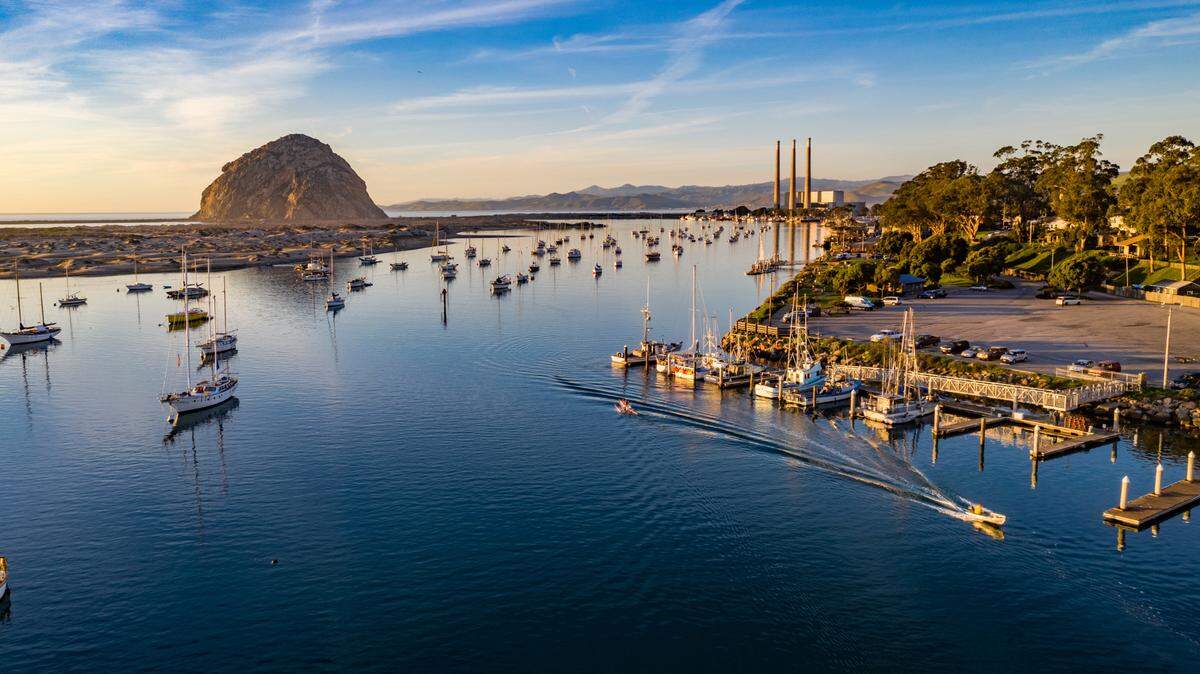
Morro Bay is famous for its waterfront, with tourists strolling down the Embarcadero and fishermen hauling rockfish and halibut onto their boats.
The city, however, doesn’t have enough money to fund maintenance of its docks, seawalls and other harbor infrastructure, city manager Scott Collins said.
So it’s asking for help from Morro Bay voters.
Measure B-22 creates a new tax for Morro Bay and will appear on ballots for the November election.
Some say it’s the solution to the city’s funding gap, while others urge the city to use existing funding sources for the harbor.
Here’s everything you need to know about the proposed tax.
What is Measure B-22?
Measure B-22 would levy a flat $120 tax on all taxable properties in Morro Bay, and the money would be used to fund improvements to the harbor infrastructure — including docks, piers, public restrooms on the waterfront, seawalls and the boat launch, according to the county’s voter guide.
The harbor fund is currently financed by rent from boat slips, piers and waterfront leases, along with about $400,000 this year from sales tax revenue, Collins said, but these funding sources fall short of the waterfront’s needs.
Morro Bay can only afford to spend about $150,000 to $250,000 a year on the harbor, when the infrastructure really needs about $800,000 to $1 million a year in maintenance, Collins said.
The tax would collect about $680,000 a year, helping to close that gap, Collins said.
More than 50% of Morro Bay voters must vote in favor of the measure in order for it to pass, the voter guide said. It would activate during the 2023-24 tax year, and be adjusted each year for inflation starting during the 2025-2026 tax year.
The tax revenue would be deposited into a special fund to be used only for harbor infrastructure maintenance.
Each year, the City Council will appoint an oversight committee to ensure the money is spent properly, and the city will complete an annual report on the use of the funds, the voter guide said.
The focus of funding has been “to keep the lights on” rather than make improvements, Collins wrote in an email to The Tribune.
Ron Reisner, a marine surveyor and member of the Committee for Morro Bay Harbor Parcel Tax Measure B-22, said it’s critical for the city to maintain waterfront infrastructure to attract tourists.
Shops, restaurants and hotels on the waterfront “are the heart and soul of the economic engine of Morro Bay, because that’s where all the sales tax comes from,” Reisner said.
“If you’re going to have a working waterfront, then the waterfront has to be sound and safe,” Reisner said. “To my mind this is a simple choice, inevitable degradation or planned sustainability.”
Some Morro Bay residents, however, are not convinced that the city needs another funding source for the harbor. Citizens for Affordable Living member Dan Sedly is one of those residents.
Sedly said “the city has not proven their case” about needing more funding, and he advised the city to hire a third party to evaluate what infrastructure must be fixed on the waterfront and how much it would cost. Then, the city should prove that it can’t cover those expenses with its current budget.
“Our city government is not paying attention. It’s not spending money responsibly,” Sedly said. “I would like to see that there’s truly a deficit and that they are spending their money wisely.”
Who should pay for infrastructure improvements?
Sedly, who opposes the tax, said waterfront maintenance should be funded by tourists, who spend the most time there enjoying the restaurants, shops and hotels, and boat owners, who use the harbor.
He proposed a 1% sales tax increase on all businesses on the Embarcadero and said the city could use that money for the harbor.
Reisner, however, doesn’t think sales tax revenue would generate enough money for the waterfront.
He noted that sales tax revenue is funneled into the city’s general fund, which is used to finance police, fire, roads and other city expenses — so it would not contain enough money for the harbor, he said.
Reisner thinks that all Morro Bay property owners should pay for the infrastructure, as suggested by Measure B-22, because they are the people who “have the most invested” in the harbor.
“Property values in Morro Bay are enhanced by the mere presence of the harbor and the bay and the waterfront,” Reisner said. “If none of that existed, where do you think your property values would be? The answer is less.”
Reisner noted that tourists also pay a significant amount of money in sales tax, helping to fund the city’s police services, fire services and roads — all a benefit to permanent residents.
Sedly disagreed. He said other SLO County coastal towns like Cayucos and Pismo Beach have high property values without the harbor.
“Yes, the harbor is what makes Morro Bay unique,” Sedly said. “But any coastal town that has direct proximity to the ocean is going to have high property values.”
With inflation increasing the price of groceries, gas, rent and even utilities, Sedly said he’s concerned about a $120 tax causing financial strain for locals.
“It’s a combined sabotage on people’s checkbooks,” Sedly said, adding that “$120 is make or break” for folks on fixed incomes, members of the working class and families with children.
Sedly suggested that the city pursue grants to fund the harbor infrastructure maintenance.
Reisner agreed that the city should pursue grants for harbor maintenance — but alongside the tax, not instead of the tax.
In order to pursue state and federal grants, the city typically must contribute money to a project, too. For example, grant applications often require applicants to submit a design for the project, which requires funding.
“It’s like the down payment on a house,” Reisner said. “The bank wants you invested in it.”
As a result, revenue from the tax would open up more opportunities for grants, Reisner said.
Should the tax have an end date?
As proposed, the tax does not have an expiration date and will be adjusted for inflation annually starting during the 2025-26 tax year.
Sedly suggested that the tax have an end date two to five years after its enacted, so that the city stays conscious of the ways it’s spending its money.
Reisner, however, doesn’t think the measure should include an expiration date, as the infrastructure will need maintenance indefinitely.
“The marine environment is harsh,” Reisner said. “Sea water and salt in the air, it’s chipping away on that infrastructure every day, all day, indefinitely.”
Voters also can propose a ballot measure in the future to repeal the tax, Reisner said, though Sedly thinks its unlikely someone would pursue that path.
The county mailed ballots to voters on Oct. 10, and folks have until Election Day on Nov. 8 to return those ballots by mail, at drop boxes located across the county or at the polls.