Where do State Assembly candidates stand on childcare, housing and Diablo Canyon?

Where do California State Assembly candidates stand on housing, water and other key issues?
On Tuesday, the San Luis Obispo Chamber of Commerce hosted a roundtable discussion with candidates running for the state Assembly’s newly restructured 30th District, which now includes parts of Monterey, San Luis Obispo and Santa Cruz counties.
Three of five candidates attended Tuesday’s forum. Each candidate addressed a total of three tables of voters, answering their questions for about 16 minutes per table.
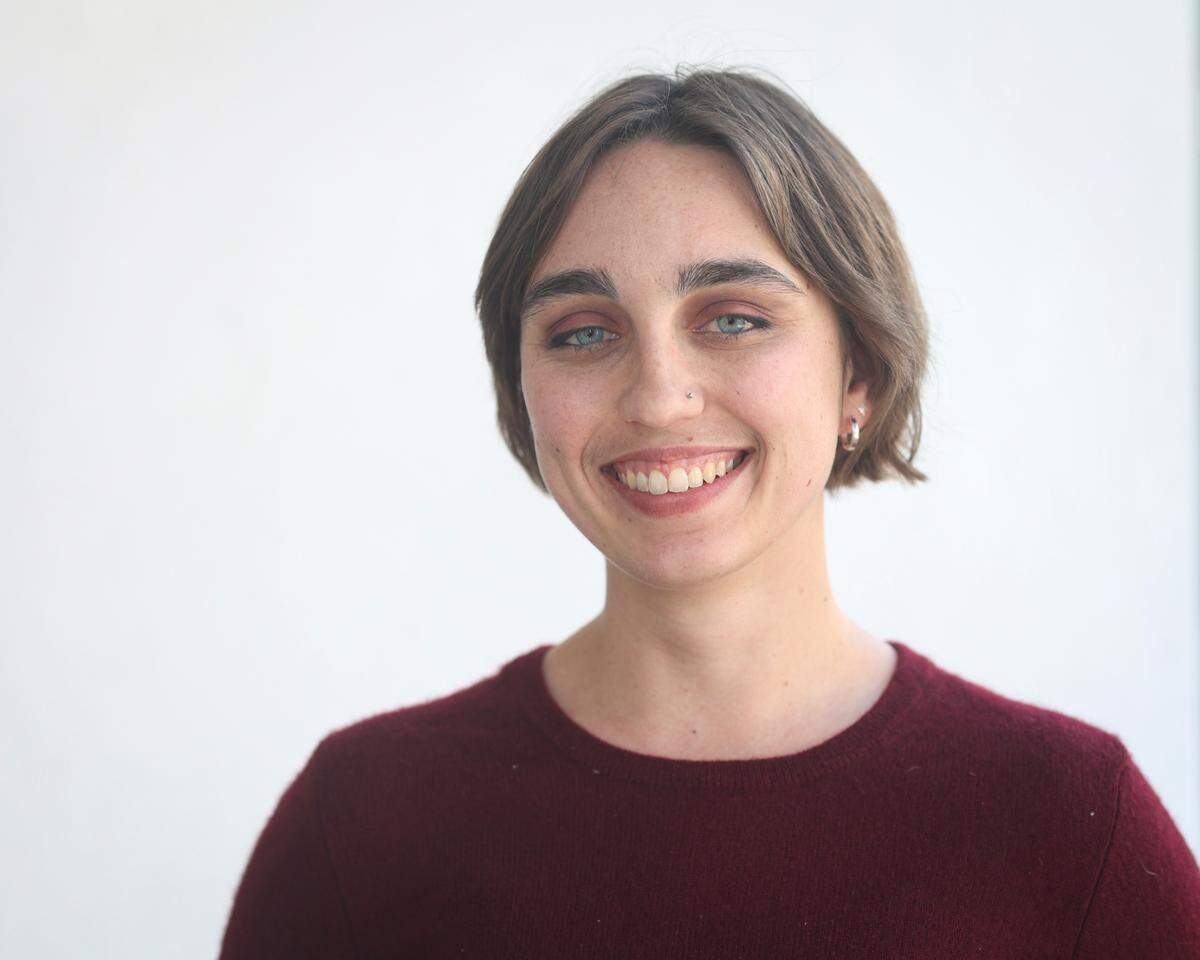
Dawn Addis, a Morro Bay City Council member and co-founder of Women’s March San Luis Obispo, ran for state Assembly in 2020 and is running again to represent the new district.
Also on the ballot are Zoë G. Carter, the director of operations at the Monterey County Business Council; John Drake, a Cal Poly student who recently ran in the 2021 gubernatorial recall election; Vicki Nohrden, who ran for California State Senate in 2020, and Jon Wizard, a retired firefighter and police officer who now serves on the Seaside City Council.
Drake and Nohrden did not attend the debate.
Here’s what the candidates had to say about childcare, nuclear power and more.
State Assembly candidates support childcare funding
Securing affordable childcare is not just a “mom issue,” Addis said, it’s an infrastructure issue and a priority on her agenda.
Addis remembers scrambling to find childcare when she moved to San Luis Obispo in 2001, and prices have only increased since then, she said.
She said that federal funding for childcare is important, but is often directed to counties. She wants to see more federal dollars directed to cities, as they’re better connected with their communities’ needs, she said.
Parents often want their neighbors to watch their children, so at-home neighborhood daycare centers are popular on the central coast, Addis said. She wants to direct funding to those small businesses, she said.
Wizard agreed that finding funding for childcare is important. He noted that the child tax credit was successful — reducing child hunger by about half.
“Investments in children always pay dividends,” Wizard said. “We can’t expect to have a thriving, prosperous future if our kids grow up hungry.”
Wizard would explore a variety of ways to support childcare in District 30. He said the state could offer tax credits for childcare, exempt parts of a parent’s paycheck from taxes, or offer a tax refund to businesses that fund child care for their employees.
The state could also partner with the federal government to offer childcare subsidies, Wizard said, adding that it’s critical to ensure that childcare providers are receiving financial support, too.
Monterey County is working on adding a property tax to fund childcare initiatives for working families, which Carter said she supports.
Carter also said that District 30 doesn’t have enough childcare providers, and it’s critical to ensure that “they’re being paid enough to support themselves in high cost communities like here.”
Candidates call for expanding housing in District 30
Housing is a priority for Addis, who worked with the Morro Bay City Council and Housing Authority of San Luis Obispo to make progress on a new affordable housing project.
At the state level, she would prioritize working with local leaders to build housing policies that work for the Central Coast, she said.
“The community up and down Assembly District 30 has really neat communities — lots of small towns,” Addis said. “We need to give cities more tools to get the right kind of housing done for each community.”
Like Addis, Carter said communities should decide how their housing is built.
Carter noted that various state laws tell cities how to develop their land — from requiring a higher density of homes to making rules for accessory dwelling units, or, ADUs, she said. She wants to see less of these mandates.
“The state coming down with a one-size-fits-all does not work,” Carter said. “We can’t say that the same things that work in San Francisco are the same things that work in San Luis Obispo.”
She said she’d focus on policies that expand housing affordable to the workforce.
Broadband internet access is also important to Carter, who sits on the Central Coast Broadband Consortium. They’re working on providing broadband to the southern part of Salinas Valley.
Unlike Addis and Carter, Wizard supports state housing regulations. Wizard said the state has to focus on two types of housing: “affordable hosing and housing that is affordable.”
Wizard considers affordable housing to be subsidized housing, such as the Housing Choice Voucher Program. State policies that require developers to include a certain number of units for lower-income residents with their projects support affordable housing, he said.
Increasing the number of homes that people earning a median income can pay for can be accomplished by building smaller homes closer together, Wizard said.
Strict local zoning can prevent some of these solutions, he said.
“We have a ton of tools already,” Wizard said. “But we aren’t able to leverage each tool in each community.”
He’s in favor of state density bonus laws that allow developers to override local zoning, allowing them to build more units if they include more affordable housing units.
What should be the future of Diablo Canyon nuclear power plant?
Wizard supports building a floating wind energy farm off the coast of Morro Bay, but said it’s “wishful thinking” that the facility will be up and running when Diablo Canyon nuclear power plant shuts down in 2024 and 2025.
He said he would rather focus on supporting workers who are displaced when the nuclear power plant closes.
In 2018, Gov. Jerry Brown signed a bill to give San Luis Obispo County $85 million to help it through the plant’s closure.
Due to inflation, that money has lost some of its value, Wizard said, adding the county will need more funding to support displaced workers because there are no replacement jobs for them in the area.
“We need to help them or we need to pause the closure,” Wizard said.
Carter said Diablo Canyon’s closure is inevitable, so she would focus on re-purposing the space and safely shutting down the nuclear reactors.
Addis agreed that the power plant will inevitably close, and she’s focused on finding energy sources to replace it.
She supports the production of offshore wind energy in the Morro Bay call area.
“It’ll be super important as California tries to meet those clean energy goals,” she said.
How can SLO County secure water supply?
Water management is critical to supporting growth in housing and the economy on the Central Coast, Wizard said.
“We can talk till we’re blue in the face about economic development and new jobs and attracting new businesses,” he said. “But if we don’t have the water to start the business or build the home, the conversation is over before it began.”
Newsom proposed $750 billion in drought mitigation in his recent budget — which is not that much money when inflation and population size are considered, Wizard said.
Wizard acknowledged that state and federal funding is critical to local water projects such as Central Coast Blue, which focuses on recycling water.
Addis agreed that state funding is key to supporting local water projects, noting that state dollars were helpful to Morro Bay’s multi-million dollar water reclamation project. If elected to the State Assembly, she said she’ll work to funnel state funding to the county for more water projects.
In order to build more housing, California needs a “water solution,” Carter said, as new homes need to have an adequate water supply.
California should look into alternative water sources, such as recycling water, capturing storm water and desalination, she said.
A California exodus?
The 2020 U.S. Census showed population decline in California, and the state lost a congressional district.
Addis said the No. 1 reason people offer for leaving California is the high cost of living. That’s something the Democratic supermajority in the state legislature should pay more attention to, she said.
Addis is also concerned about declining enrollment in schools, which means a decline in funding.
Carter said people leave the state for a variety of reasons, including taxes. She said she often hears about businesses struggling with “red tape,” such as a long permitting process to start a business.
Prioritizing SLO County in the Legislature
San Luis Obispo County used to be entirely in District 35, represented by Templeton resident Jordan Cunningham.
Now, SLO County is split between District 19 and District 30; the latter includes portions of Monterey and Santa Cruz counties.
Attendees asked the District 30 candidates how they would support San Luis Obispo County while in office.
Carter and Wizard, who live in Monterey and Seaside, respectively, said they plan to set up offices in San Luis Obispo County while attending local meetings and events to stay in the loop.
As a San Luis Obispo County local, Addis said she’ll always keep county interests in mind.
She noted that Cunningham faced challenges as a Republican in the state Legislature, where Democrats hold the supermajority.
Addis said new relationships will open up to her in the Legislature as a Democrat, where she’ll take a “SLO County moderate” position — socially progressive but more fiscally conservative.
“If we elect a local in the majority,” Addis said, “We can get so much more done.”
This story was originally published April 27, 2022 at 10:47 AM.