
4 newcomers are running for a seat on SLO’s City Council. Here’s how they compare
The San Luis Obispo City Council race is in full swing with forums, campaigns and disagreement on key issues as a packed field of eight candidates compete for two open seats.
The newcomers — who represent a group of fresh voices in the city government conversation running for city office for the first time — include Abrianna Torres, Kelly Evans, Robin Wolf and Erik Long.
Through questionnaires and interviews conducted by The Tribune, they have weighed in on key issues from the racial justice protests that have rocked the city in recent months, to the housing and economic challenges facing the city.
The four will take on a seasoned group of city government veterans, including incumbent Andy Pease, former Mayor Jan Marx and former Cultural Heritage Committee chair James Papp.
Jeffery Specht, who has never been elected to city office, is a third-time council candidate and frequent council critic in public comment at meetings.
The election, which is separate from the mayor’s race, will fill the seats now occupied by Pease and Aaron Gomez, who is not running for re-election.
Here’s a look where the first-time candidates stand on some of the city’s key issues:
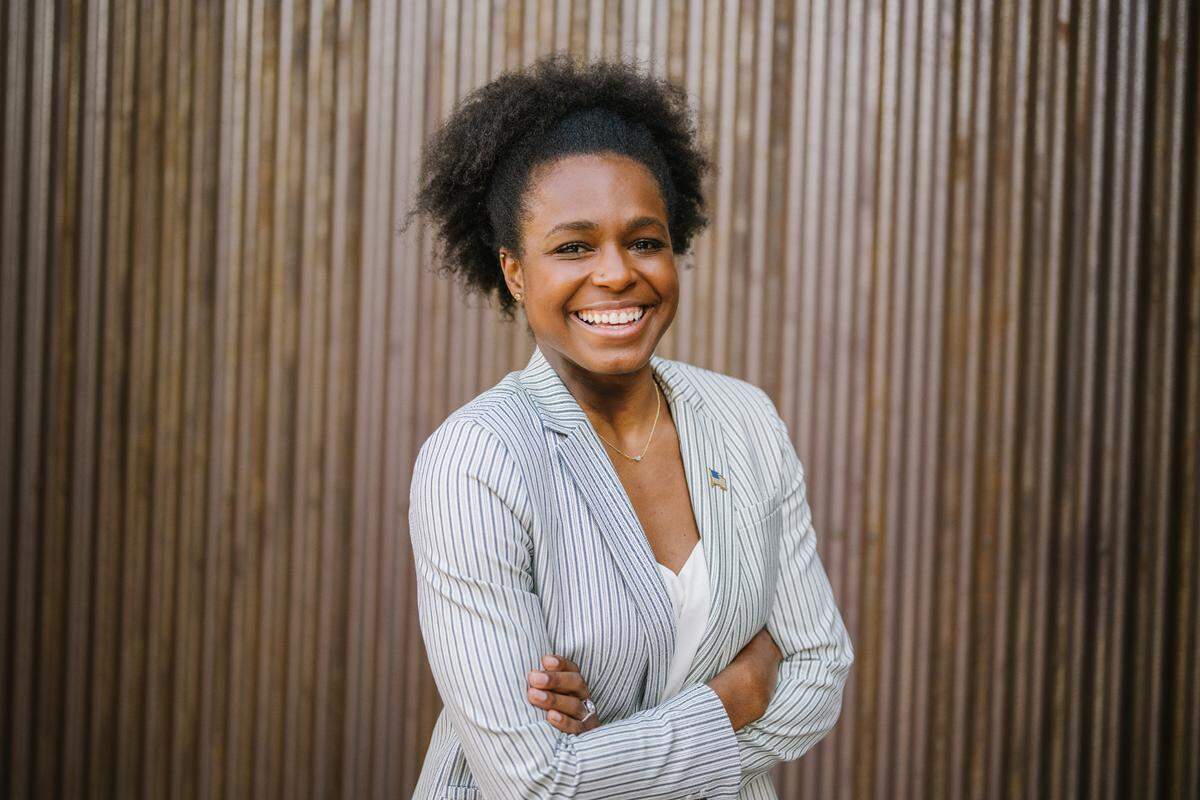
Abrianna Torres
Torres is a defender of local law enforcement and supports lowering city fees for small businesses and working people, to help create new jobs that can pay for the high cost of living in SLO. She opposes the city’s proposed 1-cent sales tax increase.
“Propositions such as the tax increase will only drive up the cost of living and continue to drive our residents out,” Torres said.
The 27-year-old previously worked as a SLO County Jail correctional officer before becoming a small-business consultant with the national company Paychex.
Torres, whose father is also a SLO County sheriff’s correctional deputy, recently posted on Instagram: “Defend the Police. Defund the media. Stand up for justice for all.”
“I know the backlash that comes with standing up for law enforcement today,” Torres wrote. “I often tell myself to stay quiet because I don’t want others to feel uncomfortable. Well, it’s time to get uncomfortable.”
Torres, who’s Black, said she faced intolerance growing up in SLO, including an incident in junior high when a substitute teacher made a racist remark. But Torres attributes those situations to individuals, not the community at large.
During the summer protests against racial injustice in San Luis Obispo, Torres found herself in an informal role of mediator to assist a local business owner who faced criticism from protesters on social media because her business boarded up windows.
“I felt like (the activists) had a lot to say, but they weren’t willing to reciprocate that listening,” Torres said.
During the meeting, Torres said she was told by protesters that she’s “not Black because she’s from San Luis Obispo, and being Black is a culture and not a skin color.” Torres said that was “infuriating because clearly I’m Black.”
Torres identified community health and public safety as top priorities. She told The Tribune she firmly opposes police abuses but said protesters don’t always reflect a message that aligns with the entire Black community.
Torres supports re-examining all existing housing fees and regulations to reduce “burdensome overregulations” and unnecessary costs to developers, “thereby increasing sots to renters and homebuyers.”
“You’re always going to find a bad person in different industries,” Torres said. “That doesn’t just apply to police. It applies to all occupations. And that’s not an excuse at all. We need to continue to build transparency and accountability in law enforcement. However, I’m confident in our local law enforcement agencies and in the work that they do.”
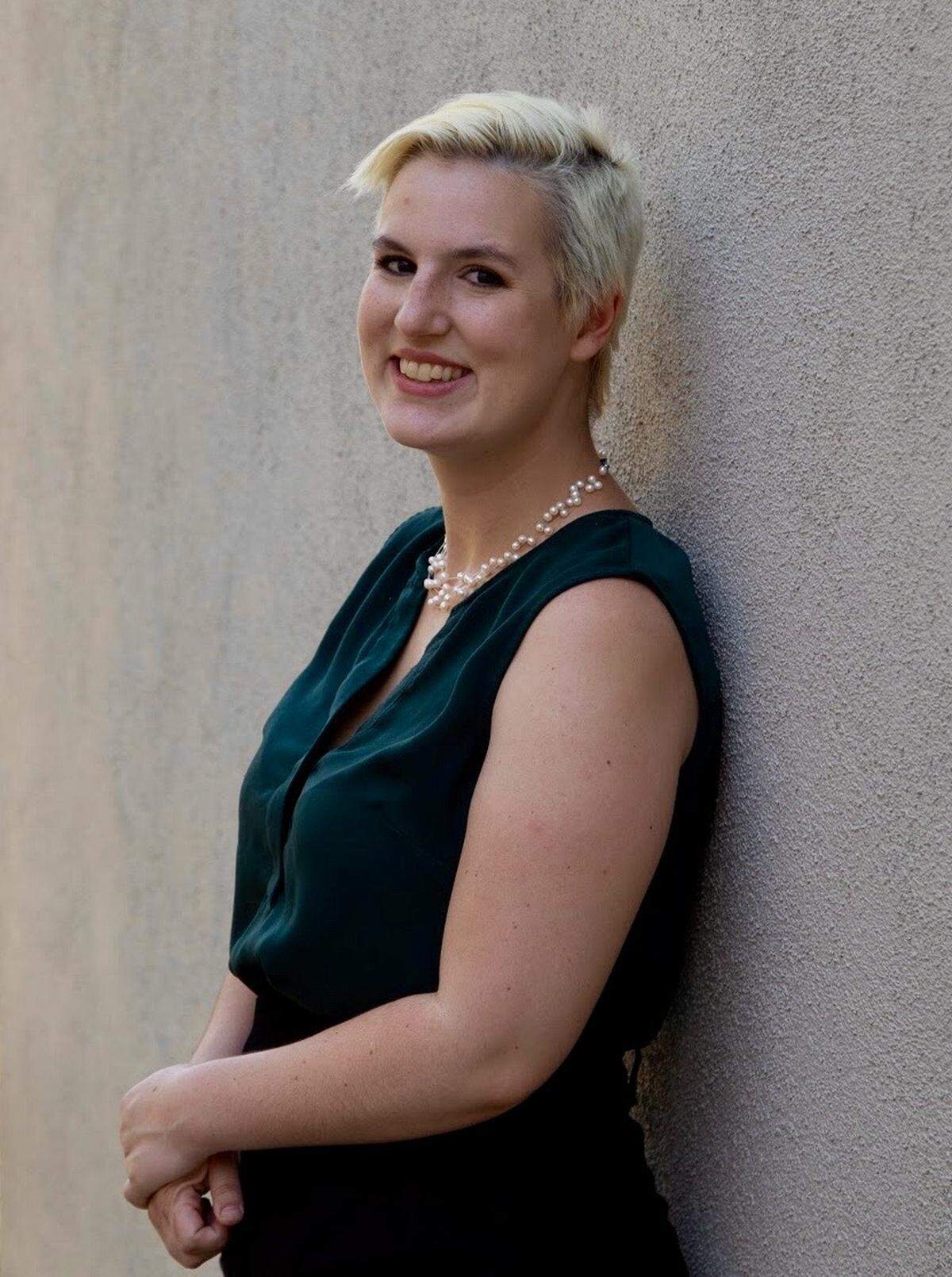
Kelly Evans
Evans is an event coordinator who supports more downtown housing and higher density to mitigate overcrowding.
Evans, 23, has described herself as an “anti-racism, pro-housing candidate” who will advocate for poor and working people, as well as racial and social justice.
She believes in higher density housing, tall buildings and mixed commercial and residential zoning, particularly in the downtown, along with increased bike and bus use that she believes can cut the number of cars on the road in half.
“As it stands, with the amount of single-family zoning throughout SLO, rent costs are so high that overcrowding is unavoidable,” Evans said. “Increasing the number of units and decreasing size so that tenants can live alone or in partnerships opens up single-family housing to families. It puts tenants in homes close to where they work, driving commute times down and ideally getting some cars off the road entirely.”
Evans said she supports the city’s 1-cent sales tax increase proposal to help boost the revenue stream, overhauling systemic policing practices (including by developing new training standards) and overturning the car-camping ban for homeless people and providing additional support for the nonprofits feeding the homeless in the community.
She believes the pilot parklet program should be a permanent improvement to help small businesses.
“We must divest from violent, aggressive training and tactics, and refocus our efforts on the root of crime — most often poverty,” Evans said.
Evans is critical of the June 1 and July 21 protests in SLO, saying the police response was unfair and the answers provided by SLO Police Chief Deanna Cantrell on the use of tear gas were unacceptable. She said a multi-ethnic center and classes would be a good addition to help improve city diversity and inclusion.
“Discomfort is where growth happens,” Evans said. “If Tianna Arata is going to be charged, then everyone else on the freeway should be charged. ... And to use tear gas and bean bags against (protesters) because at the end of the day police were tired, is not acceptable.”
Evans has advocated for rental relief, helping undocumented workers cover costs amid coronavirus, and assisting HelpSLO with volunteer efforts to assist community members struggling with COVID-19 impacts.
“Moving forward, we will continue these programs, update our inclusionary housing ordinance, explore flexible density and support housing within the 1% growth cap of the General Plan,” Evans said.

Robin Wolf
A 40-year-old bar manager at The Hatch in Paso Robles, and owner of SLO Bitter Co. small-batch cocktails, Robin Wolf said she personally understands the struggles of renting, having done so in SLO since 1999.
Wolf, who describes herself as a “solution-based, practical progressive” candidate, said that economic recovery and vitality is “the most important issue,” along with community health to prevent the spread of coronavirus.
“Everything else falls under that right now,” said Wolf. “As a business owner and hospitality manager, I know firsthand the challenges small businesses are facing. We need to let go of holding on and change and adapt.”
Wolf said her ideas for improvements include sharing information about what business have to offer and how locals can support them (above and beyond city efforts to do so already), continuing to support and enhance the city’s parklet program, encouraging business in smaller spaces and virtual platforms, and wearing masks to prevent COVID-19 spread.
“Parklets are a great start, especially in our industry,” Wolf said of bars and restaurants.
Wolf supports the city’s sales tax increase proposal and wants to fund programs that enhance infrastructure, environmental protection and community support for vulnerable residents, noting that visitors will cover 70% of those costs.
She favors growing development up, not out, to protect against urban sprawl, and would address homelessness by working hand in hand with nonprofits and assistance organizations.
“I am not anti-tall building,” Wolf said. “I see growing up instead of out as a way to protect open space. ... Downtown is the anchor to spend a lot of energy on. I think we need to look to more creative solutions in our housing choices — mixed-use development, smaller houses and live/work opportunities.”
Wolf was firmly against the SLO police decision to use tear gas against protesters during the June 1 march.
“I believe that there is no time where it is appropriate for police to use chemical weapons on the people they commit to protect and serve,” Wolf said. “... And for SLOPD to use tear gas on an entirely peaceful group of citizens exercising their legal right to protest is unconscionable.”
She said the opportunity to select a new chief is “one the city has to seize as an opportunity” to shape best practices moving forward, and uphold transparency and accountability, which is “so key.”
“I think it’s the responsibility of public officials to be engaged and understanding, and to build trust in the community,” Wolf said. “I do not think public officials like the sheriff or district attorney should have clandestine meetings with specific (political groups) that exclude the rest of the community. That breeds mistrust.”
%20-%20Erik%20Long.jpg "040-20-001 (1) - Erik Long.jpg")
Erik Long
A 59-year-old retired educator and administrator, Long didn’t appear at a recent Chamber of Commerce forum nor an editorial board meeting organized by The Tribune.
He mostly referred readers to his website in questions posed to candidates by The Tribune.
He hopes to host a series of talks about the future of the city, covering “homelessness, housing and downtown parking.” Local experts and state leaders would be invited, according to Long’s website.
“It is further hoped that from these summits we will be able to reach common ground for ideas that can be implemented to the benefit and progress of our community as we forge forward into the 21st century,” Long said.
Long lists his employment as a political consultant, a former political science lecturer at Cal Poly and former political science assistant professor at College of the Canyons in Santa Clarita, among other job roles.
Note: A story on the additional four City Council candidates will be published separately from this story.
This story was originally published September 23, 2020 at 5:00 AM.
%20Cropped.jpg)