Supervisors approve new policies on ICE access to SLO County facilities
More than two months after the San Luis Obispo County Board of Supervisors held a special forum where the Sheriff’s Office explained its interactions with federal immigration officers, supervisors reconvened Tuesday to take direct actions — within its limited power — to address ongoing deportation efforts here.
In a 3-2 vote, the board approved a motion to adopt a formal policy requiring a judicial warrant for access to nonpublic areas in county facilities, as well as a policy to prohibit federal commandeering of county property.
Supervisors also allocated $100,000 to support children in immigrant families who have been destabilized by the Trump administration’s mass deportation operations.
In the 10 weeks since the Truth Act Forum, county staff, including executive staff, county counsel, the Sheriff’s Office and other departments, explored the extent that the county can control its non-public spaces and facilities, as well as whether the county can bar ICE from commandeering county property for certain activities.
They also looked into whether the Sheriff’s Office could release more information to the public, and researched whether more health and social services could be directed to families who are impacted by immigration enforcement.
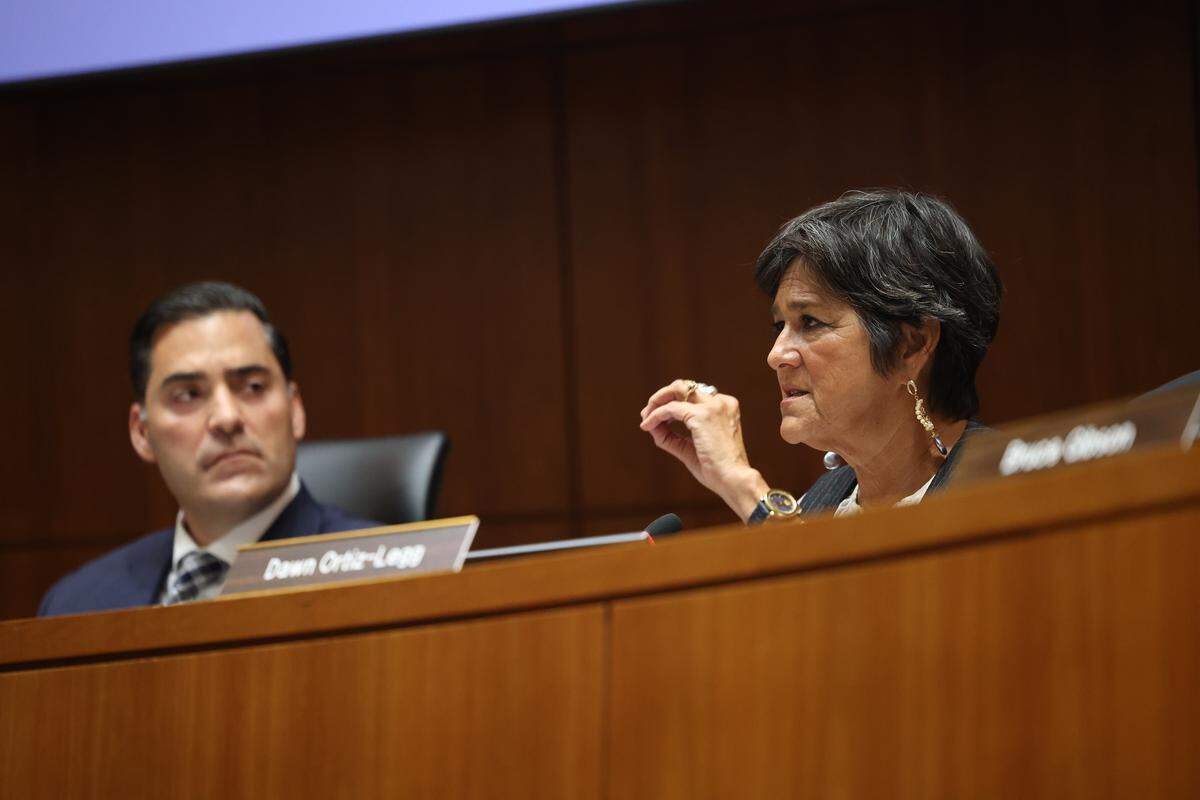
Supervisors Jimmy Paulding and Dawn Ortiz-Legg, who were a part of the ad-hoc immigration task force assigned to dive into these issues, told The Tribune that the Sheriff’s Office had pledged to be more transparent about U.S. Immigration and Customs Enforcement activities at the SLO County Jail.
The agency has now posted a frequently asked questions brochure in English and Spanish on its website and will continue to publish a quarterly online data report that details ICE access to people in jail. The agency will also release an educational video that breaks down its role in the community.
“I think that’s a step in the right direction towards transparency, and that’s something that we’ve heard from the community that people want to see,” Paulding said during the meeting.
However, Cambria Indivisible leader Susan Mackey wanted the county’s efforts to go farther and said a real-time report was necessary to provide better transparency to the public.
Though ultimately, “I want a report that says zero,” she told The Tribune while sporting a teal “immigrants make our communities better” T-shirt.
The Sheriff’s Office will also update the jail’s ICE access notice form so that it has a recommendation to contact a family member, according to a county presentation.
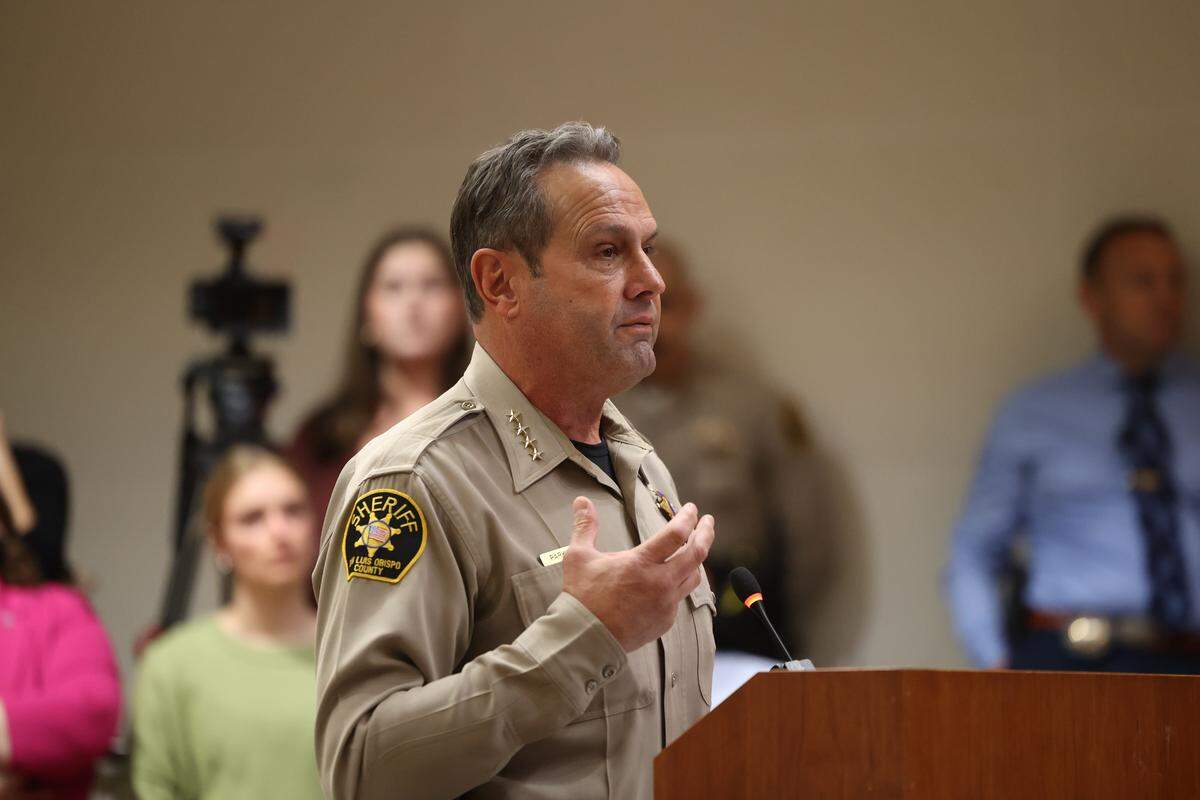
Local activists concerned about sheriff’s increased cooperation with ICE
Prior to the Tuesday hearing, six local Indivisible groups, SLO50501, the SLO Frog Brigade, Cambria Peace Corner and Buen Vecino sent a letter to the board urging them “to prevent the unjust and inhumane abductions of community members by ICE,” the letter said.
The letter shared concern about the Sheriff’s Office’s “increase in voluntary cooperation” with federal immigration agents.
In 2024, the sheriff transferred one person to ICE custody. Then in 2025, the sheriff transferred 69 inmates to ICE custody, according to data shared by the Sheriff’s Office at the Truth Act Forum.
According to activists who regularly monitor the jail, the number could further increase this year.
From Jan. 1 to March 31, witnesses saw ICE agents apprehend 30 people from the San Luis Obispo County Jail, according to witness statements, photos and Public Records Act request responses compiled by local Indivisible groups and Buen Vecino.
The sheriff transferred 14 of those people into ICE custody from the sally port. Meanwhile, ICE agents took 16 people from the jail lobby, Kansas Avenue or the bus stop near the jail after those people were released from jail custody, according to the data.
Meanwhile, the Sheriff’s Office shared on its website that it had released 15 people to ICE custody in 2026 as of Thursday.
“If this pattern continues, over 120 people will be abducted by ICE at the County Jail this year,” the letter said, which would be an increase from 2025.
According to the letter, the Sheriff’s Office is violating Senate Bill 54 by allowing ICE to take people without qualifying convictions from the lobby. However, the agency has said before that the lobby is a public place, so it cannot prevent ICE agents from waiting there.
The letter urged the board to prohibit the use of county facilities, like the jail, for federal immigration enforcement. The groups also want the county to create community oversight of the jail, provide real-time data on ICE’s access to people in county custody, and provide “know your rights” education to those in custody.
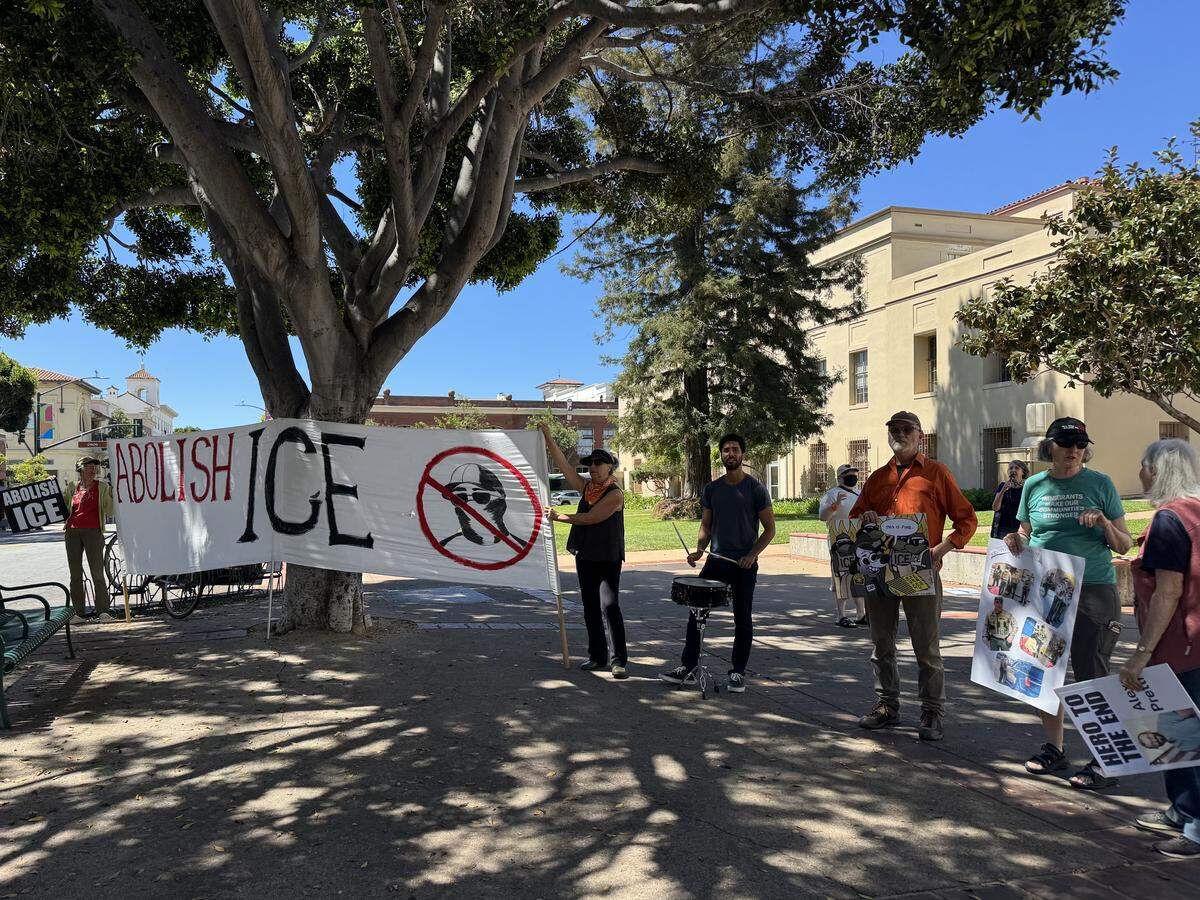
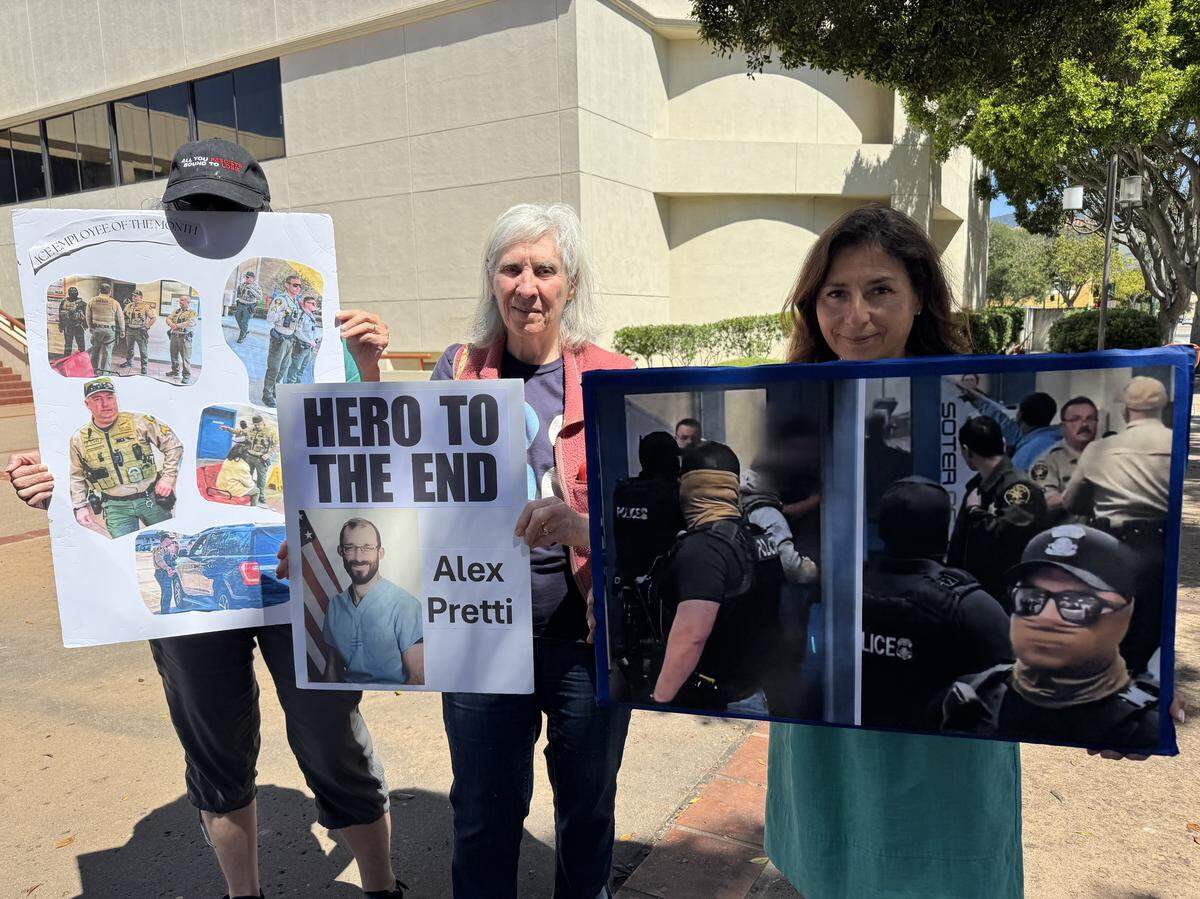
Before Tuesday’s meeting, more than a dozen people gathered to protest ICE in SLO County. Activists banged drums, sang protest songs and held a giant “abolish ICE” banner. Others carried signs pasted with photographs of sheriff’s deputies and ICE agents in the jail lobby.
During 45 minutes of public comment, nearly 20 community members spoke at the podium, many thanking the board for creating a dedicated immigration ad hoc committee, while also pushing for supervisors to do more to prevent ICE from accessing the jail.
“Public safety is built on a foundation of trust,” Mackey said in her public comment. “When local law enforcement acts as an arm of federal immigration authorities, that trust is shattered — not just for our undocumented neighbors, but for the entire community.”
Some called on supervisors to enact ordinances that bar ICE from entering or commandeering county property. Others urged the board to go to the jail to see firsthand how the Sheriff’s Office is collaborating with ICE.
“We challenge all supervisors, all five of you, to visit the jail to witness ICE interactions with local law enforcement,” Cindy Lewis from North SLO County Indivisible said. “Go out there, be on the ground.”
How would SLO County enforce an anti-commandeering policy?
The county cannot prevent ICE agents from accessing areas that are open to the general public, such as streets, sidewalks and parks.
In county-owned facilities with areas that are still open to community members — like the jail lobby — the county could enforce reasonable restrictions on how the spaces are used, but those rules would have to be applied to all people, including activists, federal officials, family members and all members of the public, according to the staff report.
The jail lobby could be limited to only specific activities, such as standing in line to talk to an employee at the reception window or waiting to be escorted to a locked portion of the facility. In this example, everyone else would have to wait outside, the report said.
San Luis Obispo County does have “considerable authority” to prevent county property from being commandeered by federal immigration operations, the presentation said.
Several California counties already have anti-commandeering policies in place, including Los Angeles, Santa Clara, Alameda and San Mateo counties, according to the staff report.
“However, enforcement challenges and practical limitations remain, and such policies and ordinances likely have little practical effect on the ability of the county to stop commandeering when it occurs,” the report said.
Currently, the federal government has no authority to take over the county’s property, according to the staff report. But supervisors did adopt a formal policy Tuesday to prohibit commandeering and only allow access to nonpublic areas — such as employee-only areas and work spaces — if federal officers have a judicial warrant.
“Actually coming forward and voting to approve such a resolution … addresses the fear,” Supervisor Bruce Gibson said during the meeting. “It is a fundamental statement we can make to our immigrant communities.”
Supervisors Heather Moreno and John Peschong opposed the effort.
“It’s the equivalent of doing a resolution for everything right now that we already can or cannot do, so I don’t see the point in that at all,” Moreno said.
Supervisors allocate $100,000 for children of immigrant families
In the aftermath of the Truth Act Forum, the county also surveyed 55 local organizations that serve immigrant communities.
According to the presentation, organizations said they needed more flexible funding, more staff and expanded legal services and translation support to better help these communities.
Supervisors voted to set aside $100,000 for a designated children’s fund within the Community Foundation of SLO County’s One Community Fund to support kids in immigrant families by connecting them with “essential services that directly impact their health, safety, and ability to succeed in school and in life,” the staff report said.
The money will go toward services like early childhood care and education, food resources, mental health, housing and youth development.
Moreno and Peschong said they didn’t see a need for the fund, especially since there was no reported increase in ICE-related unaccompanied minors, according to Child Welfare Services.
Others argued that the money wasn’t nearly enough. Lewis said the $100,000 was just “a drop in the bucket.”
“Baby steps. The ad hoc immigration task force recommendations provide something, but not nearly enough,” she said during public comment.
Gibson agreed that it appeared to be a “small number,” but he hoped it would grow in the future.
“It’s never enough,” Ortiz-Legg told The Tribune. “But we think it’s a good start”
This story was originally published April 8, 2026 at 11:01 AM.