One way or another, Central Coast Blue water project is coming. But who gets to build it?
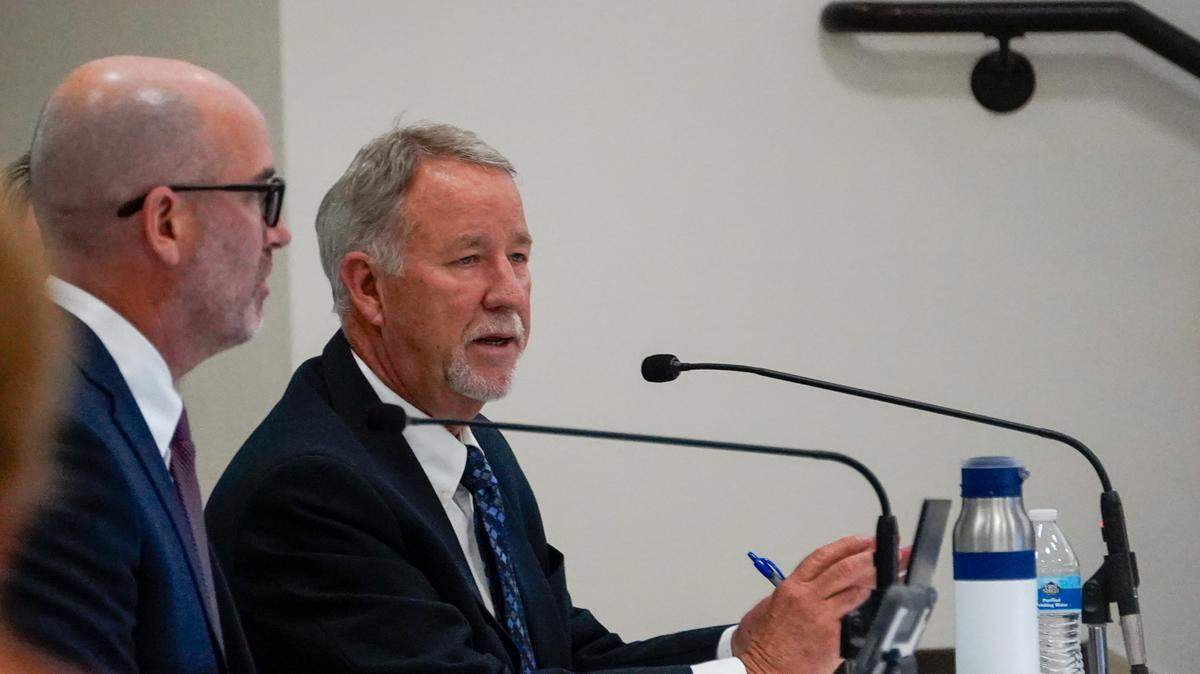
The Central Coast Blue project hopes to be up and running within the next half decade, but one key question is looming: Who will build it?
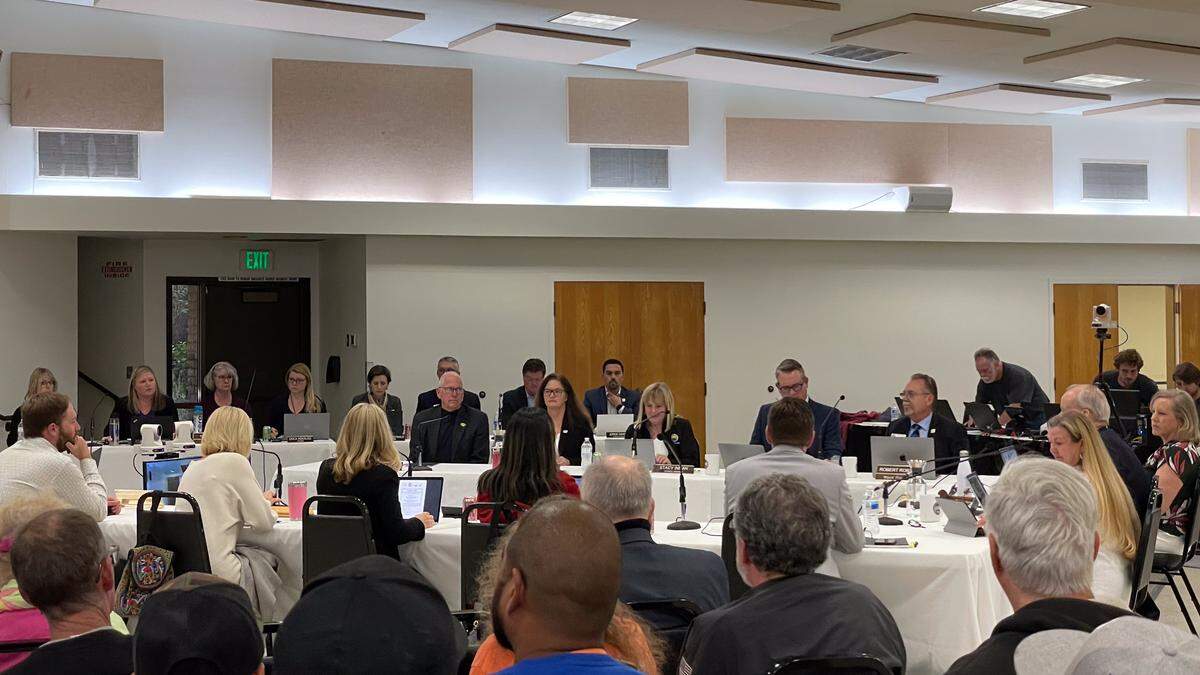
Monday’s joint city council meeting between the city governments of Pismo Beach, Grover Beach and Arroyo Grande featured a study session aimed at answering that question, as the three councils heard from local construction workers and union advocates.
Initially proposed in 2016, Central Coast Blue is a water recycling initiative that would see wastewater from Pismo Beach’s wastewater treatment plant diverted to a new advanced purification facility that would turn out 900 acre-feet per year of clean, drinkable water.
With the project just three years away from its proposed 2026 completion date and funding more than 50% in hand, the Joint Powers Authority of the three cities heard arguments for and against using local construction workforces to complete the project.
Those arguments also included whether or not the project would use a project labor agreement, a type of union collective bargaining agreement often used in the construction industry to guarantee prevailing wages and set goals for hiring local workers.
For the Central Coast Blue project, that PLA would be known as a community workforce agreement, which would guarantee a certain percentage of the workforce comes from companies in San Luis Obispo, Monterey, Santa Barbara and Ventura counties.
Though PLAs and CWAs do not require the entirety of the workforce to be made up of union workers, some local construction companies said they took issue with the inclusion of these hiring guidelines.
“Our company is a very qualified contractor for this type of work,” Cushman Contracting Corp. project manager Devin Light said during public comment. “However, with PLAs, we’re just not going to be a part of that bidding process. It’s not fair to our employees.”
What are the options?
The Joint Powers Authority staff provided the city councils with three alternatives to promote hiring local workers for the project: local hire good faith efforts, PLAs, and a local hiring mandate, Water Systems Consulting program manager Justin Pickard said at the meeting.
Local hire good faith effort programs essentially sets the standards contractors have to follow when they employ local workers, Pickard said.
Pickard said this hiring guideline requires bidders to reach out to local subcontractor companies made up primarily of local workers, and once a contract is awarded, the successful bidders must make “ongoing and continued efforts” to recruit and retain local workers.
“The contractors would be required to demonstrate these good faith efforts that they’ve made to employ local workers by documenting what they’ve done and providing this documentation to the project owner on a regular basis,” Pickard said.
Project labor agreements are the second option the JPA can pursue, Pickard said.
“Project labor agreements are another mechanism that can be used to promote local hiring on covered projects, but that is not really their primary purpose,” Pickard said.
The primary purpose of a PLA is to establish the terms and conditions of employment on a project, including hiring procedures, terms and conditions for work, wages, benefits, management, dispute resolution and preventing work stoppages, Pickard said.
PLAs can be written to prioritize the employment of local workers, Pickard said, usually by requiring the construction unions to prioritize the referral of local resident union workers rather than the unions’ standard dispatch procedures, which prioritize the union’s out-of-work list.
PLAs can also be written to prioritize hiring specific groups within the union, such as veterans or apprentices, Pickard said.
Lastly, the JPA can opt to implement a local hire mandate, which Pickard said is on “the other end of the spectrum” from the other two options.
“Rather than establishing a local worker participation goal, a mandate would require that a certain number craft work hours on a project be performed by local workers,” Pickard said.
To be adopted, a work hour requirement may require a detailed economic analysis determining a historical lack of local worker participation, which is more susceptible to legal challenges than the other two options, Pickard said.
Would a CWA be right for Central Coast Blue?
During his presentation to the city councils, Pickard brought up several examples of CWAs in recent years.
For example, for the city of San Luis Obispo’s 2018 Water Resource Recovery Facility project, the city used a CWA to require a 30% local hire goal, Pickard said. By the end of March 2023, 83% of all work hours on the project had been completed by local workers, he said.
However, it’s likely that project would have used local work with or without a PLA.
Pickard said in September 2021, when the city of San Luis Obispo was considering a broader application of PLAs for more of their public works construction projects, a study of 14 projects conducted by the city between 2018 and 2021 found 90% of the work hours were performed by local workers without use of a CWA.
As a result, the city decided to limit the application of CWAs to only a few larger “legacy projects,” including a downtown parking structure, an Hwy. 101 overpass on Prado Road and a public safety center, Pickard said.
Following Pickard’s description of the different approaches to hiring, the city councils heard from two presenters about the benefits and drawbacks of their approaches.
Joshua Madrano, the executive secretary and treasurer of the Tri-Counties Building and Construction Trades Council, argued a labor force with more union workers under a PLA would help ensure workers receive a prevailing wage, and will help continue to fund the training of the next generation of construction apprentices.
The second presenter, Eric Christen from the Coalition for Fair Employment in Construction, said requiring a CWA is redundant and may be restrictive to the non-union construction workforce, which makes up just 11.7% of the construction workforce, according to the Bureau of Labor Statistics.
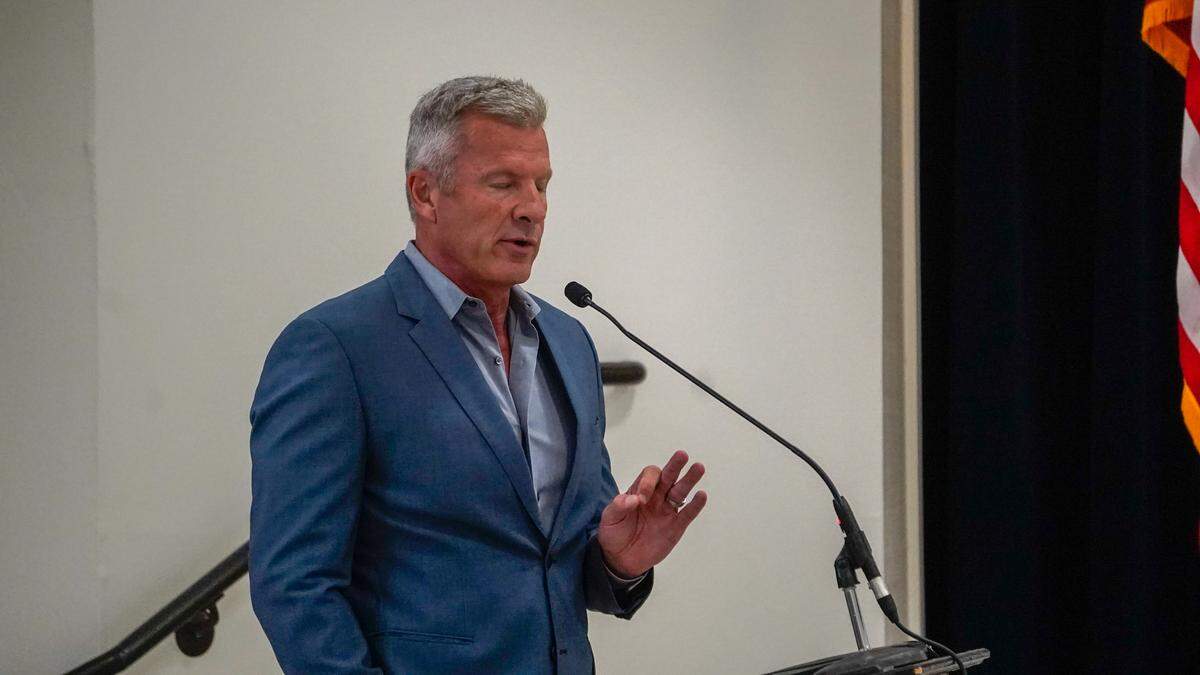
Christen said non-union workers would have to pay union dues under a PLA, and may lead to contractors being forced to work with people they are not familiar with due to union workforce requirements.
“It’s like having a basketball team going into the Finals, and just before tip-off, have half of their team replaced with people that (they) have no relationship with and be expected to engage in a game that’s competitive against their opponents,” Christen said. “Why would this even be part of any agreement?”
Many construction workers who spoke during public comment recommended the JPA not implement a CWA for the project, citing the already-high rates of local participation by the construction workforce in local projects.
JPA split on best hiring practice
Though the JPA did not vote on what path to pursue, several council members showed their support for different means of getting the project done.
Arroyo Grande Councilmember Kristen Barneich said she supported setting local workforce goals through a local hire good faith agreement.
“It appears from the information that was presented by staff that a local hire agreement will allow even more local workers to work on the job,” Barniech said. “I like the opportunity to hire anyone, not just union workers.”
Arroyo Grande Councilmember Jim Guthrie said the comparisons between the $95 million Central Coast Blue project and San Luis Obispo’s projects in the study may not be the most apt, as Central Coast Blue might attract larger out-of-town bidders.
However, he said he believes the high rates of local participation in public works projects will continue no matter what direction the JPA chooses.
Arroyo Grande Mayor Caren Ray Russom was in favor of using a CWA to get the project done.
Russom called herself a “big supporter” of PLAs, and said using one for the Central Coast Blue project would allow local governments to recover more tax value from in-county workers.
Union laborers under PLAs “have a vested interest in making sure (the projects) go just right and as promised,” Russom said. “That’s not necessarily true of the open market.”
The JPA will next meet June 19 for a special meeting on the project’s Environmental Impact Report agenda.
This story was originally published June 9, 2023 at 5:00 AM.