
Should cyclists be required to wear helmets? SLO bike activists say no
The death toll for cyclists involved in motor vehicle crashes in California keeps climbing — 99 in 2009, 129 in 2014, 155 last year.
The big reason for all the bike-related deaths, according to a detailed new federal study: Head injuries.
The number of states that require adult bike riders to wear helmets: Zero.
The number that require children to wear helmets: 21.
The National Transportation Safety Board looked at this and other data and recommended that all 50 states, the District of Columbia and Puerto Rico require everyone to wear a helmet when riding.
That’s going to be a tough sell in San Luis Obispo and around the country. San Luis Obispo County’s numbers have been fairly steady, with one person killed last year and two each in 2016 and 2017.
Many bicycle advocates oppose such mandates.
Roads are the problem, SLO advocate says
Rick Ellison, executive director of Bike SLO County, which promotes bike safety, is a strong advocate for wearing helmets but is not in favor of mandatory helmet laws.
“It’s going to discourage riders,” Ellison said. He said tourists renting a bike for a short ride may not have easy access to one, if they can find one at all. Commuters taking short trips may also find it unnecessary, he said.
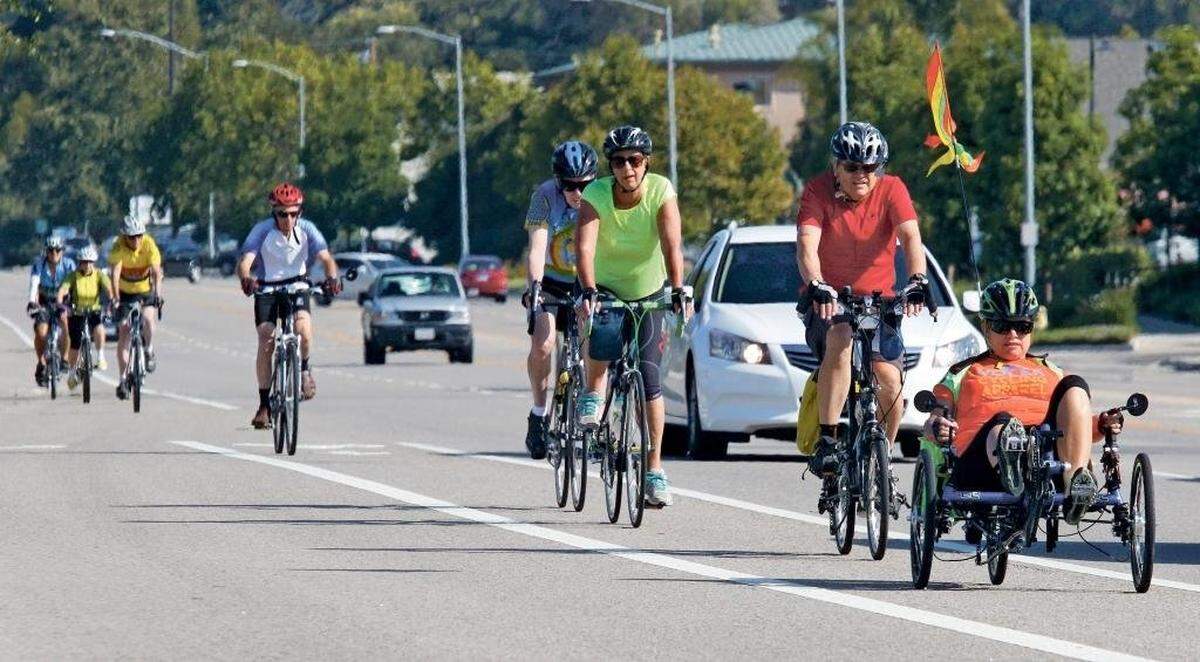
The biggest problem in protecting people on bikes, he said, is poor infrastructure.
“People tell us the number one barrier to riding is a sense of safety, being 3 to 6 feet away from a vehicle weighing 2,000 pounds is too scary for many,” Ellison said.
Local leaders are aware of the need for dedicated and protected bike lanes, he said, and such changes should be encouraged to get more people on bikes.
National advocates echoed his thoughts.
“We are against mandatory helmet laws. We teach and encourage helmet use, but believe mandatory helmet laws discourage bicycling and we’ve seen the enforcement be uneven and target people of color,” said Caron Whitaker, vice president, government relations at the League of American Bicyclists in Washington.
What the NTSB research shows
A renewed push for helmet requirements began last week, when the safety board released its first comprehensive analysis of bicycle safety issues in 47 years. It reported that wearing a helmet reduces the likelihood of head injuries by an estimated 48 percent.
“Head injury is the leading cause of bicycle-related deaths,” it said.
To NTSB member Jennifer Homendy, page after page of findings in the bicycle report were clear evidence that the board should put its considerable weight behind a push to require that everyone should wear an age appropriate bike helmet when riding a bike.
Her fellow board members agreed but had concerns, concerns shared by many in the cycling community. Skeptics often say they want more emphasis on improving roads and vehicles as a way of making cycling safer, and are concerned such laws gives law enforcement a reason to stop certain people and then find other reasons to detain them.
When the board discussed its report last week, NTSB Vice Chairman Bruce Landsberg noted that “There’s complete agreement that helmets do work. They’re absolutely effective.”
But a recommendation about required use?
“I was struggling with this one a little bit,” he said. “First off, there’s a perception of the nanny state. We’re Americans, we’re independent and we don’t like folks telling us what to do particularly from Washington.”
Chairman Robert Sumwalt had similar thoughts.
“I kind of struggle with this,” he said. “Do we require helmets on skateboarders? Or helmets on people riding scooters? I guess to ride horses? About 100 people a year die falling off horses. Do we require people riding horses to wear helmets?”
He wondered how far should the requirements should go.
“Why don’t we, when we get through with this one, maybe I’ll propose a recommendation that requires people to wear reflective clothing? Where does it stop?” he asked.
Deb Banks, Sacramento Area Bicycle Advocates acting executive director, said she “could see” mandatory helmets for children, which is the law in California. But she also noted that the push for mandated helmets could easily go too far.
“We don’t mandate helmets for skiers or skateboarders or rock climbers,” she said.
Homendy, in an interview with McClatchy, said the “nanny state” argument often comes up “every time we take a significant stand on a core safety issue. We’re the safety agency. We have to set the bar for safety.”
She noted that requirements that once seemed far-fetched have become a norm — and have saved lives.
Homendy recalled how, as a child in the 1970s, she would stand up in her family’s station wagon. Today, few would think of sitting in any vehicle without a seat belt.
Sumwalt understood.
“I grew up jumping on a bicycle and riding it and never thought about wearing a helmet. On the other hand I grew up getting into an automobile never with the notion of not buckling a seat belt,” he said.
Helmets save lives
The helmet debate has been raging for years. What’s different now is the increasing use of bicycles, particularly in urban areas, as well as increasing concern about safety.
Last year, 857 people died in cycle-related crashes, the highest number since 1990.
The new NTSB research offers fresh evidence about the extent of head injuries in bicycle crashes. It found “the underutilization of helmets continues to contribute to the incidence of deaths and serious injuries among crash-involved bicyclists.”
It urged a “national strategy” to increase helmet use among all riders, and perhaps educational campaigns and helmet distribution programs.
The next step, Homendy said, is to bring the bike safety community together to talk about how to proceed and perhaps have the government offer model helmet use legislation
“Our job is not a popularity contest. We’re not here to take a straw poll to see who wants it and who doesn’t,” said Sumwalt. “Our job is to speak the truth, which we already have done in our finding.”
This story was originally published November 20, 2019 at 10:40 AM.
.jpg)