
Trust in Putin falls to lowest level since Ukraine war began
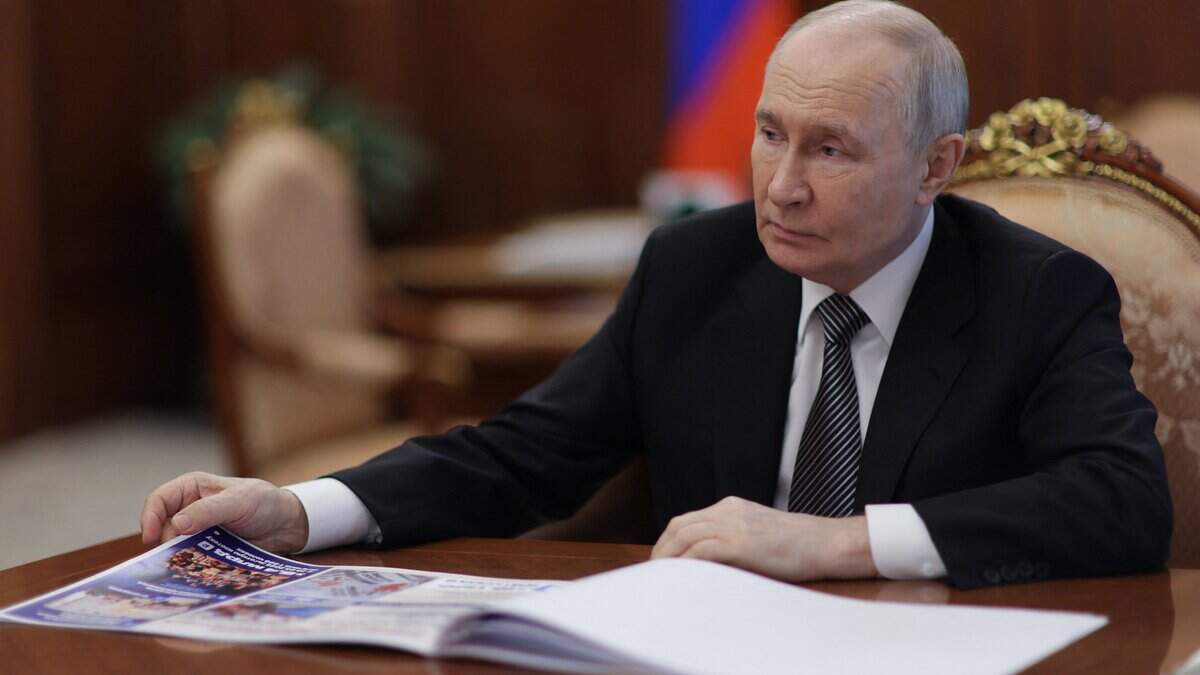
Vladimir Putin has faced a sudden drop in trust among Russian voters, according to polling that comes as Russians grapple with fuel shortages, internet blackouts and a faltering economy caused by his full-scale invasion of Ukraine.
Given the restrictions in Russia where dissent can result in jail time, state polls are usually taken with a pinch of salt.
However, they can offer a snapshot of trends, and a new survey shows that Putin has to deal with growing discontent less than three months out from parliamentary elections in September that will likely be organized to favor the ruling United Russia party.
Trust in Putin and job approval ratings drop
The poll by the Kremlin-friendly NOM (Public Opinion Foundation) of 1,500 people of voting age across 51 Russian regions conducted on June 21, showed that 69 percent of respondents trusted Putin, a drop of five percentage points from June 14. This was the lowest level for the Russian president since the start of his full-scale invasion and a slump from the 82 percent he enjoyed 12 months ago.
The level of distrust of Putin has gone up to three percentage points in a week to 18 percent, a marked increase from the 10 to 11 percent figures recorded this time last year.
Approval ratings for how Putin was doing his job also dipped to 71 percent, down four percentage points in a week, and while it has been at that level before, over time the figure has gone down over the last six months, from 82 percent in September 2025.
Another state pollster, VTsIOM, recorded slightly better results for Putin, with his approval ratings at 70.4 percent in the week between June 15 and June 21, 2026, up 2.7 percent on the previous week.
However, the Financial Times reported this only came after the pollster started to include face-to-face polling, likely to discourage open dissent.
It comes as a separate poll by Gallup found 60 percent of Russians said economic conditions were getting worse, the first time in 20 years that such a view was expressed by a majority, beating the previous high of 50 percent in 2021 during the COVID-19 pandemic.
Russia’s wartime economy, whose growth has been supported by high defense spending, shows signs of slowing with the government lowering its growth forecast for 2026 from 1.3 percent to 0.4 percent, despite higher global oil prices because of the Iran war.
High labor shortages have also fueled inflation.
“Historically, Russians’ views of their job market have typically tracked closely with the unemployment rate,” the Gallup assessment released Tuesday said. “But perceptions are worse than conditions in 2026, reflecting wider economic pessimism across the country.”
Putin admits problems
The polling came ahead of Putin’s address to the United Russia Congress on Sunday, in which he referred to fuel shortages caused by Ukrainian drone attacks that have targeted energy infrastructure to hurt Moscow’s war machine.
On Sunday, Ukrainian President Volodymyr Zelenskyy said Ukrainian drones had targeted refineries in Russia’s Krasnodar and Yaroslavl regions. Fuel rationing has been put in place in at least 56 Russian regions, including Moscow, according to data analyzed by The Moscow Times.
Putin told a Russian state TV reporter that such attacks “do create problems” and that there was a shortage of fuel but it was not critical.
However, his comments come as people complain on social media about miles-long lines at gas stations, especially in occupied Crimea, which Kyiv is trying to isolate with drone attacks. There has also been anger at internet outages in Moscow and other cities that have fueled fears of a digital clampdown.
Complaints are growing about fast-rising gasoline prices and some local authorities and major retailers have been hesitant to enact rationing.
During his speech on Sunday, Putin said that the Kremlin was addressing Russia’s wartime economic challenges and that it would fulfill all social obligations in comments likely to show that he was aware of the problems faced by ordinary Russians.
Of note was the ruling United Russia party formally claiming to be Putin’s party for the first time since 2007, according to independent news outlet Meduza.
Putin is not a member of the party, although he is closely affiliated with it. However, a campaign poster released Sunday showed his image next to the slogan “United Russia is the president’s party,” and “Being for Putin is the bare minimum.”
Think tank the Institute for the Study of War said this is likely intended to make it look like Putin has widespread popular support when the United Russia Party inevitably wins in elections in September that will neither be free nor fair.
Official: Russian glide bombs kill two in Ukraine
In daily developments, Russian glide bombs killed two people and injured at least 15 in the southeastern Ukrainian city of Zaporizhzhia on Tuesday, Regional Governor Ivan Fedorov said.
Fedorov, writing on the Telegram messaging app, said Russian forces had deployed seven bombs over 90 minutes in the city, a frequent target of Russian attacks.
Reuters Television footage showed emergency crews carrying the injured to safety and training hoses on blazing buildings.
A drone strike on a minibus on Monday in Zaporizhzhia killed two men and a woman.
Reuters contributed to this report.
2026 NEWSWEEK DIGITAL LLC.