‘Hairy’ creature — the largest of its kind in the Philippines — is a new species

Researchers have discovered six new species of tube-nosed bats from the Philippines, more than tripling the number of the country’s known species.
Five of the new species, all from the Murina genus, are found nowhere else in the world, with three restricted to their own islands within the archipelago, according to a study published Sept. 8 in the peer-reviewed journal Zootaxa.
These species are believed to have branched around 11 million years ago and evolved in isolation due to geographic barriers, according to the study.
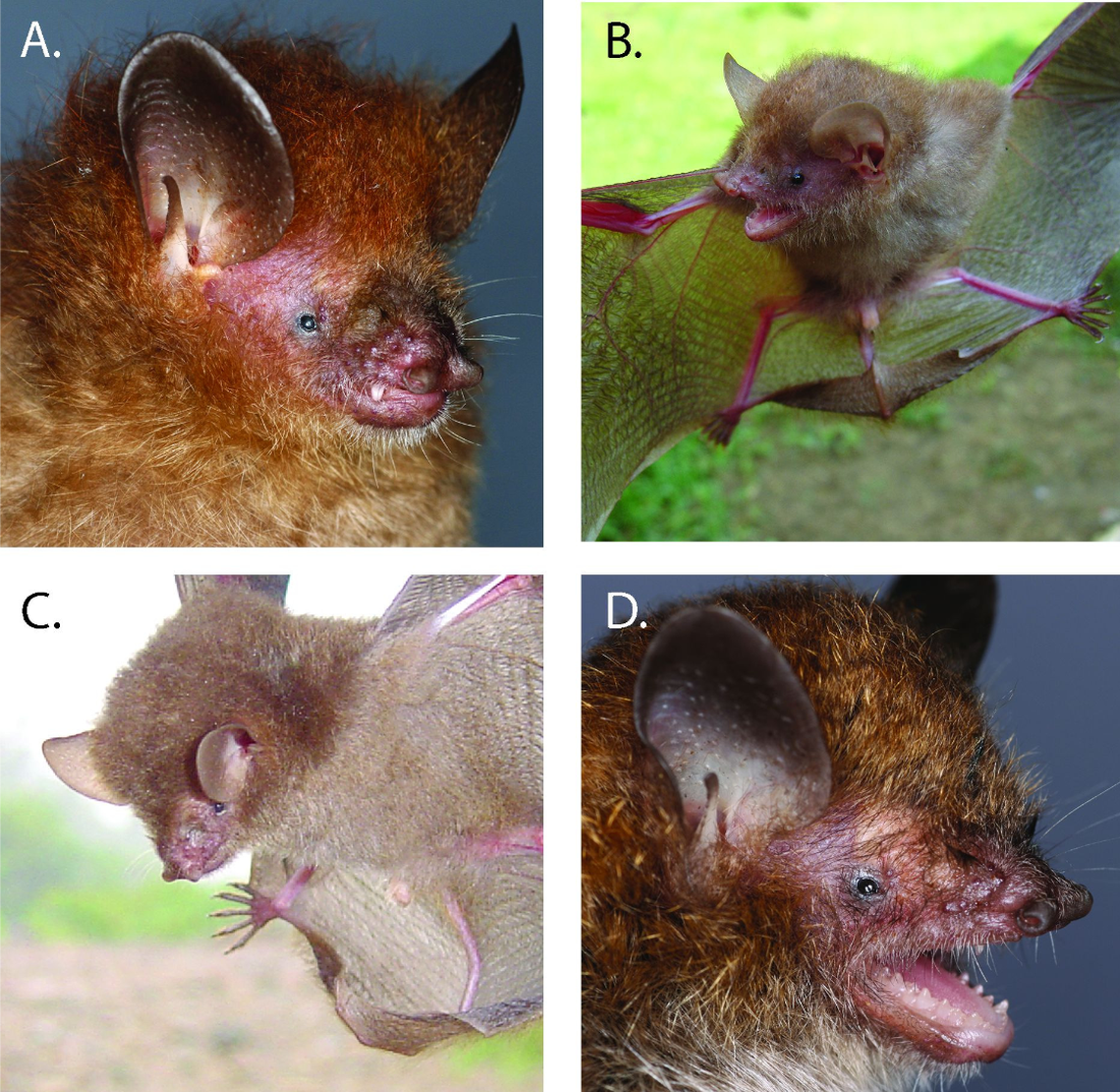
The largest new species — and now the largest Murina bat known from the Philippines — is Murina hilonghilong.
Just two specimens of the new species were found in the lowland ironwood forest of Mt. Hilong-hilong on Mindanao Island, according to researchers. The mountain is considered a “Key Biodiversity Area” and is home to many mammal, amphibian and bird species found nowhere else in the world, the study said.
Murina hilonghilong is 3.5 inches long and weighs 10 grams, or about as much as a AAA battery, according to the study.
It is tricolored, with a pale gray base fur that changes to a “buff,” or pale yellow, with “reddish-brown tips,” researchers said. The fur on its underside is white from its chin down to its abdomen, according to the study.
Researchers said its “feet are covered with long hairs extending beyond the claws,” adding that the “forearm and thumb are also quite hairy.”
It has a notably large head with a deep snout and well-defined jaw and neck structure, according to the study, likely suggesting it is adapted for powerful biting and chewing.
Habitat loss due to nickel mining
Researchers noted that although many of the species were discovered in protected areas, deforestation is still occurring, notably in the region where Murina hilonghilong was found.
Between 2000 and 2019, Mt. Hilong-hilong lost 4.14% forest cover, according to the study. Researchers said the mountain is in a region rich in nickel, which is “growing in demand for its use in electric car and other batteries.”
The country has “58 large-scale metallic mines,” researchers said, noting that the expansion of mining operations comes with greater forest loss and poses a serious threat not only to Murina hilonghilong but also to the five other new species discovered and all “forest-dependent species.”
The research team included Judith L. Eger, Jodi L. Sedlock, Burton K. Lim and Lawrence R. Heaney.
This story was originally published September 17, 2025 at 9:03 AM with the headline "‘Hairy’ creature — the largest of its kind in the Philippines — is a new species."