Violent earthquake triggers huge die-offs of animals in sacred waters in Myanmar
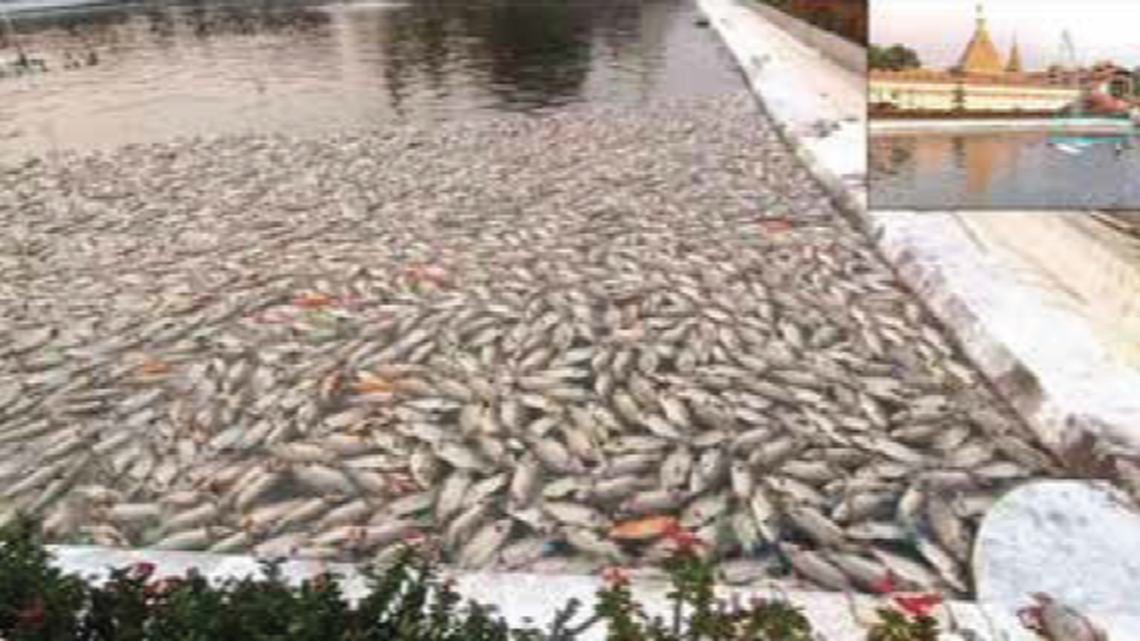
In March, a massive, violent earthquake shook Myanmar.
The 7.7-magnitude tremor was the largest to hit the country in more than 100 years. The primary quake along with numerous powerful aftershocks killed over 2,700 people and destroyed “nearly 50,000 residential buildings, thousands of monasteries and schools, and hundreds of hospitals,” experts said.
It also led to the collapse of ecosystems in two of Myanmar’s most important bodies of water: an ancient lake, and a sacred pond, according to a study published Aug. 26 in the Journal of Threatened Taxa.
According to researchers, Inle Lake is “the second-largest lake in Myanmar and the only ancient lake on the Indochinese Peninsula.”
Some sources define an ancient lake as one continuously filled with water for more than 130,000 years.
“Despite its relatively small size...and shallow depth,” averaging just over 6 feet, the lake supports “significant freshwater biodiversity” and species found nowhere else, according to the study.
The second body of water, the Mahamuni Pagoda Pond, is home to a “diverse” array of fish, including various species of carp, catfish and freshwater turtles, such as the critically endangered Burmese roofed turtle and the Burmese peacock softshell turtle, the study said.
“These animals are frequently released by pilgrims as part of long-standing religious and cultural rituals that symbolize the act of merit-making,” researchers said.
Using field observations, photographs and input from locals, researchers determined the earthquake “triggered adverse ecological conditions” in both bodies of water in both the immediate aftermath and in the long term, the study said.
Changes to “water chemistry, hypoxia, and the suspension of sedimentbound pollutants,” all likely contributed to massive species die-offs, according to the study.
These die-offs have caused detrimental imbalances within the habitats.
Millions of gastropods, like snails and mollusks from various species, died suddenly in Inle Lake. Their decaying carcasses led to the rapid deterioration of water quality and an explosion of harmful bacteria, researchers said.
“This microbial surge poses further risks to the remaining native freshwater species,” researchers said.
Researchers said further assessments, monitoring and habitat restoration are “urgently needed.”
The research team included Hsu Htoo, Imon Abedin, Sang Van Vu, Hyun-Woo Kim and Shantanu Kundu.
This story was originally published September 5, 2025 at 1:03 PM with the headline "Violent earthquake triggers huge die-offs of animals in sacred waters in Myanmar."