‘Barking’ on mountain leads to wrinkly ‘fanged’ creature. It’s a new species
.jpg "Scientists found a “fanged” creature with a “barking” call in a mountain forest of Indonesia and discovered a new species, a study said.")
In a mountain forest of Indonesia, a “fanged” creature sat in a small river, its wrinkly body half out of the water. Its “barking” call filled the trees, catching the attention of nearby scientists — and for good reason.
The “stocky” animal turned out to be a new species.
A team of researchers visited the Meratus Mountains on Borneo island several times between 2016 and 2019 to survey wildlife in “this unique and understudied region.” Generally, Borneo is considered “one of the most important areas of global biodiversity,” but specific areas and animals have not “been thoroughly studied,” according to a study published Aug. 7 in the peer-reviewed journal Species Diversity.
During their surveys, researchers heard a “barking” sound and followed it to some frogs, the study said. Intrigued, the team caught dozens of these frogs and, after taking a closer look, realized they’d discovered a new species: Limnonectes meratusensis, or the Meratus’ creek frog.
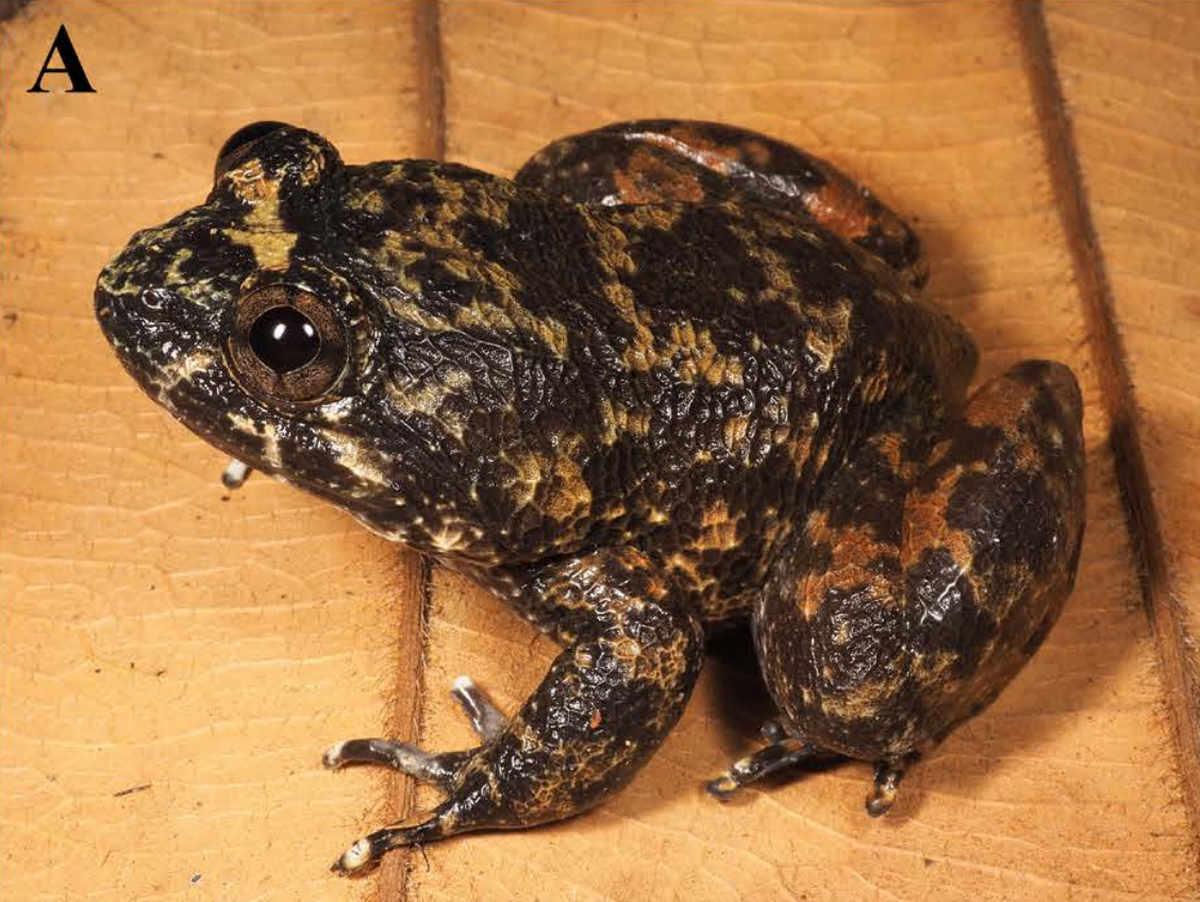
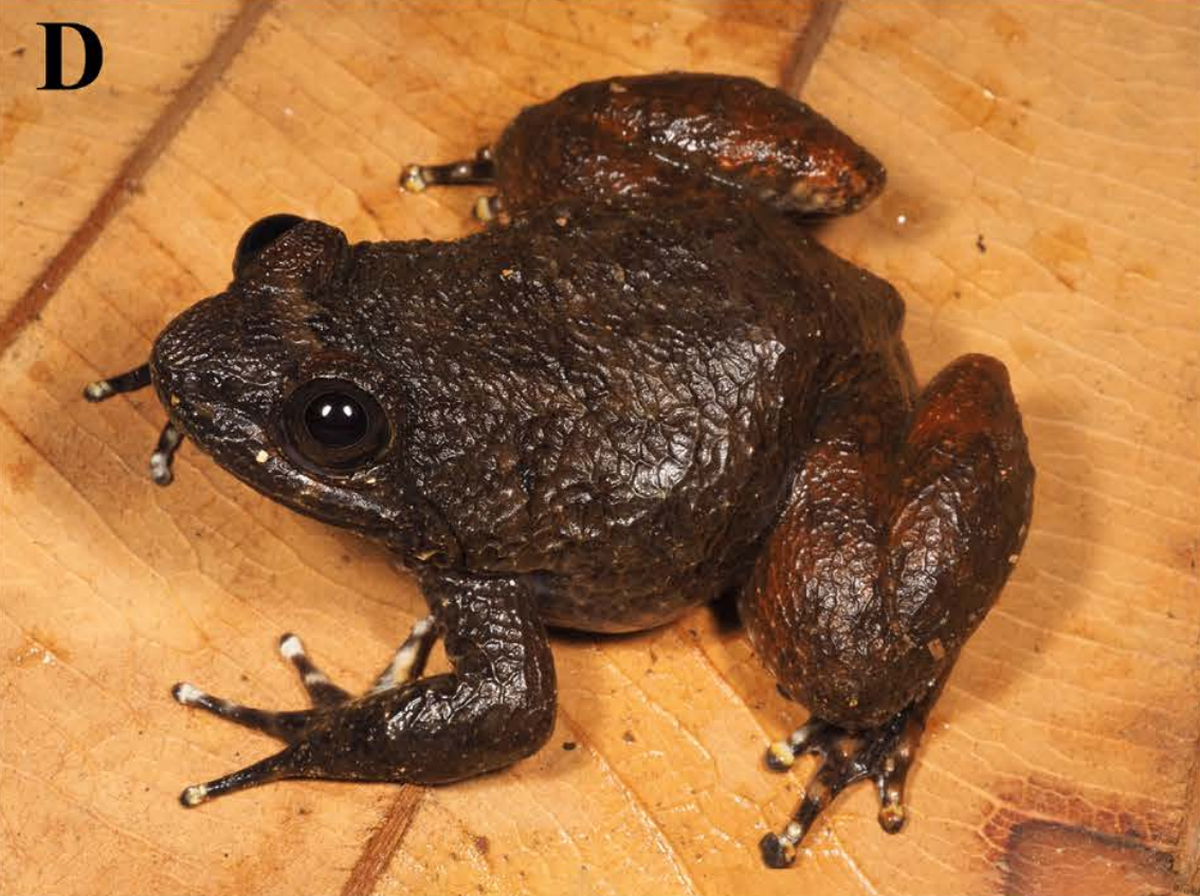
Meratus’ creek frogs are considered “medium”-sized, reaching about 2.5 inches long, the study said. They have “relatively smooth” skin “with (a) radiating network of low wrinkles.” Their limbs are “stout” and “short” with “slender” fingers.
Photos show the “stocky” new species. Its coloring varies from a marbled brown pattern to a uniform brown tone to “reddish brown,” the study said and photos show.
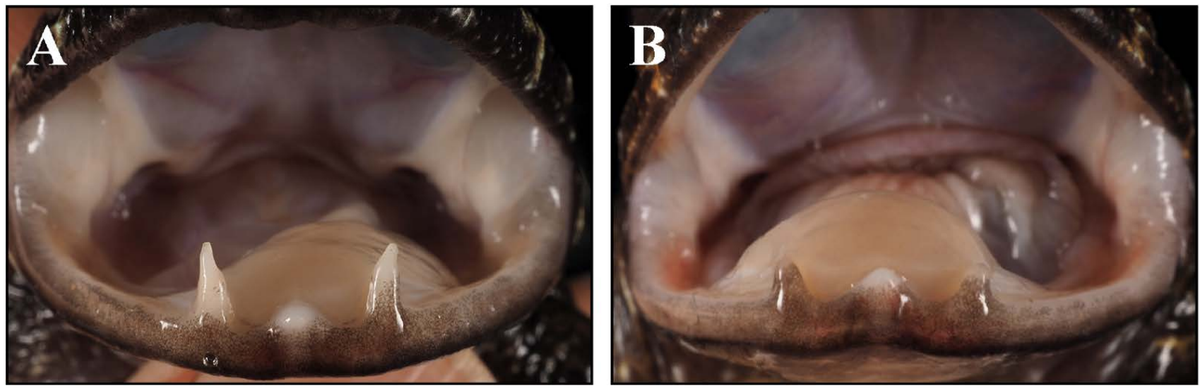
Like other fanged frogs, the new species does not have true teeth but “tooth-like projections” on its lower jaw, the study said. Some male Meratus’ creek frogs had “fangs” with sharper “tusk-like” tips while others had “blunt tips.” The variation “may (be) caused by the physical impact of male-male combat related to breeding behavior, which may involve biting or forceful collisions.”
A few male Meratus’ creek frogs were heard calling, which sounded “like barking, ‘wwiikkk.....wekkk...wekkk...wekkk,’” researchers said.
Meratus’ creek frogs were found in and around “small rocky streams” in mountain forests between elevations of about 1,800 to 4,300 feet, the study said. Much about its lifestyle and behavior remains unknown.
The new species is known to residents in the Meratus Mountains and traditionally used as a food source “due to its thick meat,” the study said. Researchers suggested finding a “balanced approach” to conservation “that respects these practices while ensuring the long-term sustainability of the new species.”
Researchers said they named the new species after the Meratus Mountain Range where it was first discovered and, so far, the only place where it has been found. The Meratus Mountains are in Indonesian Borneo.
Borneo is a large island in southeastern Asia shared between Brunei, Indonesia and Malaysia.
The new species was identified by call sound, overall size, coloring, skin texture, finger and toe shape, head shape and other subtle features, the study said. DNA analysis found the new species had at least 8% genetic divergence from other frog species.
The research team included Ade Damara Gonggoli, Tomohiko Shimada, Kanto Nishikawa, Masafumi Matsui, Thornton Larson, Eric Smith and Amir Hamidy.
This story was originally published August 12, 2025 at 7:00 AM with the headline "‘Barking’ on mountain leads to wrinkly ‘fanged’ creature. It’s a new species."