Color-changing creature found calling at edge of forest. It’s a new species
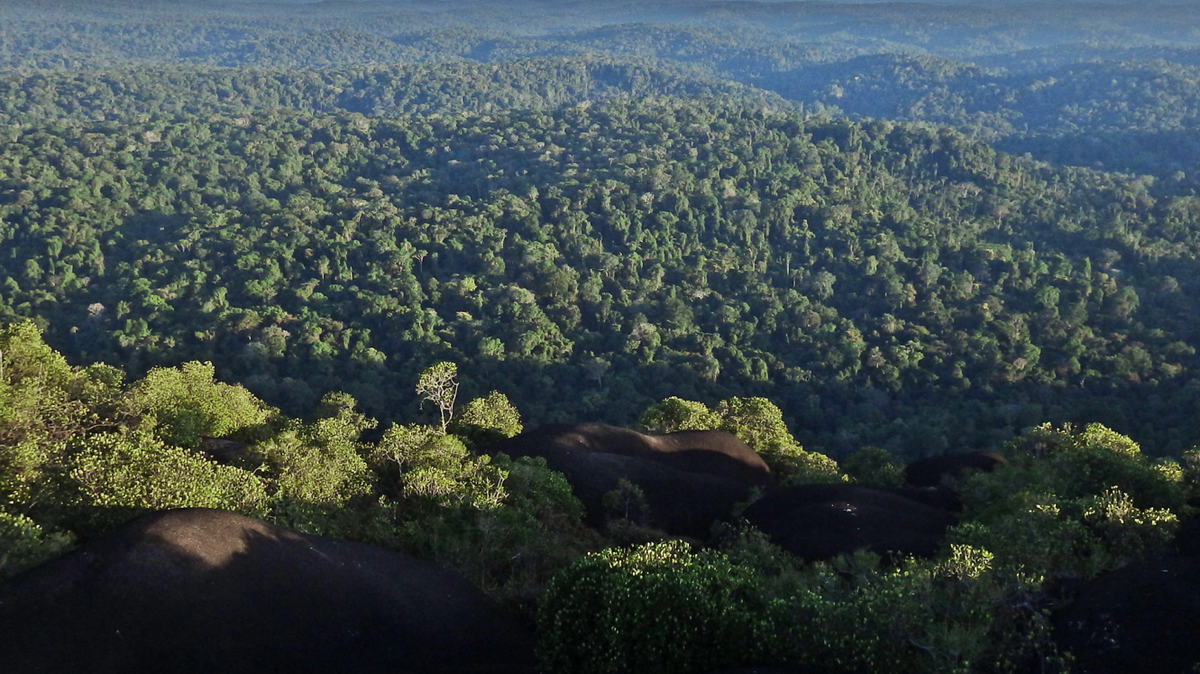
As night settled across a forest in South America, a color-changing creature perched in the canopy and called out. The “high-pitched” whistle-like sound caught the attention of nearby scientists — and for good reason.
Its source turned out to be a new species.
A team of researchers spent 20 years doing “extensive field work” in French Guiana, an overseas territory of France along the northeastern coast of South America, “in an effort to better understand the extraordinary diversity of this region,” according to a study published July 28 in the peer-reviewed European Journal of Taxonomy.
During their surveys, the team often heard the “characteristic call” of a frog coming from the treetops, but catching these “cryptic” animals proved difficult, the study said.
Eventually, researchers found five of these frogs and, after taking a closer look at them, realized they’d discovered a new species: Pristimantis fouqueti, or Fouquet’s rain frog.
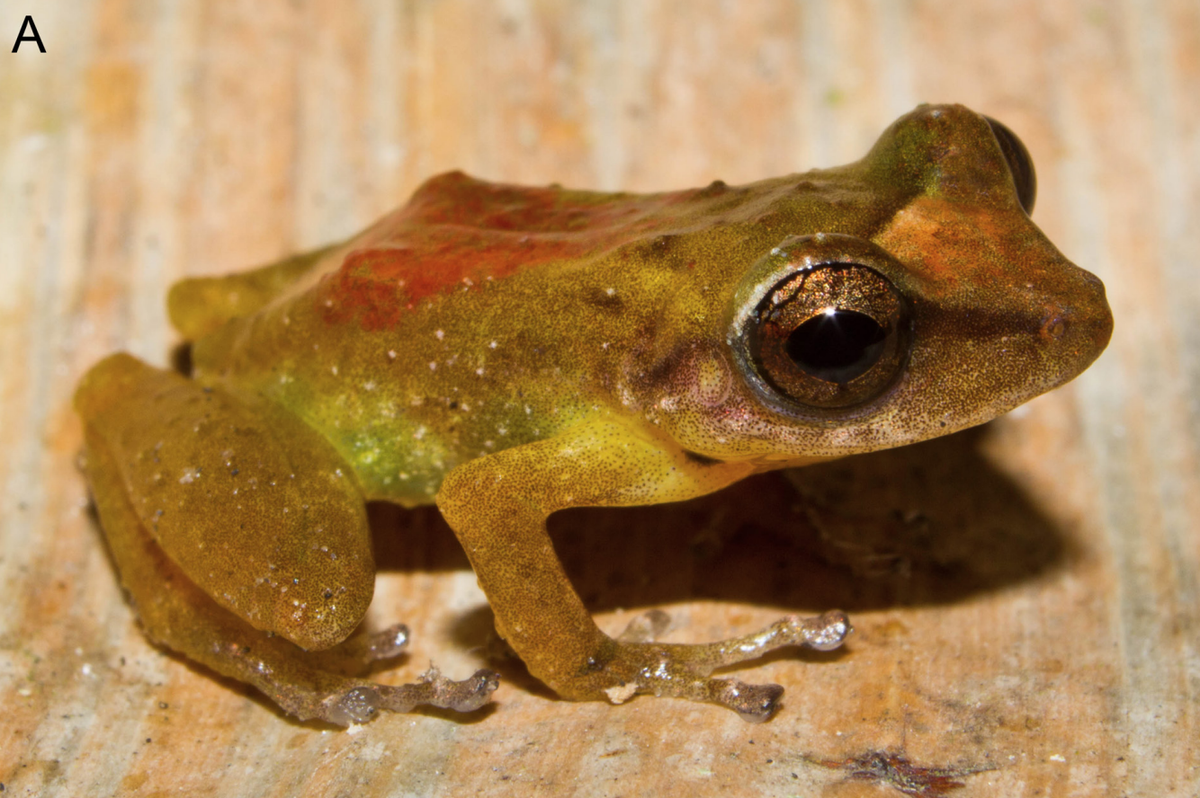
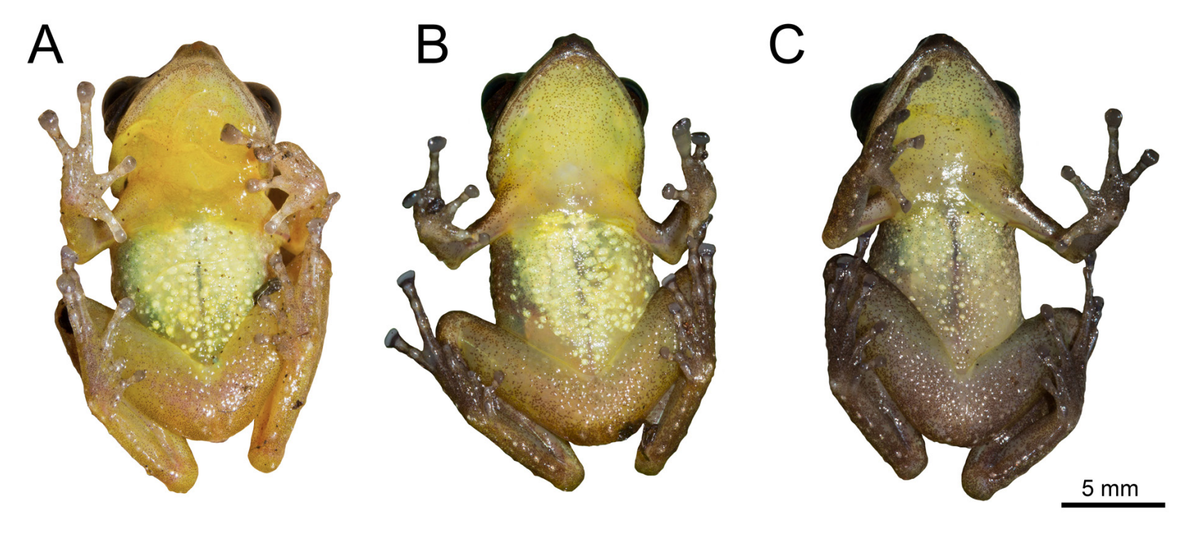
Fouquet’s rain frogs reach about an inch in length and are covered with “scattered” bumps known as tubercles, the study said. Their heads are “wider” than their bodies and have “large” copper eyes. Their fingertips and toes have “expanded” discs.
Photos show the coloring of the new species. Generally, the frogs are “yellowish to greenish brown” but can change color “depending on light or temperature conditions,” often becoming paler during the day, researchers said. A “large reddish brown patch” is “usually present on the middle of the (frog’s) back.”
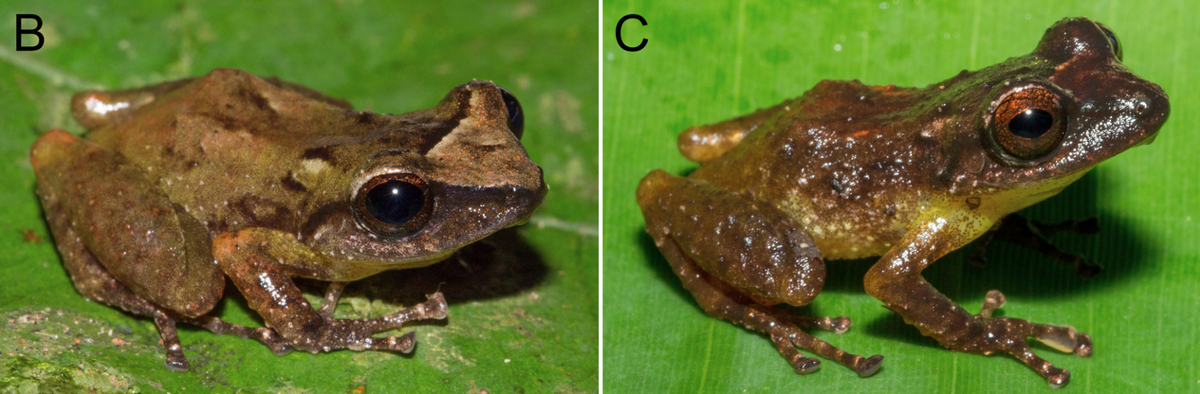
While handling Fouquet’s rain frogs, researchers discovered that the frogs’ bumps can also change size, “going from conspicuous tubercles to flat tubercles.”
Male Fouquet’s rain frogs make a “series of short, high-pitched, whistled calls,” the study said. The frogs have “been observed calling both in choruses and individually,” their “call intensity increasing on rainy nights.”
Fouquet’s rain frogs are nocturnal forest-dwellers, typically preferring “forest edges” or clearings, the study said. They often perch at least six feet up in the tree canopy, but a few frogs “were found during the day” in lower bromeliad plants.
“Very little information” about the lifestyle and behavior of the new species is known because “it has been rarely observed” and is considered hard-to-catch, the study said.
Researchers said they named the new species after their “friend and colleague Antoine Fouquet for his invaluable contribution to the amphibian systematics in the Guiana Shield in general and in French Guiana in particular.”
Fouquet’s rain frogs have been found at “many” locations throughout French Guiana and in a neighboring region of Brazil, the study said.
The new species was identified by its DNA, call, skin texture, finger and toe shape, head shape and other subtle physical features, the study said.
The research team included Alexander Tamanini Mônico, Elodie Courtois, Esteban Diego Koch, Michel Blanc, Maël Dewynter and Philippe Kok.
The team also discovered a second new species of rain frog.
This story was originally published July 31, 2025 at 11:29 AM with the headline "Color-changing creature found calling at edge of forest. It’s a new species."