
Orcas seen giving food to humans, study says. Is it kindness or something else?
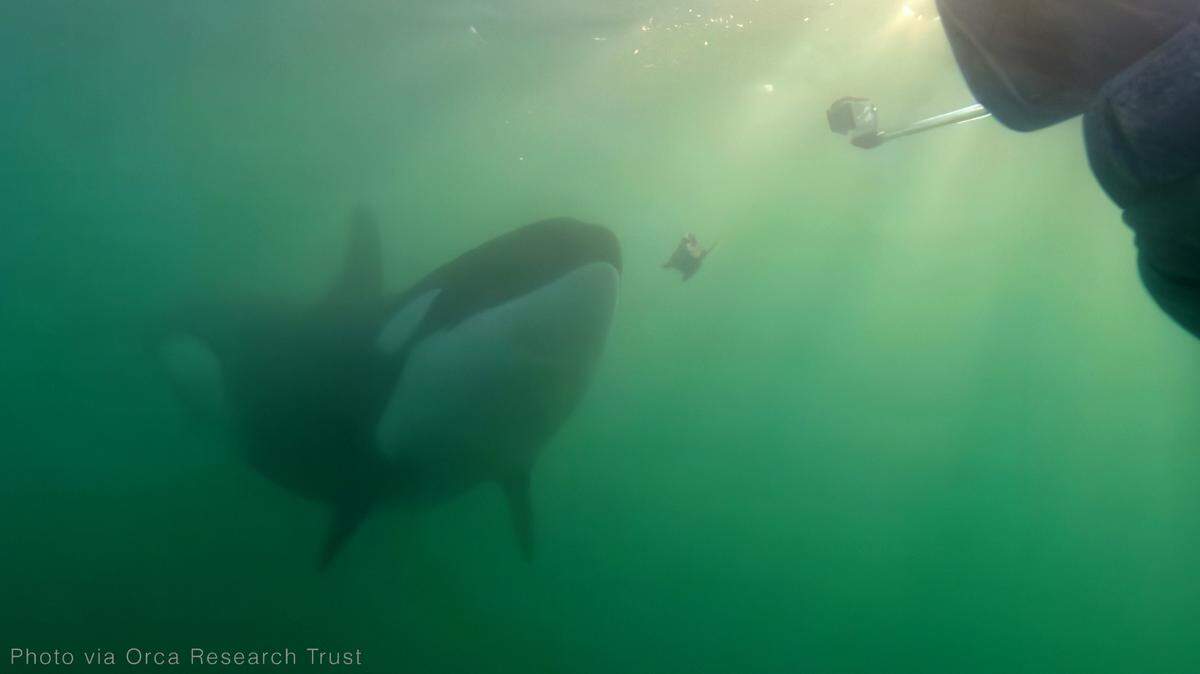
In the fall of 2018, a lone killer whale approached a boat in the Pacific Ocean.
It didn’t attack the vessel — as has happened numerous times in recent years. Instead, it offered up an unexpected gift.
The apex predator “dropped a dead whole harbor seal directly under where we were standing,” Jared Towers, the director of Bay Cetology, told McClatchy News.
After delivering the carcass, the orca slowly swam a lap around the boat, perhaps waiting to see what would happen. But, when no one onboard took an interest in the free meal, it snapped the prey back up and promptly devoured it.
This curious behavior, it turns out, was not an anomaly. In fact, it has happened more than two dozen times across four oceans, according to a study published June 30 in the American Psychological Association.
“The accounts of killer whales offering prey and other items to humans presented here, suggest that these are not isolated events but rather, represent a unique form of behavior that has been selected for in this species,” the authors wrote.
What exactly motivates orcas to give gifts to humans is unclear, but it could stem from kindness, curiosity or even — more ominously — a “Machiavellian” impulse.
Gift-giving orcas
To conduct the study, a team of researchers collected data on worldwide human-orca interactions that occurred between 2004 and 2024.
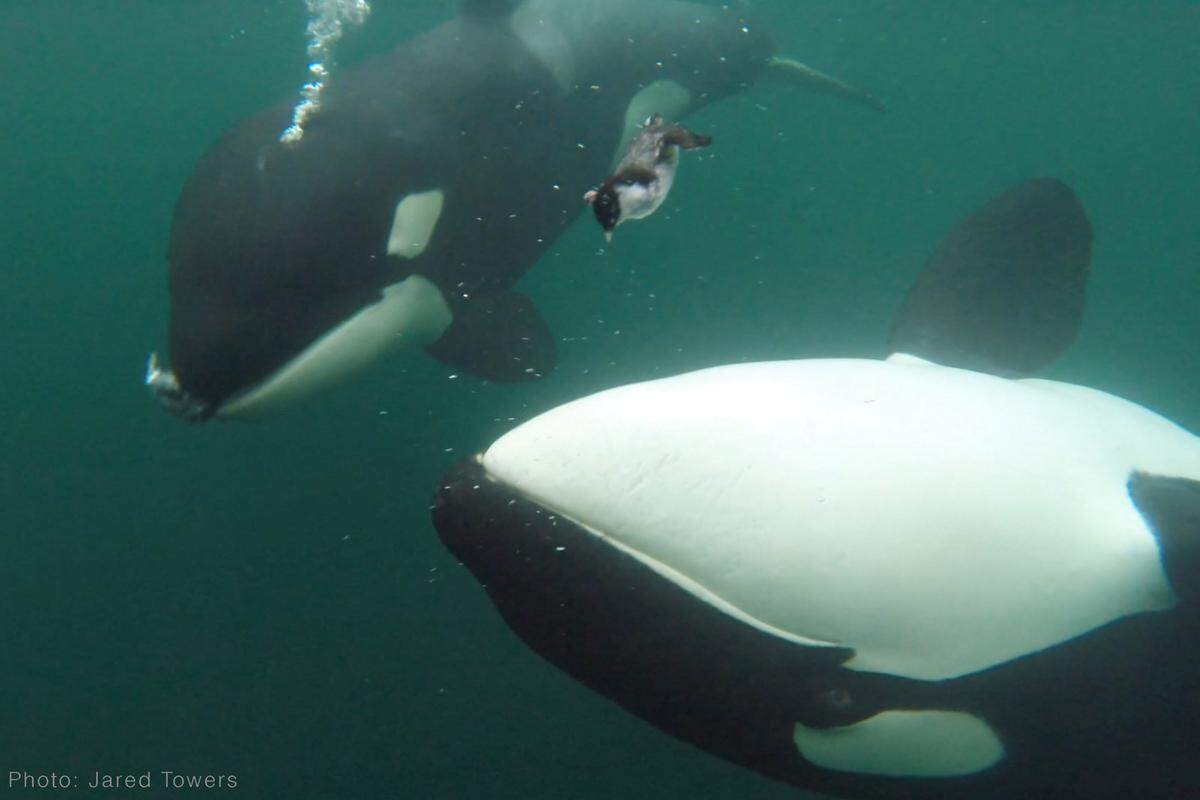
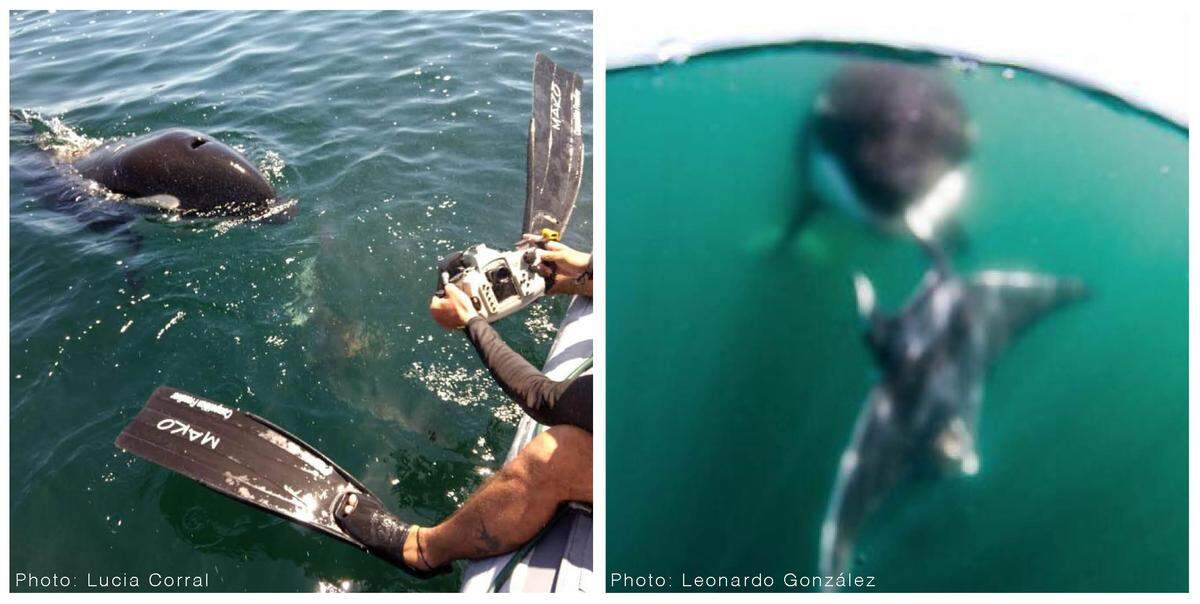
In total, they uncovered 34 separate accounts of wild orcas offering up prey to people situated on boats, in the water or on shore. These took place off the coasts of North and South America, Europe and Australia.
The marine predators served up 18 species of wildly different sizes, including a sea star, a spotted jelly, a sea otter, an ocean sunfish and a gray whale.
In nearly all of the cases, the orcas delivering the offerings were part of larger group. And in every case but one, they stuck around to see how the humans would react.
In some instances, people retrieved the dead animal before placing it back in the ocean. After this happened, on two occasions, the orcas proved persistent, placing the prey back in front of the people.
Kindness or something else?
Researchers hypothesized a handful of factors that could play into the orcas’ gift-giving behavior.
“There are a few drivers of this behavior to consider,” Towers said. “First, killer whales often kill large prey which means they often have surplus.”
Because killer whales can end up with more food than they can consume in one sitting — and since they lack ways to transport or preserve prey — it may quickly lose its value, meaning it can be discarded.
“Second, sharing of resources is foundational to their evolution so sharing with us may be a way to practice learned cultural behavior,” Towers said. And, “third, killer whales have massive brains which they apparently use to explore the behavior of other animals in their environment (like us).”
In short, the killer whales may just be charitable or curious.
But, there’s still one other option that could help explain the whales’ peculiar behavior.
“While seemingly prosocial and altruistic, it can also not be ruled out that these cases were Machiavellian in nature,” the authors wrote, indicating the orcas could be attempting to manipulate humans.
They noted that killer whales in captivity have been documented using dead prey as bait to lure other species near in order to kill them. That said, no humans have ever been killed by wild orcas.
And, while interesting, Towers also cautioned that this behavior is unlikely to be that widespread in orcas.
“I think it’s important to recognize that although there are a number of cases of orcas attempting to provision people around the world,” Towers said, “that these cases are very rare and are usually documented by people who spend a lot of time studying wild orcas.”
This story was originally published July 2, 2025 at 2:32 PM with the headline "Orcas seen giving food to humans, study says. Is it kindness or something else?."