‘Leaf-toed’ creature found ‘wandering’ at night in Cambodia. It’s a new species
Night stretched across western Cambodia, coaxing a “leaf-toed” creature from its hiding place and onto the boulders. Its “reddish”-gold eyes scanned the surrounding landscape, but it wasn’t the only one searching.
Nearby scientists noticed the spotted animal — and discovered a new species.
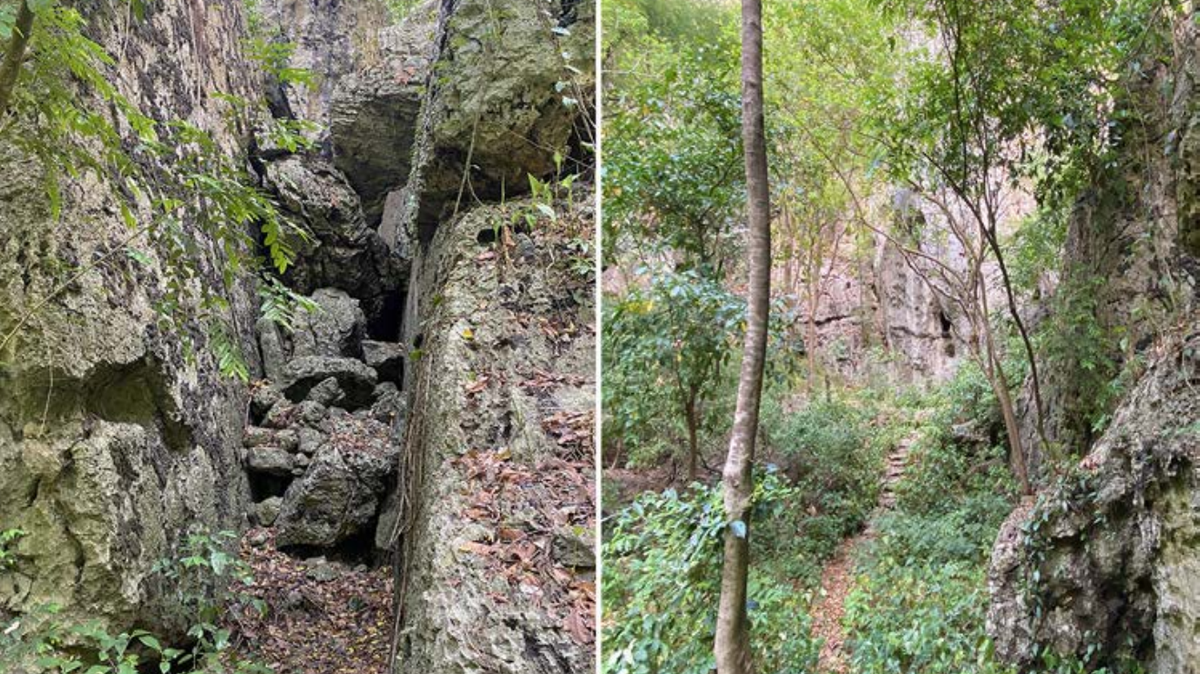
A team of researchers visited some poorly known karstic rock formations in Battambang Province in March 2024 to survey reptiles and amphibians. Karstic habitats generally have high levels of biodiversity so the team expected to find some interesting animals, according to a study published June 30 in the peer-reviewed journal Zootaxa.
During their visit, researchers encountered over a dozen unfamiliar-looking geckos, the study said. Intrigued, they took a closer look at the lizards, analyzed their DNA and quickly realized they’d discovered a new species: Dixonius noctivagus, or the Battambang leaf-toed gecko.
%20Phnom%20Khpoh.JPG "Dixonius noctivagus (20.03.2024) Phnom Khpoh.JPG")
Battambang leaf-toed geckos are considered “small,” reaching just over 4 inches in length, the study said. They have “flat” snouts and “moderate”-sized eyes with a “reddish”-gold mosaic-like pattern. Its “short” fingers and toes have “expanded,” “leaf”-like pads.
Photos show the new species’ coloring. Overall, its body is light brown with darker brown blotches almost resembling leopard spots.
Battambang leaf-toed geckos were found on karstic boulders, “a cement wall” and on the ground nearby, the study said. Several female geckos were found pregnant with “two eggs, indicating that breeding probably occurs in February and March.”
%20Phnom%20Khpoh%202.JPG "Dixonius noctivagus (20.03.2024) Phnom Khpoh 2.JPG")
Researchers said they named the new species after the Latin words for “night” and “vagrant or wandering” because of its “nocturnal activity.”
The new species’ common name refers to the site in Battambang Province where it was first discovered and, so far, the only place where it has been found. The range of these geckos “undoubtedly extends farther in all directions,” researchers said.
Battambang Province is in western Cambodia and along the border with Thailand. Cambodia also borders Laos and Vietnam.
The new species was identified by its scale pattern, coloring, pores and other subtle physical features, the study said. DNA analysis found the new species had at least 7% genetic divergence from other related geckos.
The research team included L. Lee Grismer, Pablo Sinovas, Evan Quah, Sothearen Thi, Phyroum Chourn, Sophea Chhin, Seiha Hun, Anthony Cobos, Christian Ching, Matthew Murdoch, Jeren Gregory, Eddie Nguyen, Alex Hernandez, Amanda Kaatz and Jesse Grismer.
The team also discovered two more new species of gecko in the same rocky habitat: the Kamping Poi bent-toed gecko and Khpoh slender gecko.
“Small and cryptic species like these newly described geckos often escape notice,” study co-author Sinovas said in a June 30 news release from Flora & Fauna. “Bringing them to light is just the beginning of an exciting journey, one we hope will lead to the protection of these remarkable karst landscapes.”
“Cambodia’s karst landscapes remain largely uncharted, their vast biodiversity still underreported, yet they face increasing pressure from human activities — from tourism development to industrial-scale destruction caused by mining for building materials,” Sinovas said in the release. “We must prioritise the protection of these fragile karst ecosystems before rare species are lost forever.”
This story was originally published July 1, 2025 at 9:58 AM with the headline "‘Leaf-toed’ creature found ‘wandering’ at night in Cambodia. It’s a new species."