Colorful sea creatures with ‘spectacular’ blue fins turn out to be new species

Swimming through the crystal blue waters surrounding the Galapagos Islands, divers watched the hubbub of life on the coral reef. A “large,” colorful sea creature with “spectacular” blue fins caught their attention.
The “painted” animal had been misidentified for over 180 years — until now.
When Charles Darwin visited the Galapagos Islands off the coast of Ecuador in 1835, he collected several fish with wing-like fins later described as a new species of sea robin. Ever since, scientists “generally assumed that all” of the islands’ sea robins were the ones Darwin found, Benjamin Victor wrote in a study published June 5 in the peer-reviewed Journal of the Ocean Science Foundation.
But that changed when Victor and other researchers with the East Pacific Corridor Alliance started analyzing the DNA of these colorful fish. The “surprising” result suggested Darwin’s sea robins were being lumped together with other genetically distinct sea robins.
Stunned, the team started combing the archives, sought out new specimens and took a closer look at fish guidebooks for the Galapagos Islands. They realized “that among the more than 100 underwater photographs of sea robins taken in the archipelago, all but a handful are not the species collected by Darwin, but a different-looking species.”
The team had accidentally discovered a new species: Prionotus pictus, or the painted sea robin.
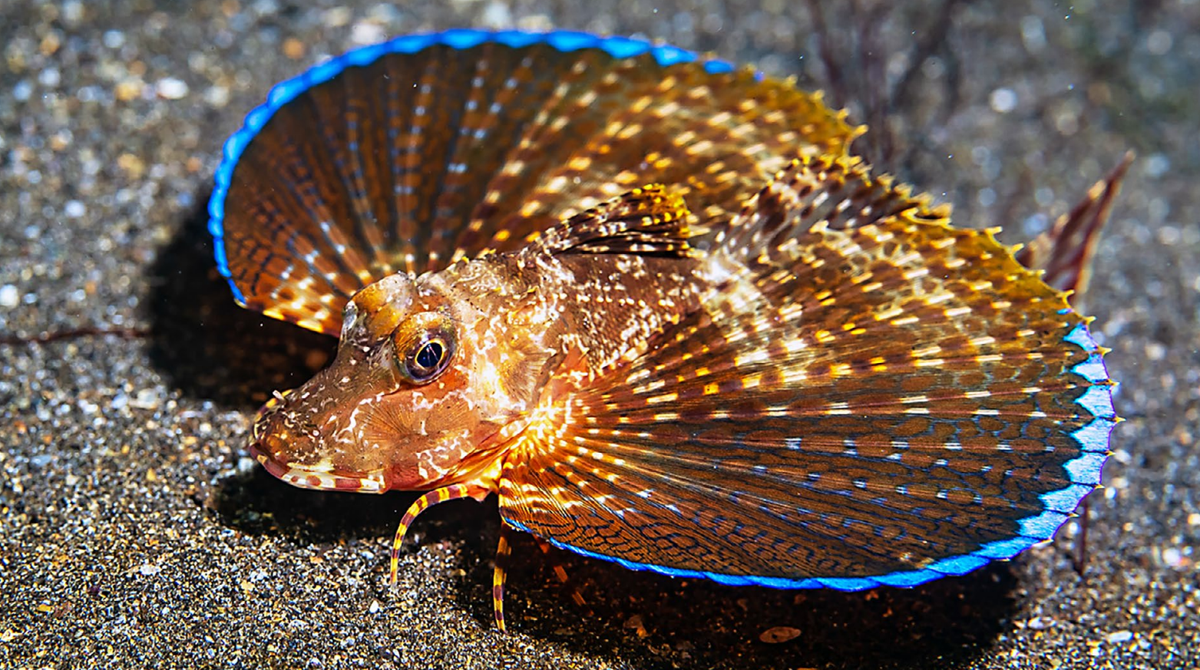
Painted sea robins are considered “large,” reaching almost 8 inches in length, the study said. They have “stout” and “elongate” bodies. Their “large” heads have a “sharply rising, duck-billed” snout, “protruding” eyes and a “small” mouth with a teeth-covered tongue.
The new species has “a variety of colorful and contrasting patterns,” Victor wrote. “A common color palette is basic brown with bright orange tints” and side fins with a “thick bright-blue” edge, which look “spectacular when fanned out.”
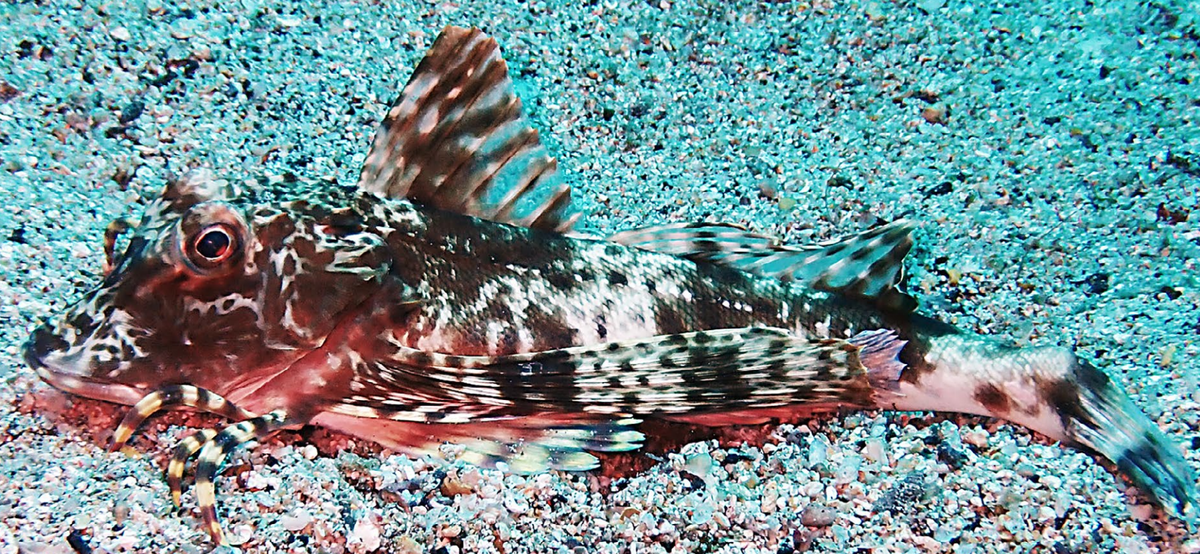
Other painted sea robins have “bright red and orange” bodies or “washed-out tan or pale” hues or a “mostly black-and-white” pattern, the study said.
Still, all painted sea robins have white markings on their heads and bodies “in a unique individual pattern (like a fingerprint),” the study said. Victor said he named the new species after the Latin word for “painted” because of these patterns, colors and “white markings as if splashed with paint.”
So far, painted sea robins have only been found in the Galapagos Islands, an archipelago off the western coast of Ecuador, the study said. The fish live in rocky areas, reefs and “sandy patches” and are often seen by scuba divers.
In an over 180-year-long case of mistaken identity, “photo guidebooks and most divers mistook (the new species of sea robin) for Darwin’s species,” Victor wrote. “Thus, a large, conspicuous, and relatively common new species of fish, endemic (native) to the Galapagos Archipelago, has eluded recognition until now.”
The new species was identified by its DNA, fin shape, head and snout shape, color pattern, lips, head spines and other subtle physical features, the study said.
This story was originally published June 11, 2025 at 6:17 AM with the headline "Colorful sea creatures with ‘spectacular’ blue fins turn out to be new species."