‘Toxic’-skinned creature with ‘large’ hands discovered as new species in Brazil
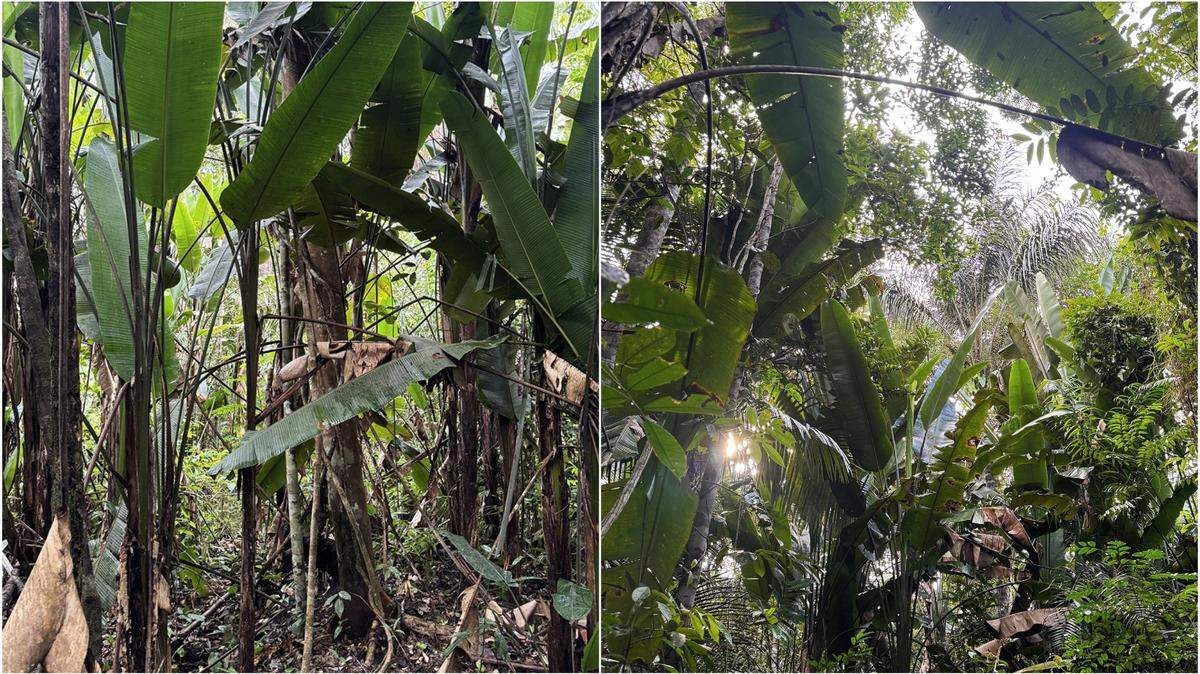
As dawn sunlight seeped through the canopy of the Amazon rainforest, a colorful creature with “toxic skin” climbed down plants using its “large” hands. Stopping on a leaf, it let out a “cricket-like” call intended to attract a mate — but attracted nearby scientists instead.
The calling animal turned out to be a “remarkable” new species.
A team of researchers trekked into the Juruá River basin of northwestern Brazil, “one of the most difficult (to access) and least sampled regions in the entire” Amazon rainforest, in 2023 and 2024 to survey wildlife, according to a study published May 14 in the peer-reviewed journal PLOS One.
During their visits, researchers heard some “cricket-like” trills coming from the trees and found dozens of brightly colored frogs, the study said. Intrigued, they captured several of these frogs, took a closer look at them and analyzed their DNA.
Researchers soon realized they’d discovered a new species: Ranitomeya aetherea, or the heavenly poison dart frog.
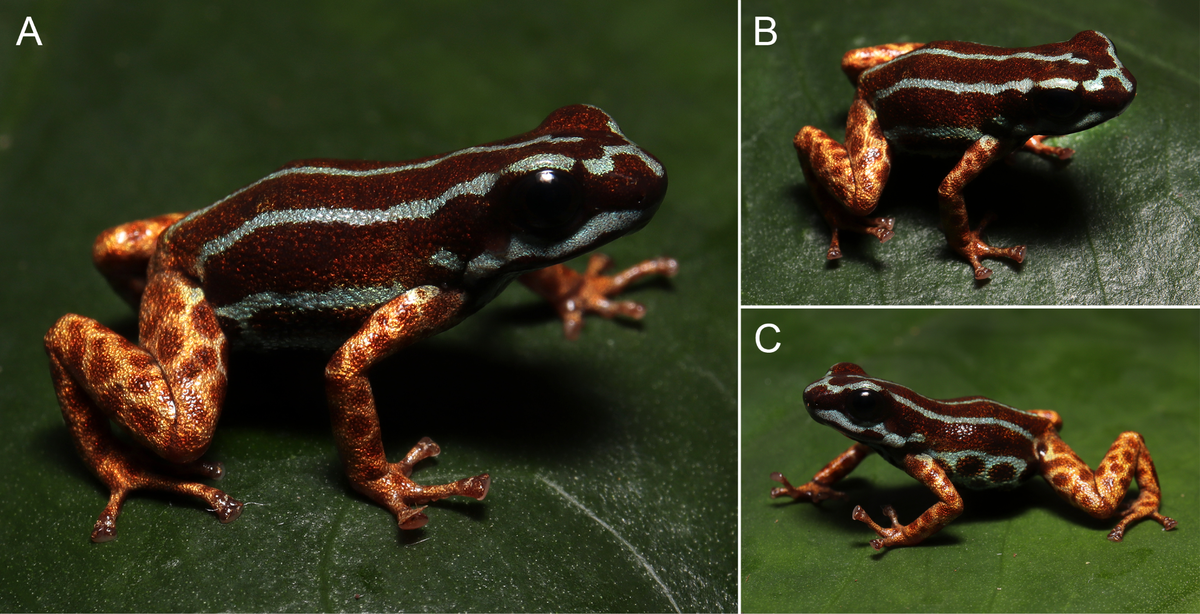
Heavenly poison dart frogs are considered “small,” reaching about half an inch in length, the study said. They have “toxic skin” and “robust” bodies with “slender” arms and “relatively large” hands.
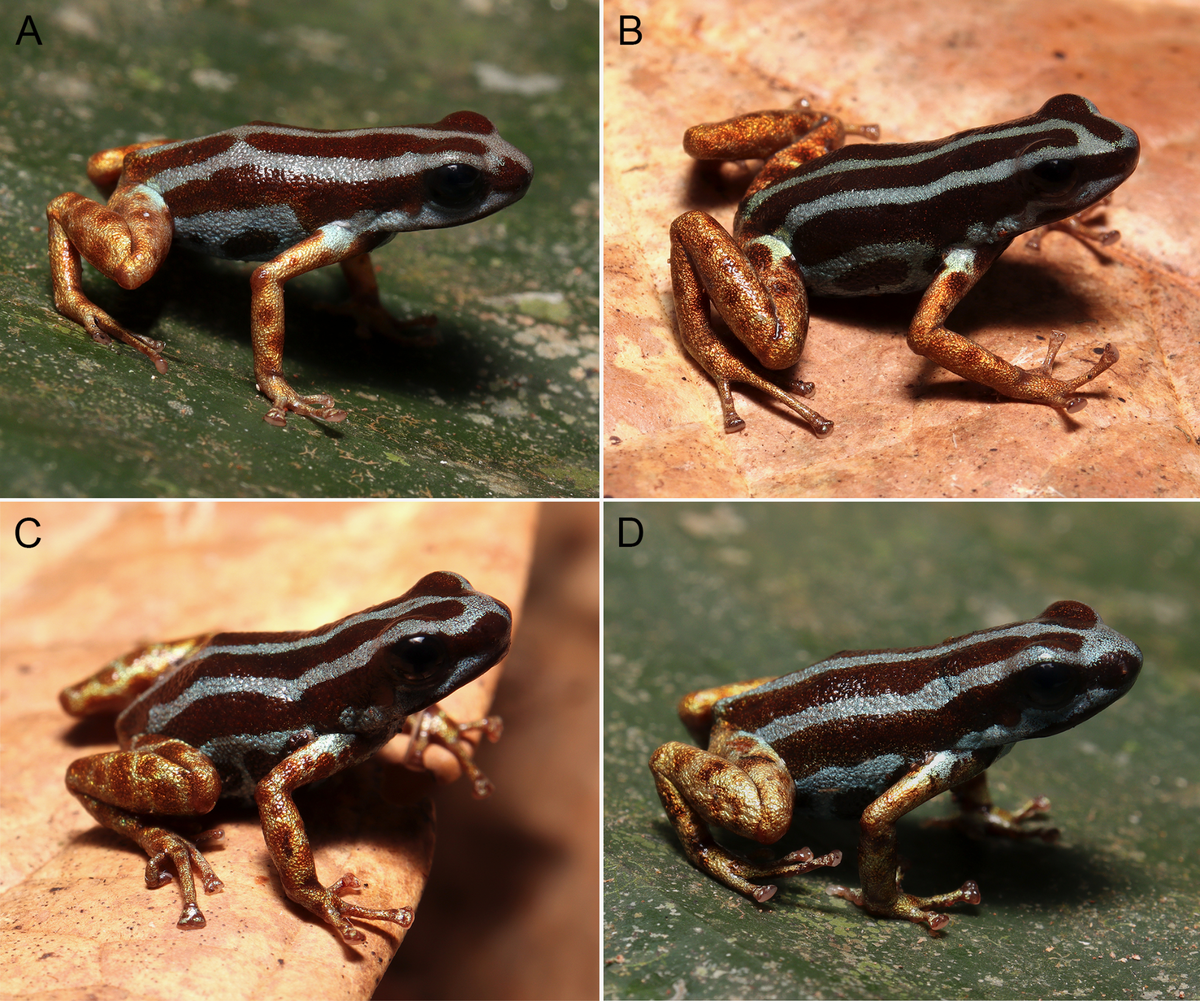
Photos show the “dark reddish-brown” coloring of the new species. Several “sky-blue” stripes run down its back, and its legs have a “copper metallic” hue.
Researchers said they named the new species after the Latin word for “heavenly” because its colorful stripes are “a shade of blue reminiscent of the sky. In addition, we attribute this name to one’s feeling of enchantment and delicacy when encountering these frogs, as if they were from outside this world.”
Heavenly poison dart frogs are “active mostly in the early morning and late afternoon” and usually found in palm plants, sometimes about 13 feet off the ground, the study said. The frogs were seen “agilely” climbing, foraging for food and calling to attract a mate. Male frogs seemed “territorial” and likely have “a promiscuous mating system.”
So far, heavenly poison dart frogs have only been found at one site in the Juruá River basin in the state of Amazonas, near the border with Peru, the study said.
The new species was identified by its call sound, tadpoles, size, coloring, toe shape, skin texture and other subtle physical features, the study said. DNA analysis found the new species had at least 2% genetic divergence from other related species.
The research team included Esteban Diego Koch, Alexander Tamanini Mônico, Jussara Santos Dayrell, Anthony Santana Ferreira, Silionamã Pereira Dantas, Jiří Moravec and Albertina Pimentel Lima.
This story was originally published May 15, 2025 at 8:15 AM with the headline "‘Toxic’-skinned creature with ‘large’ hands discovered as new species in Brazil."