‘Pygmy’ creature with ‘leaf’-like toes found in South Africa. It’s a new species

On a cold, windy evening, a “pygmy” creature with “leaf”-like toes emerged from its hiding place in a remote region of South Africa. Undeterred by the weather, it scampered across the rocks.
Visiting scientists noticed the patterned animal — and discovered a new species.
Researchers ventured into the “extreme” desert climate of Northern Cape Province in 2021 in hopes of finding some “cryptic” lizards. The environment is “rugged and arid,” with minimal rainfall and temperatures ranging from about 12 to 120 degrees, according to a study published April 4 in the peer-reviewed journal Zootaxa.
During an evening visit, researchers noticed some lizards that looked vaguely familiar, the study said. Intrigued, they caught several for a closer look and soon realized they’d found a new species: Goggia sabula, or the gravel pygmy gecko.
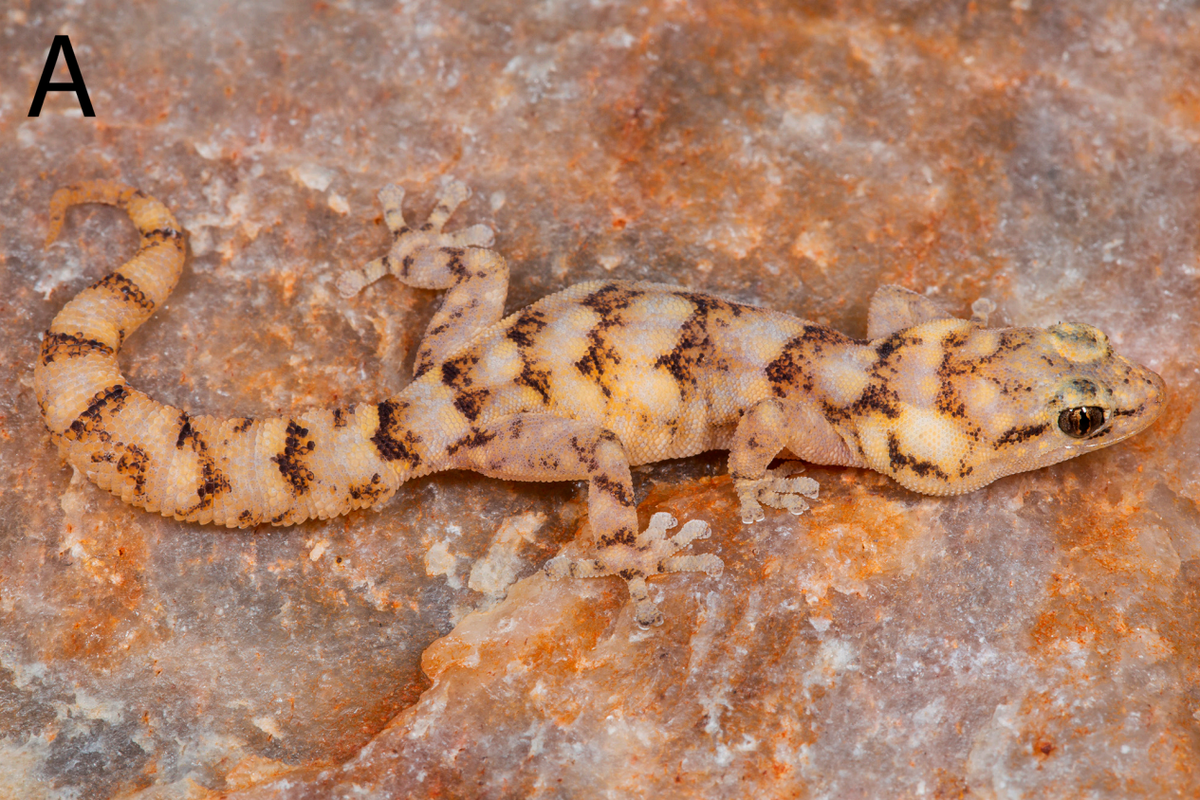
Gravel pygmy geckos are considered “small,” reaching just over 2 inches in length, the study said. They have “cylindrical” bodies with “short” snouts and “leaf”-shaped toes.
Photos show the “boldly patterned” new species. Overall, the gecko has a pinkish cream hue with rusty orange and brown markings. Its belly is a uniform cream color.
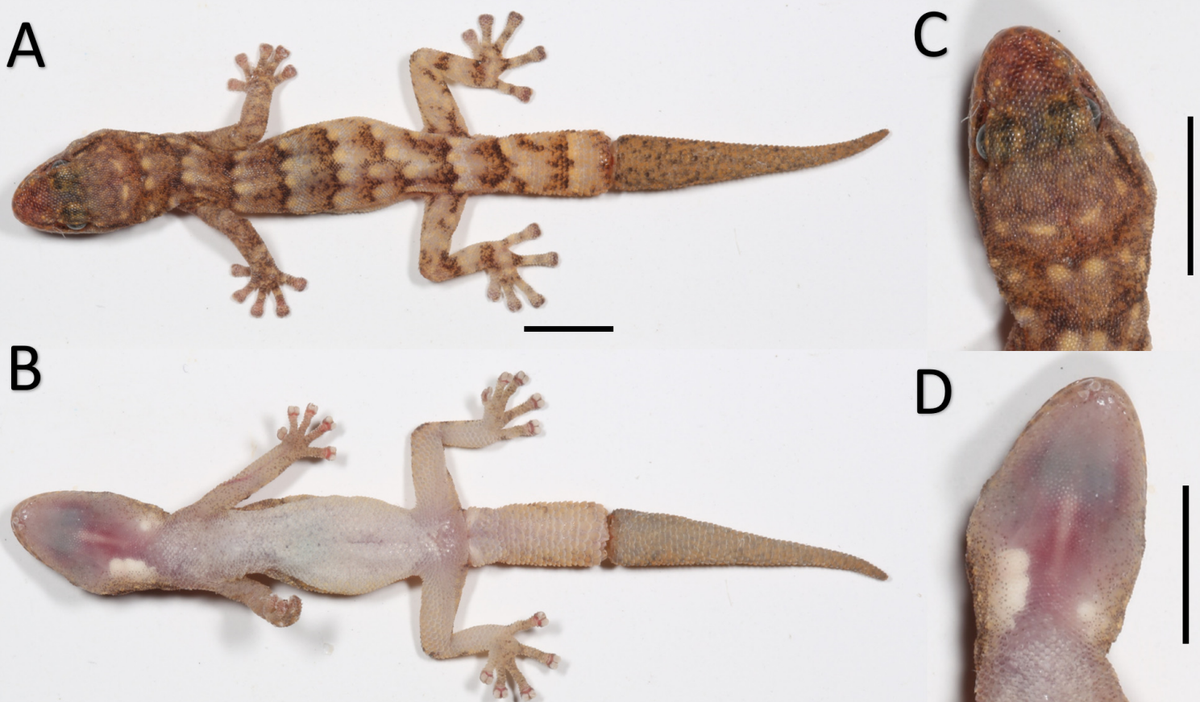
Researchers said they named the new species after the Latin word for “gravel or coarse sand” because of its preferred habitat.
Gravel pygmy geckos are rock-dwelling lizards, “sheltering in thin crevices on rock outcrops,” the study said. The geckos were seen moving around “in cold and windy conditions, suggesting that this species may remain active even under adverse environmental conditions” when other gecko species take shelter.
For now, gravel pygmy geckos live in an “intact and stable” habitat but “may in (the) future be impacted by nearby mining operations,” researchers said.
So far, gravel pygmy geckos have only been found at one site in Northern Cape Province close to South Africa’s border with Namibia, the study said. The new species “might be found in similar habitat in adjacent southern Namibia,” and researchers “highly recommended” further surveys.
The new species was identified by its habitat, body size, scale pattern, coloring and other subtle physical features, the study said. DNA analysis found the new species had at least 11% genetic divergence from other related gecko species.
The research team included Werner Conradie, Courtney Hundermark, Luke Kemp and Chad Keates.
This story was originally published April 4, 2025 at 12:38 PM with the headline "‘Pygmy’ creature with ‘leaf’-like toes found in South Africa. It’s a new species."