
Whales sing more when they have full stomachs, study finds. ‘Window into their lives’
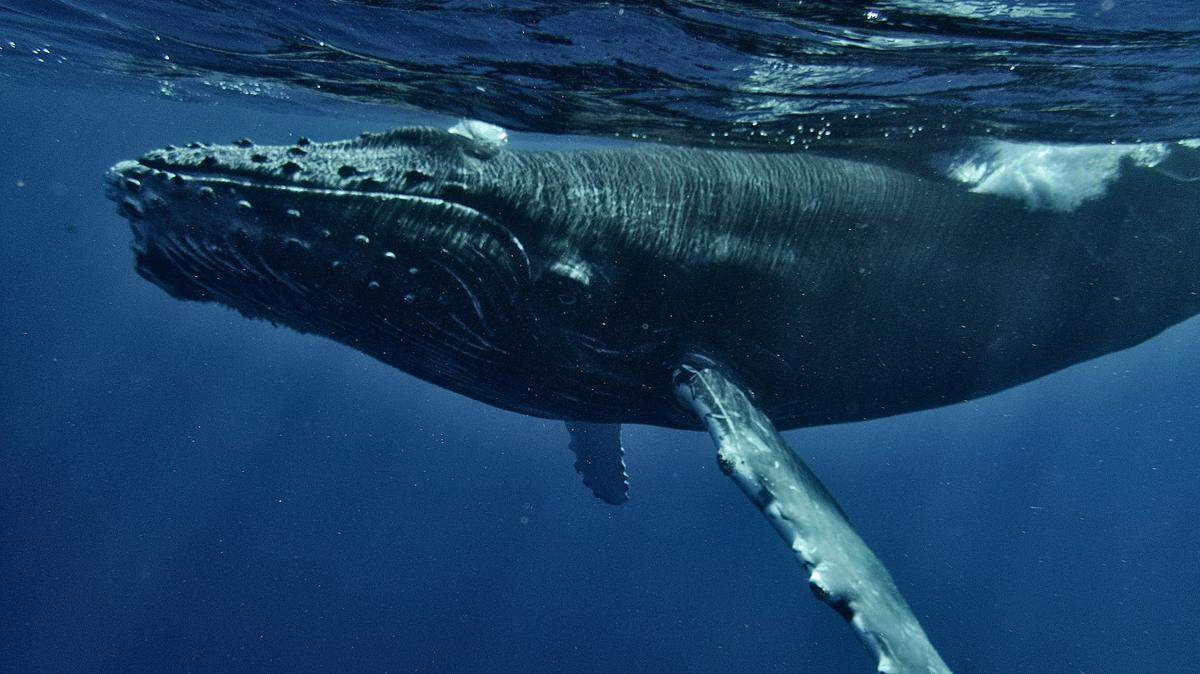
Baleen whales sing more when there is an abundant supply of food, according to a new study.
The study, published Feb. 26 in the journal PLOS One, indicates the marine giants’ vocalizations can be used to measure their health — and the health of underwater ecosystems more broadly.
“Analyzing baleen whale songs has revealed year-to-year variations that reflect changes in the availability of the species they forage on,” John Ryan, an oceanographer at the Monterey Bay Aquarium Research Institute, said in a news release from the organization.
“This research underscore(s) that listening to whale songs is much more than a rich sensing experience, it is a window into their lives, their vulnerability, and their resilience,” the release said.
Conducted over the course of six years, the study focused on three baleen species — humpback, fin and blue whales — located off the U.S. West Coast.
Using submerged microphones, known as hydrophones, researchers recorded whale songs in the Monterey Bay National Marine Sanctuary, a federally protected area off of California.
“These vocalizations can be detected if the singing whale is anywhere within an area thousands of square kilometers around the hydrophone,” according to the release.
The study kicked off in 2015 during a prolonged marine heat wave that disrupted foraging conditions across the Pacific, providing a special opportunity to examine how whales respond to environmental stress.
The research revealed significant differences in whale songs by year.
For example, humpback whale songs increased dramatically over the study period, with detections occurring 34% of days at the beginning to 76% by the end. These increases were closely correlated with improvements in foraging conditions, particularly large increases in anchovies.
Songs from blue whales showed a different pattern, with detections declining significantly when populations of krill — their sole source of food — dropped, the authors wrote in The Conversation.
Researchers examined several factors that could explain these changes in song detection — but the best-supported explanation was that they are correlated with the availability of food.
The findings suggest that, in the future, whale songs can be used to discern how well the marine mammals respond to fluctuating ocean conditions.
“As the ocean changes, some species will be more affected than others,” Ryan said. “Compared to humpback whales, blue whales in the eastern North Pacific may be more vulnerable due to not only a smaller population size but also a less flexible foraging strategy. These findings can help scientists and resource managers predict how marine ecosystems and species will respond to climate change.”
In addition to Ryan, the study authors were William Oestreich, Kelly Benoit-Bird, Chad Waluk, Carlos Rueda, Danelle Cline, Yanwu Zhang, Ted Cheeseman, John Calambokidis, James Fahlbusch, Jack Barkowski, Alyson Fleming, Calandra Turner Tomaszewicz, Jarrod Santora, Tetyana Margolina, John Joseph, Ari Friedlaender and Jeremy Goldbogen.
This story was originally published March 14, 2025 at 7:39 AM with the headline "Whales sing more when they have full stomachs, study finds. ‘Window into their lives’."