6-foot-long sea creature — with ‘sharp’ snout — discovered as new species in Colombia
Off the coast of Colombia, anglers felt something tug on their lines and hauled in a 6-foot-long sea creature with a “pointed” nose. A scientist onboard the boat snapped a photo of their catch.
It turned out to be a new species.
A team of researchers spent twenty years monitoring the catch of anglers along the western Pacific coast of Colombia. They rode along during fishing trips and visited landing sites, documenting the sea animals they saw.
One particular animal caught their attention: some “large” stingrays that didn’t quite match any known species and had “surprisingly gone unnoticed,” according to a study published Feb. 18 in the peer-reviewed journal Ichthyology and Herpetology.
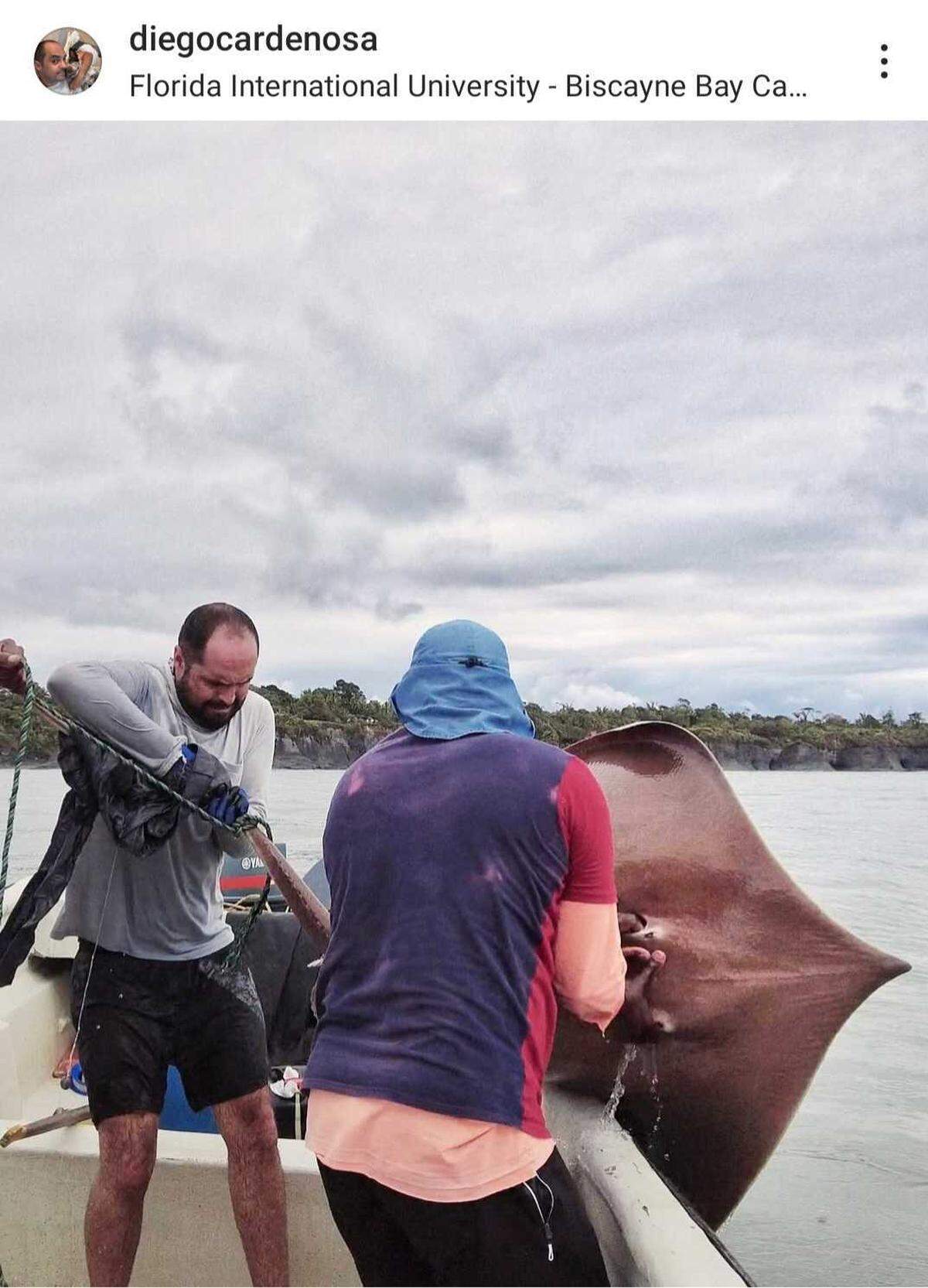
Intrigued, researchers began measuring, weighing and sampling dozens of these stingrays as anglers landed them over the years. As the data accumulated, researchers realized they’d discovered a new species: Hypanus rubioi, or the longnose Pacific stingray.
Longnose Pacific stingrays are considered “large-sized,” reaching over 6 feet long and 4 feet across and weighing over 55 pounds, the study said. They have “spade-shaped” bodies with a “sharp,” “pointed” nose and a “long,” “slender” tail ending in a stinger. Their backs have a “rough” texture with rows of “blunt thorns.”
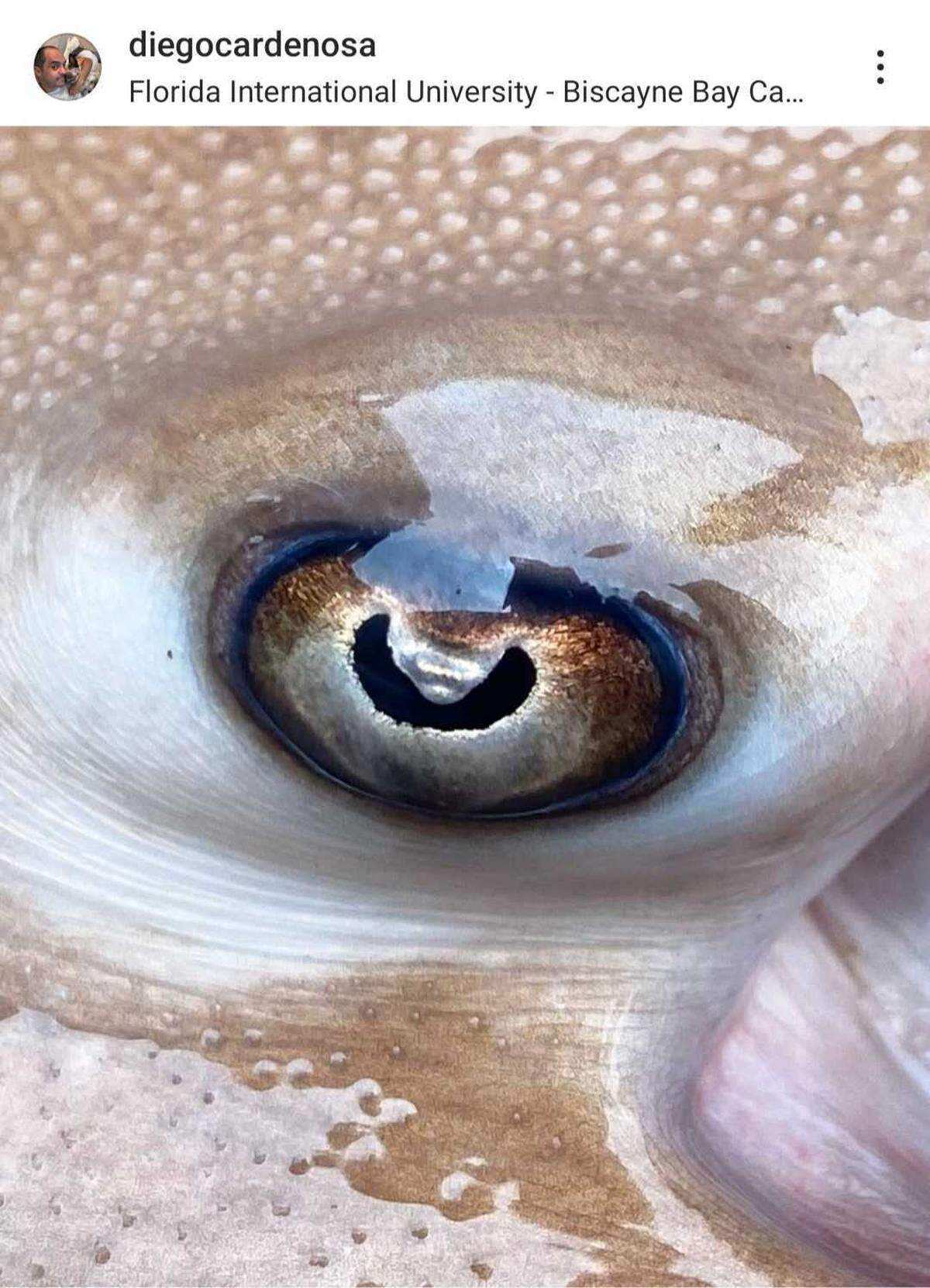
Diego Cardeñosa, one of the study’s co-authors, shared photos of the new species and the research process in a Feb. 18 Instagram post.
Overall, the longnose Pacific stingray has a “dusky” brown hue with some paler cream spots and a white edge. Its nose appears to droop when out of the water, as seen in a Facebook photo shared by Fish in The News.
Longnose Pacific stingrays live on “soft bottoms or mud habitats” at depths of about 2 to 50 feet, the study said. One female ray was caught pregnant with “two pups,” and another captured ray was estimated to be “at least 7 years” old.
Much about the new species’ lifestyle remains unknown.
The longnose Pacific stingray is “used as a food source by local fishing communities” and “sought after because it provides a good amount of protein,” researchers said. Its “liver is also used for medicinal purposes.” Overfishing and illegal harvesting could threaten the new species, but more records are needed to know for sure.
Researchers said they named the new species after Efrain Rubio, a professor at the Universidad del Valle and “one of the first researchers interested in the fish fauna of the Colombian Pacific.” The new species’ common name refers to its distinctive snout.
So far, longnose Pacific stingrays have been found at several sites along the western coast of Colombia, the study said. Researchers suspect the new species is more widespread on the Pacific coast, possibly “ranging from central Mexico to northern Peru.”
The new species was identified by its size, body proportions, eye size, texture and other subtle physical features, the study said. DNA analysis found the new species had at least 2% genetic divergence from other stingray species.
The research team included P. A. Mejía-Falla, A. F. Navia, Cardeñosa and J. Tavera.
This story was originally published February 20, 2025 at 7:11 AM with the headline "6-foot-long sea creature — with ‘sharp’ snout — discovered as new species in Colombia."