2-foot-long mammal — ‘completely spiny’ — turns out to be new species in Colombia

In a darkened forest of central Colombia, a 2-foot-long mammal climbed a tree and paused to rest its “completely spiny” body. Its elusive lifestyle and cryptic appearance largely helped it go unnoticed and, when occasionally encountered, be misidentified.
But it turned out to be a new species.
Scientist Héctor Ramírez-Chaves and his colleagues set out to study the mammals and rodents of Colombia, knowing the country’s wildlife had been “little studied,” he told McClatchy News via email.
Looking at past wildlife records, the team noticed “that some specimens of a (porcupine) species considered widespread inhabited only in a specific part” of Colombia, Ramírez-Chaves said in the Feb. 11 email. Intrigued, they “decided to study that population.”
That was easier said than done. Records of these porcupines were scarce.
To get enough data, researchers scoured museum archives, reviewed photographs of porcupines in the wild and collected a few more animals, according to a study published Jan. 3 in the peer-reviewed Journal of Mammalogy.
Soon, the team noticed a pattern: porcupines from central and northern Colombia consistently differed from those in nearby regions, the study said. Researchers realized they’d discovered a new species: Coendou vossi, or Voss’ porcupine.
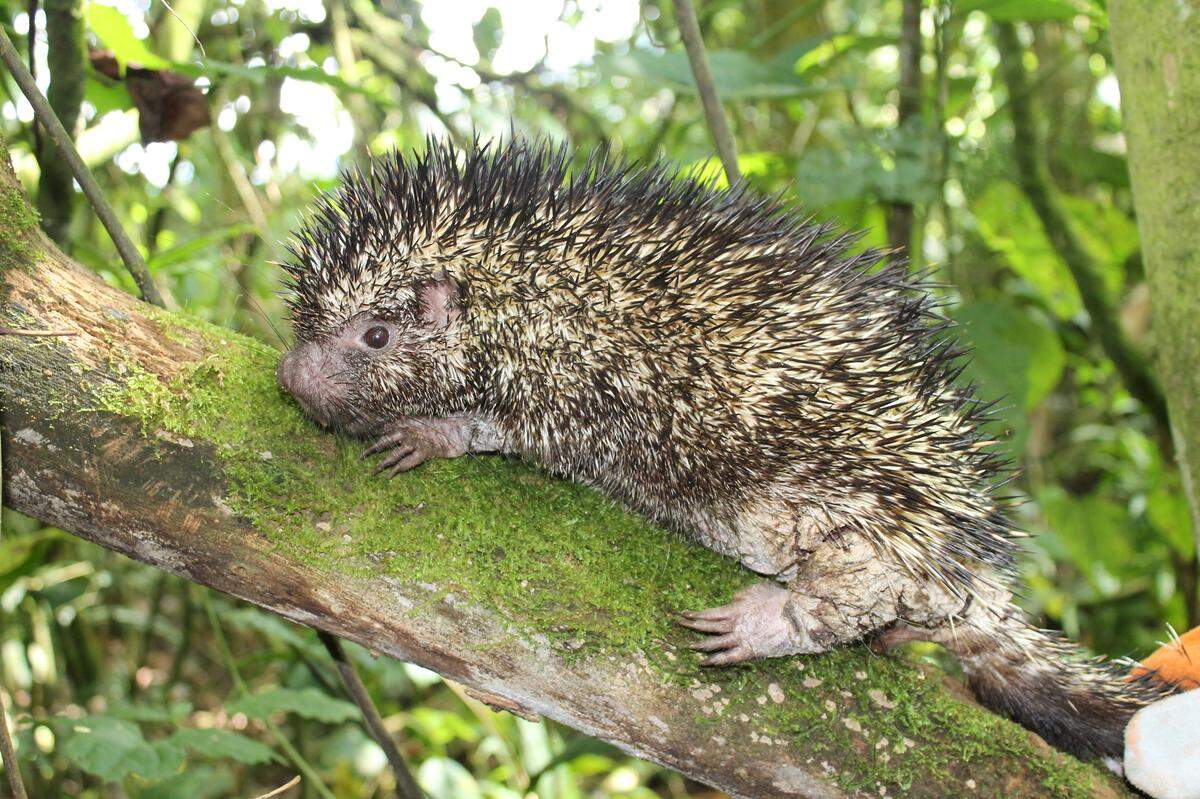
Voss’ porcupines are considered “medium-sized,” reaching over 2 feet in length, the study said. They have “small” bodies and “long” prehensile tails completely covered with multicolored quills.
A photo shows the “completely spiny” new species. Its coloring is a mixture of creamy white, brown and black.
Voss’ porcupines are “mainly nocturnal, (resting) in cavities of trees and caves” and eating “mostly” fruit, Ramírez-Chaves said. They are “not uncommon” but, due to their elusive lifestyles, “can be difficult to detect.”
Researchers said they named the new species after Robert Voss “who has contributed significantly to studies of porcupines of the genus Coendou and Neotropical mammalogy.”
So far, Voss’ porcupines have been found at several sites along the Magdalena River and northern Magdalena Province,” the study said.
The new species was mistaken as the Quichua porcupine, or Coendou quichua, for decades. It was identified by its preferred habitat, body size, tail length, quills and other subtle physical features. DNA analysis found the new species had at least 3% genetic divergence from other porcupine species.
“For me, it is interesting that there is a huge part of the biodiversity of Colombia that is understudied,” Ramírez-Chaves said.
The research team included Ramírez-Chaves, Glib Mazepa, Darwin Morales-Martínez, Andrés Felipe Suárez-Castro, Javier Colmenares-Pinzón, Paola Pulido-Santacruz and Elkin Noguera-Urbano.
This story was originally published February 13, 2025 at 10:37 AM with the headline "2-foot-long mammal — ‘completely spiny’ — turns out to be new species in Colombia."