76-million-year-old murder case launched after fossil found with tooth marks in Canada
Tens of millions of years after a young pterosaur took its last breath in present-day Canada, paleontologists are investigating its death.
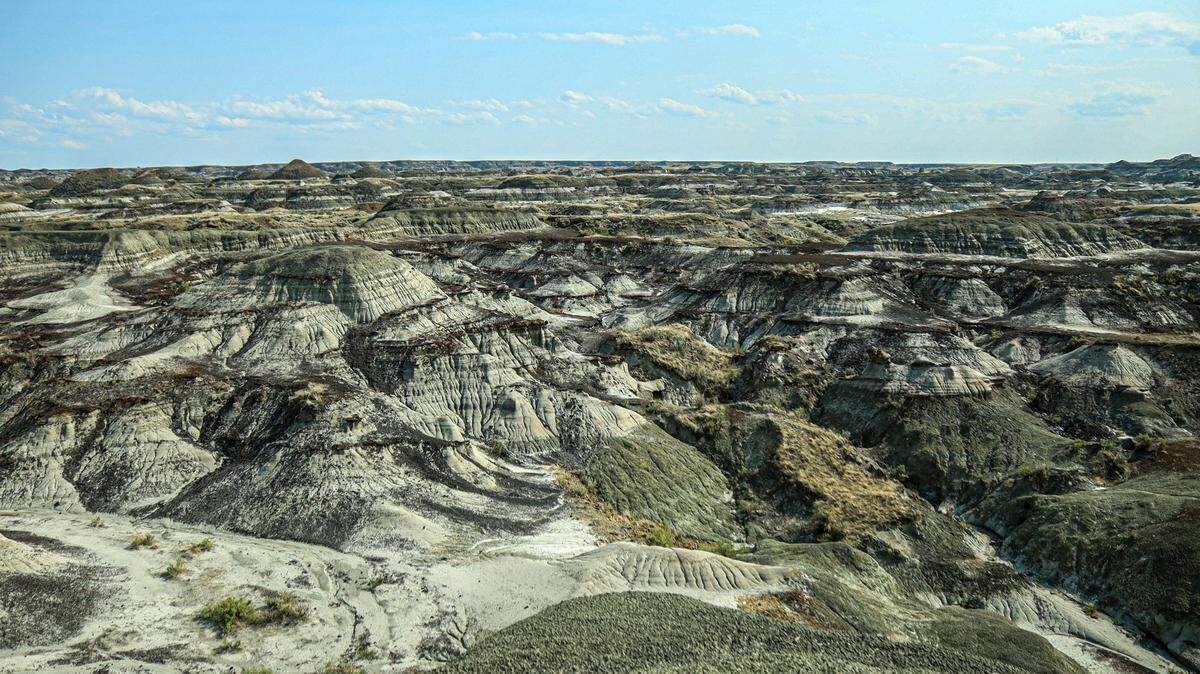
Students from the University of Reading in the United Kingdom, led by ecology professor Brian Pickles, traveled to Dinosaur Provincial Park in Alberta for a field course in July 2023, according to a Jan. 23 news release from the university.
As they learned about prehistoric ecosystems and the animals that called them home, the researchers uncovered a small piece of fossilized vertebra, the university said.
Not only was the bone itself rare, but it had an extra feature that made it extraordinary. Their findings were published Jan. 23 in the peer-reviewed Journal of Paleontology.
The vertebra belonged to a juvenile Azhdarchid pterosaur, a species of giant, prehistoric flying reptile with bones similar to birds, making them thin and typically poorly preserved, researchers said. The species lived 76 million years ago during the Cretaceous period.
On one end of the bone, a conical puncture breaks up the smooth, fossilized surface, according to the study.
“Pterosaur bones are very delicate — so finding fossils where another animal has clearly taken a bite is exceptionally uncommon. This specimen being a juvenile makes it even more rare,” study author Caleb Brown, from the Royal Tyrrell Museum of Paleontology, said in the release.
But what caused the hole?
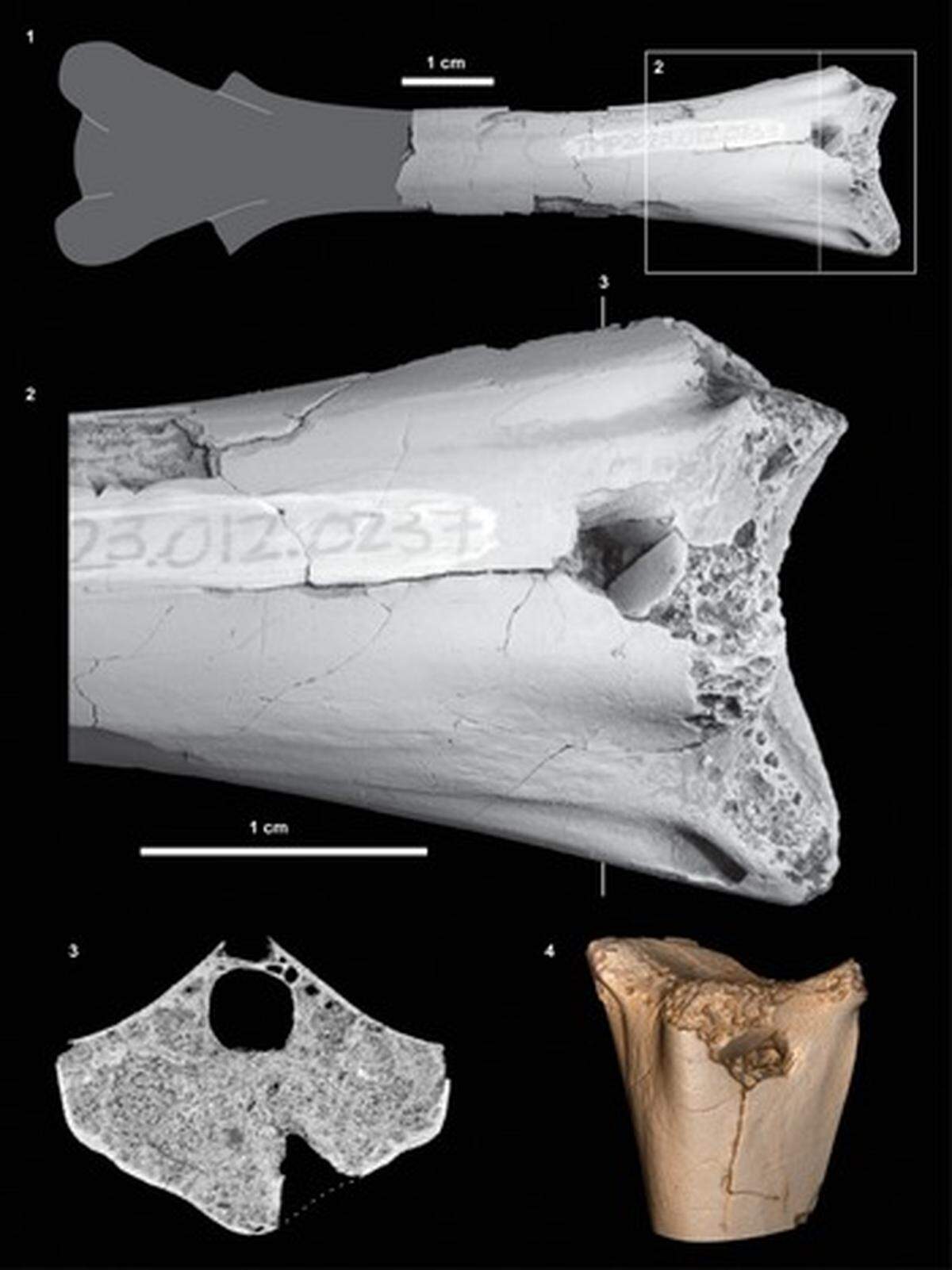
A scan of the bone found that the edges of the puncture don’t match the break points on the rest of the bone, meaning it wasn’t caused during the fossilization process, and cemented and compacted material inside the hole suggest it wasn’t a recent puncture caused by tools, according to the study.
There was also no evidence of remodeling or healing on the bone around the puncture, meaning it likely occurred very near or at the time of death of the pterosaur, researchers said.
Instead, the paleontologists believe the hole was formed from the bite of a predator capable of taking down the 6-foot-wingspan pterosaur.
The most likely culprit is a species of crocodilian, according to the study, because of the conical shape of their teeth and their body size.
Adult Azhdarchid pterosaurs could reach the size of giraffe with a wingspan of more than 30 feet, researchers said, so the animal’s small size as a juvenile may have made it a more desirable target for attack.
“Bit traces help to document species interactions from this period,” Pickles said. “We can’t say if the pterosaur was alive or dead when it was bitten, but the specimen shows that crocodilians occasionally preyed on, or scavenged, juvenile pterosaurs in prehistoric Alberta over 70 million years ago.”
This is the first time fossils have been found to show interactions between Azhdarchid pterosaurs and crocodilians in North America, paleontologists said.
Dinosaur Provincial Park is in southern Alberta in south-central Canada.
The research team includes Brown, Pickles, Phil R. Bell and Holly Owers.
This story was originally published January 23, 2025 at 12:21 PM with the headline "76-million-year-old murder case launched after fossil found with tooth marks in Canada."