
Massive ocean creatures show mysterious behavior for first time off Australia. See it
.jpg "Off the western coast of Australia, ocean giants showed off a rarely seen behavior, researchers said.")
With bodies that can grow longer than school buses, it may come as a surprise that scientists know so little about whale sharks.
The ocean giants are the largest fish in the world, but their everyday lives and behaviors in the wild are elusive and mysterious.
Whale sharks are also endangered, meaning learning about their life cycles is more critical than ever to help protect the species.
Now, researchers off the coast of western Australia believe they have captured a new whale shark behavior on video for the very first time.
“Mating and courting behaviors of whale sharks have been observed in the wild at two locations,” researchers said in a Jan. 2 study published in the peer-reviewed journal Frontiers in Marine Science. “In the Atlantic Ocean, aggregations of whale sharks occur in the waters surrounding St. Helena Islands and can include sexually mature males and females.”
Fishers have reported male whale sharks going “belly to belly” with females, according to the study, but this behavior had never been recorded.
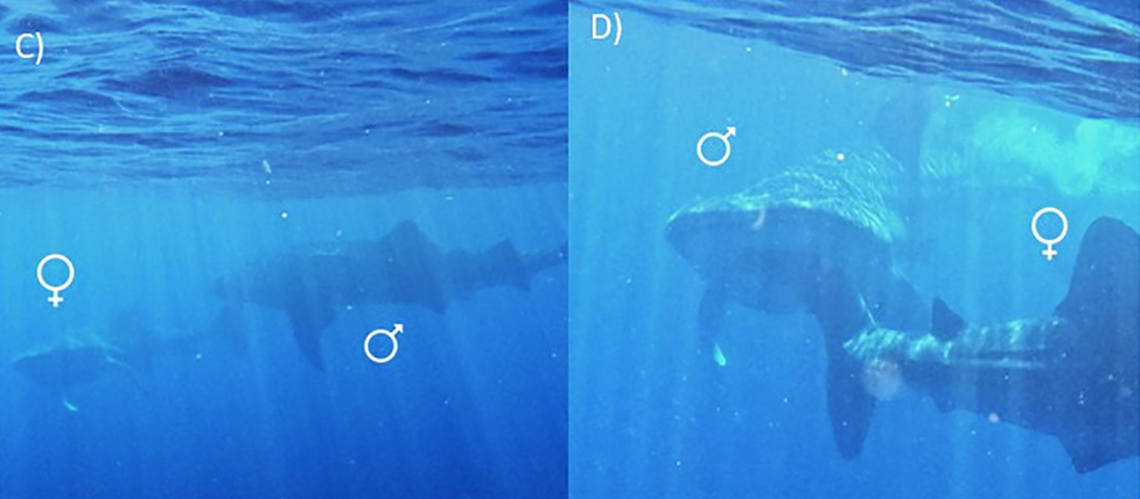
Then, in May of 2024 during a two week research expedition, a spotter plane saw two whale sharks near the surface of the water at Ningaloo Reef and alerted the boat below, according to the study.
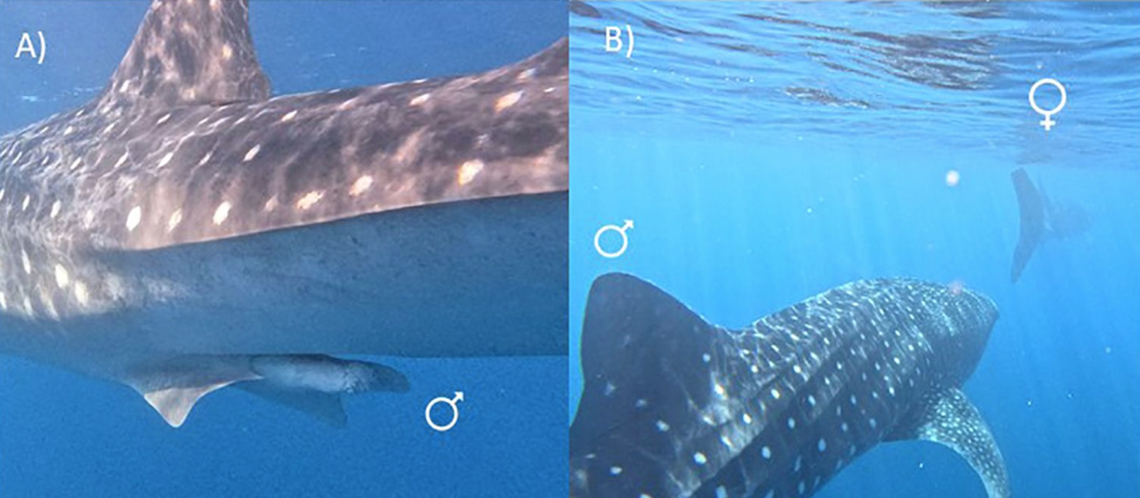
Researchers hopped into the water, armed with a camera, and watched as “the male was observed to open its mouth and lunge forward towards the caudal fin of the female,” according to the study.
“The male shark increased its swimming speed and lunged again at the caudal fin of the female, this time making contact and briefly biting the tail,” researchers said. “The female responded by rapidly pivoting with pectoral fins pointing downwards to face the male. After a brief pause in forward movement, the female again turned rapidly, with contact occurring between the snout of the male and the caudal fin of the female. The female then rapidly descended to depth followed by the male.”
A video of the interaction was shared in a Jan. 6 news release from Murdoch University.
“Following and biting are common copulation behaviors in other species within the subclass of cartilaginous fish that the whale shark belongs to,” PhD candidate Christine Barry from Murdoch University said in the release. “This is also consistent with previous reports by fishers recounting behaviors they’d observed out on the water of sexually mature males towards females at different aggregation sites.”
The researchers believe the recorded interaction didn’t end with mating, but is still helpful in understanding how sexually mature whale sharks initiate contact with one another.
The aggressive sexual behavior from males may also shed light on why there is such a sex disparity among whale sharks, particularly at aggregation sites, researchers said.
“At Ningaloo Reef, and many aggregation sites around the world, males outnumber females with a ratio of 1 female to 3 males,” Barry said. “This could explain why female whale sharks may be avoiding aggregation sites. Particularly for juvenile female sharks, the energetic costs of unwanted attention from males could imply a reason for strong male biases.”
Ningaloo Reef is off the central western coast of Australia.
The research team includes Barry, Emily Lester, Michael P. Doane, Luciana C. Ferreira, Michele Thums, Adrian C. Gleiss and Mark G. Meekan.
This story was originally published January 9, 2025 at 10:05 AM with the headline "Massive ocean creatures show mysterious behavior for first time off Australia. See it."
