Rare predator captured on trail camera in India during search for tigers. Take a look

In the forests of India, the stripes of tigers blend in with the tree trunks and foliage.
At the top of the food chain, tigers may seem like the fiercest predator in the forest. But there is a much smaller and rarer creature hidden among the trees.
A group of researchers in India were conducting routine tiger population monitoring when they installed 35 camera traps in multiple types of environments in Uttarakhand, according to a study published Sept. 26 in the peer-reviewed Journal of Threatened Taxa.
The area connects to multiple reserves, including an area “home to very important wildlife species like elephants, tigers, leopards, bears, hyena (and) crocodiles,” according to the study.
Specifically, one range is known for housing 53 “Royal Bengal Tigers,” researchers said.
But when the researchers went back to their traps in January, more than tigers had been immortalized in the images.
At first, researchers believed that a civet had walked past the lens. Civets are nocturnal mammals similar in appearance to raccoons that live in southeast Asia.
“After matching, the species was identified as a honey badger through its morphological characters such as a larger size of the skull and mantle color,” researchers said. “This is the first photographic evidence of honey badger presence in Tarai East Forest Division.”
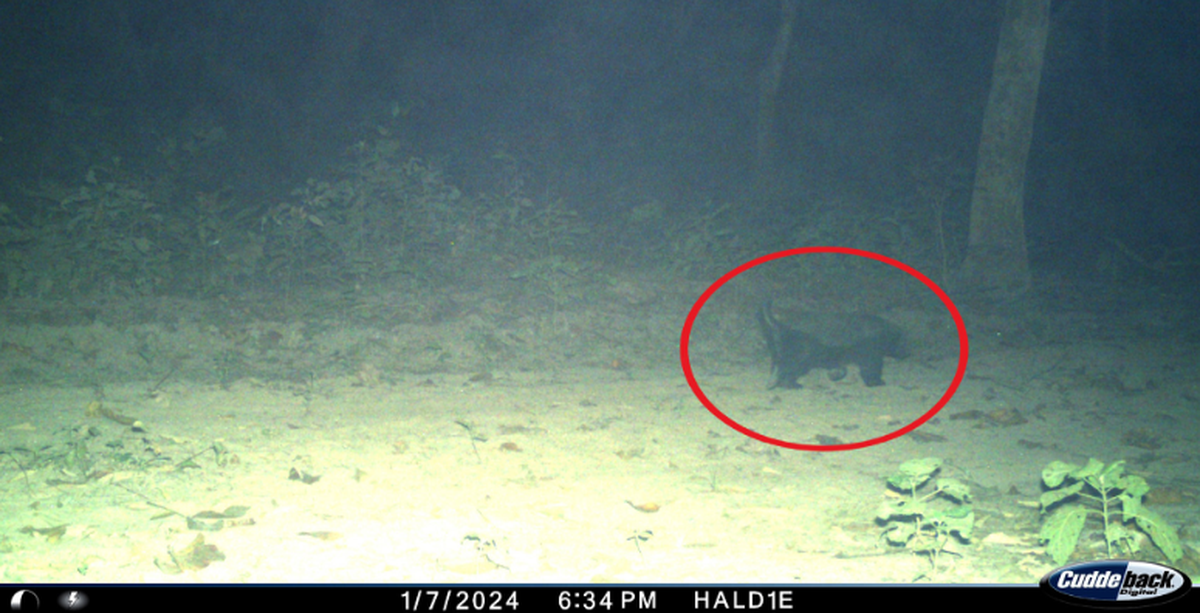
Honey badgers have been seen in India before, according to the study, but their appearance in this area was new.
Researchers were unable to tell the age of the animal but could clearly see that it was a male and on its own, according to the study.
“They are solitary animals, but a female and her cub can be seen foraging together, and they can hunt in pairs during the mating season,” researchers said.
The species is not endangered, instead listed as “least concern” on the International Union for Conservation of Nature’s Red List, but is considered “a very rare species,” according to the study.
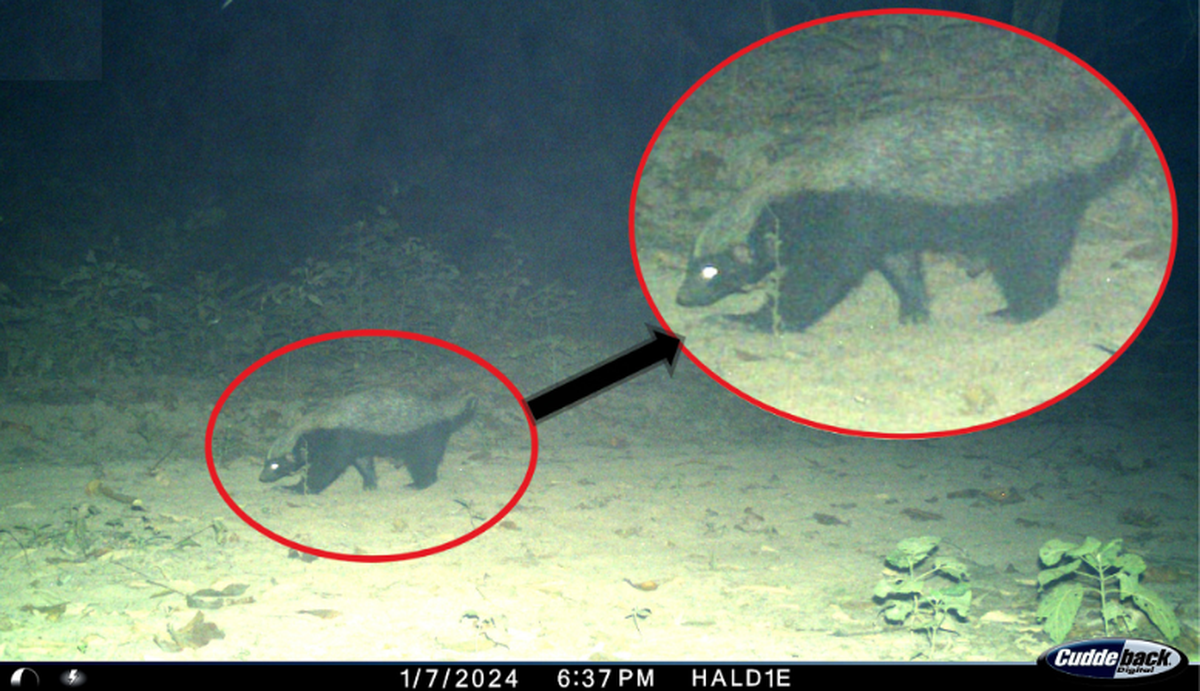
Honey badgers are around 10 inches tall at the shoulder, but they have sharp claws that are used for digging and climbing. The species also has unique “loose and tough” skin that moves freely on the animal. Honey badgers can “twist and work its way free from either an attacker or from being stuck in a tight space, whilst also providing protection from bites inflicted by other carnivores.”
Their small size doesn’t stop them from being one of the more aggressive creatures in the animal kingdom.
Honey badgers don’t look for trouble, according to BBC Wildlife Magazine, but they can hold their own against much larger predators and will attack when they get surprised.
They often raid beehives, earning their name, but also hunt rodents, reptiles and insects, and can take on the calf of an antelope, a cheetah cub and baby eagles, BBC Wildlife Magazine reports.
The honey badgers were spotted in Uttarakhand, India, bordered to the north by Tibet and to the east by Nepal.
The research team includes Prashant Kumar, Bhaskar C. Joshi, Anand Singh Bisht and Himanshu Bagri.
This story was originally published October 8, 2024 at 7:13 AM with the headline "Rare predator captured on trail camera in India during search for tigers. Take a look."