
Massive find made by seafloor mapping team in Pacific Ocean, scientists say
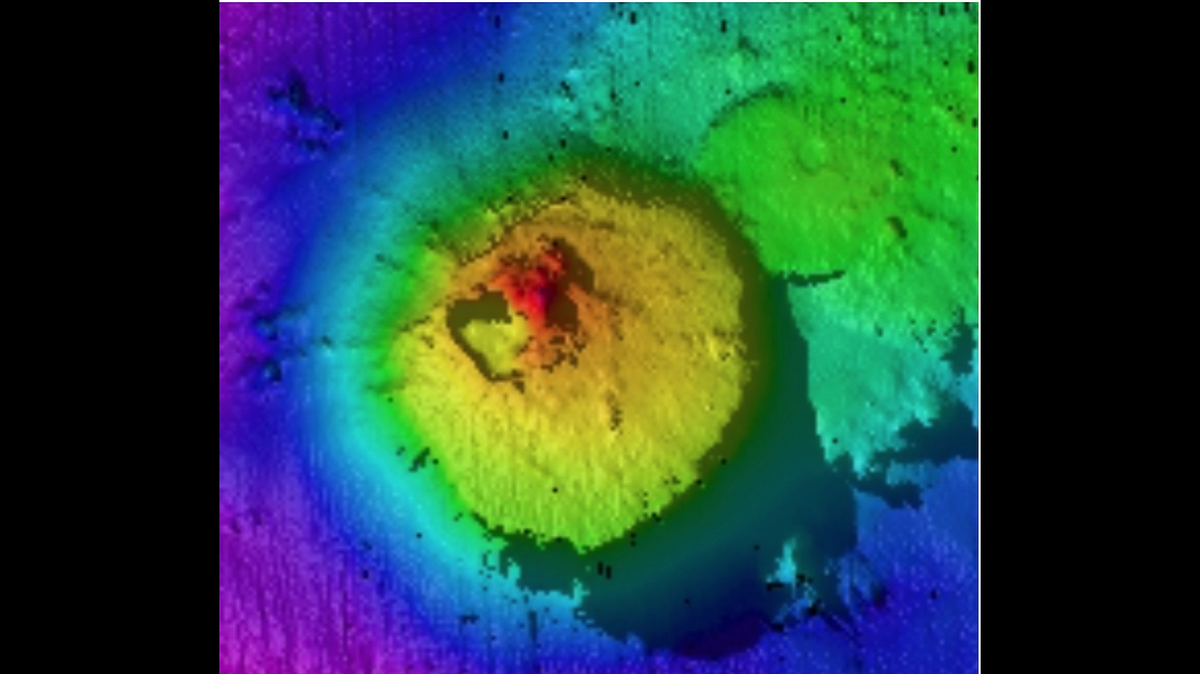
A Pacific seafloor mapping project has located a mountain “twice as high as the Burj Khalifa” in Dubai, which is the world’s tallest building, according to the Schmidt Ocean Institute.
The 5,249-foot-high seamount covers a massive 5.4 square miles and hides 1.5 miles below sea level in international waters, the institute reports.
It was discovered by a team aboard the research vessel Falkor (too), about 84 nautical miles outside the Guatemalan Exclusive Economic Zone, officials said.
“A seamount over 1.5 kilometers tall which has, until now, been hidden under the waves really highlights how much we have yet to discover,” Schmidt Ocean Institute Executive Director Jyotika Virmani said in the release. “It’s exciting to be living in an era where technology allows us to map and see these amazing parts of our planet for the first time!”
.png "image (1).png")
Seamounts are underwater mountains that typically begin as volcanoes, the National Oceanic and Atmospheric Administration says.
“Most seamounts are remnants of extinct volcanoes. Typically, they are cone shaped, but often have other prominent features such as craters and linear ridges and some, called guyots, have large, flat summits,” NOAA reports.
“The number of seamounts that are at least 1,000 meters high is thought to be greater than 100,000. Despite their abundance, however, less than one-tenth of a percent of the seamounts in the world have been explored.”
Seamounts are of interest to scientists because they serve “oases of life,” hosting deep sea corals, sponges and “a host of invertebrates,” experts say.
The newly discovered seamount “has a classic volcano appearance,” marine technician Tomer Ketter told McClatchy News in an email.
This includes “a round shape with steep round sides and a generally flat top dotted by a secondary, discrete peak and a crater which is a remnant of its volcanic origin and activity.”
“The seamount is located in the Guatemala basin ... in an area of the seafloor that is roughly 20 million years old and most likely not exhibiting volcanic activity anymore,” Ketter said.
The Falkor (too) has made a series of seafloor discoveries since launching in March, including “two additional uncharted seamounts in the Galápagos Islands Marine Reserve, three new hydrothermal vent fields, a new ecosystem underneath hydrothermal vents, and two pristine cold-water coral reefs,” the institute said.
This story was originally published November 22, 2023 at 8:38 AM with the headline "Massive find made by seafloor mapping team in Pacific Ocean, scientists say."