Hot muddy waters hid these bronze statues for almost 2,000 years, experts in Italy say
In a country that already boasts the Colosseum, the Valley of the Temples, and the volcanically-preserved ruins of Pompeii, archaeologists announced another discovery they believe will rewrite ancient history.
Archaeologists in Italy began excavating the ruins of a sanctuary and thermal hot spring in Tuscany about three years ago, Italy’s Ministry of Culture said in a news release on Tuesday, Nov. 8. The waters were considered sacred by ancient Romans and the ancient Etruscans who lived in the area before them.
The hot muddy waters held a treasure trove of artifacts.
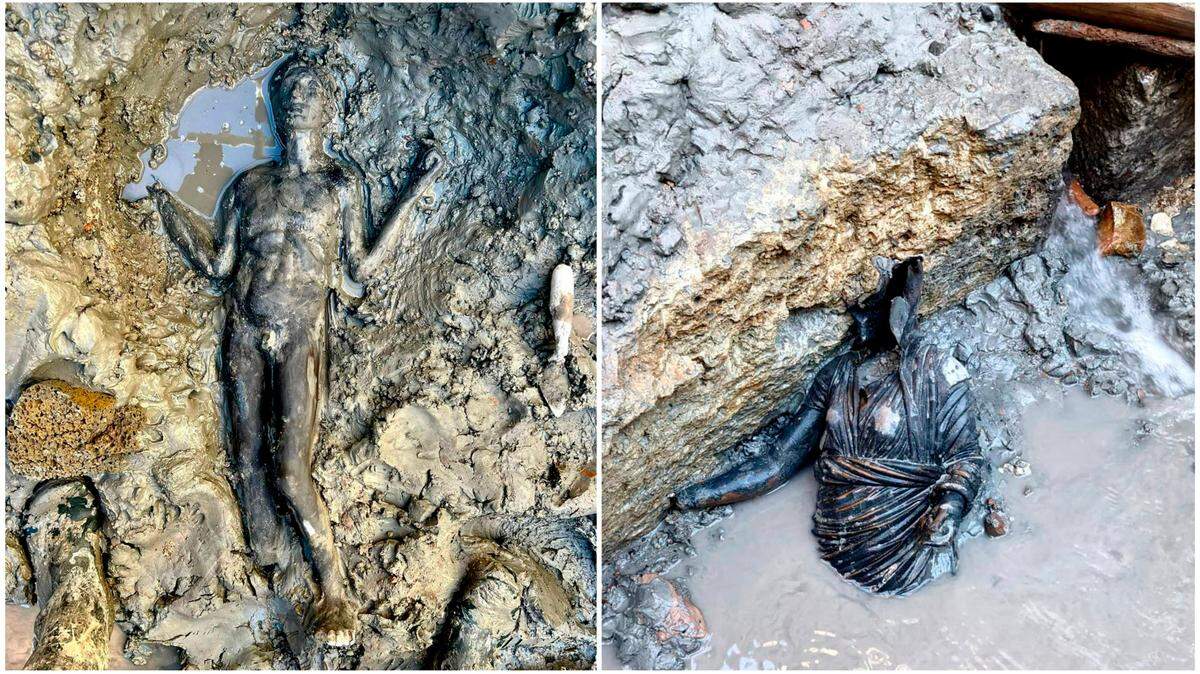
Archaeologists, led by Professor Jacopo Tabolli with the University for Foreigners of Siena, found more than 20 bronze statues and 5,000 gold, silver and bronze coins preserved in the hot spring, the ministry said. Photos show the human-shaped statues reemerging from the mud. The brownish-black statues showed a bit of weathering but remained largely intact.
Some statues were standing figures, photos show. Others were more like busts, depicting just a head, a video from the ministry shows. Some statues had inscriptions on them, still readable millennia later, the release said and video shows.
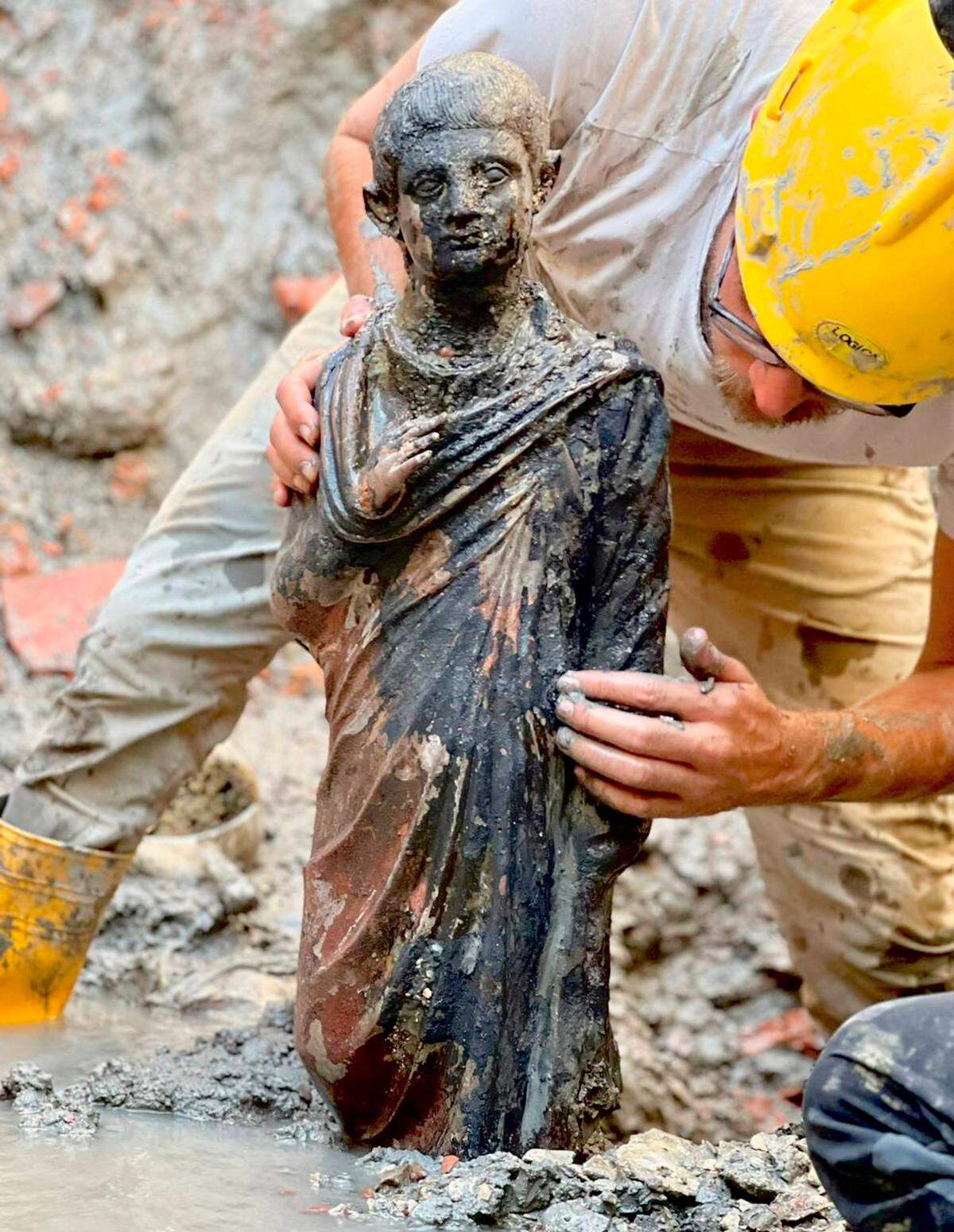
These statues were given to the thermal hot spring as part of a religious vow or ritual, experts said in the release. Some depicted ancient Greco-Roman deities, including Hygieia, the goddess of health and hygiene, and Apollo, god of the sun.
Explaining the ritual of hot spring offerings, Tabolli told Reuters that people viewed it as a sort of exchange.
“You give to the water because you hope that the water gives something back to you,” he said.
Most statues date between the second century B.C. and first century A.D., meaning the figures spent about 2,000 years in the mud-filled hot spring, archaeologists said. This period was a time of “great transformation in ancient Tuscany” when the ancient Etruscans were being absorbed into the ancient Roman empire in an unstable and war-filled process, the Italian ministry said, per Reuters.
Tabolli, the lead archaeologist, believes the bronze statues will rewrite ancient history. Few bronze statues have been found from this ancient era; instead, archaeologists have found mostly terracotta statues — until recently.
The thermal hot spring, Bagno Grande, is located in San Casciano dei Bagni, about 100 miles north of Rome in the province of Siena and the larger region of Tuscany.
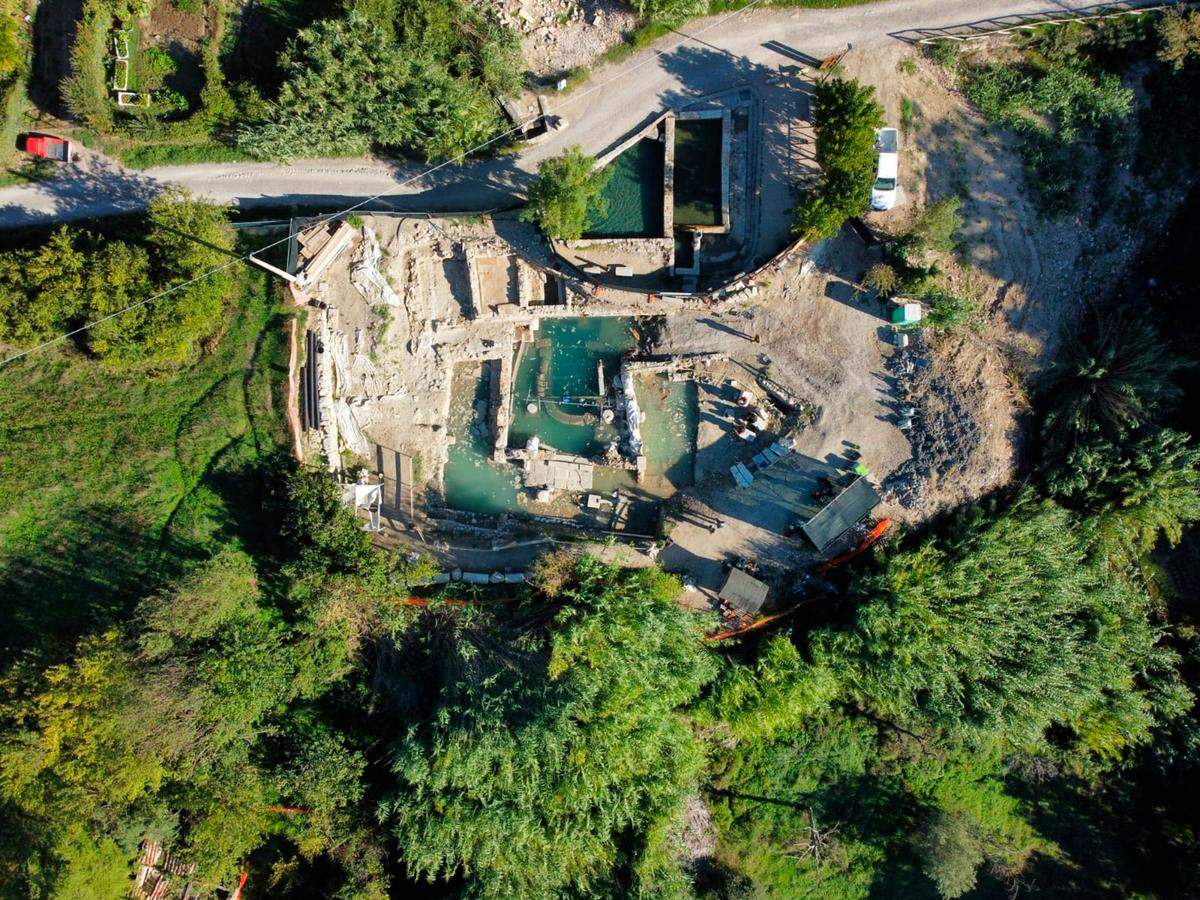
Recovering the statues was a collaborative effort, the Ministry of Culture said, involving architects and geologists, experts in ancient inscriptions and ancient plants, as well as coin and currency experts.
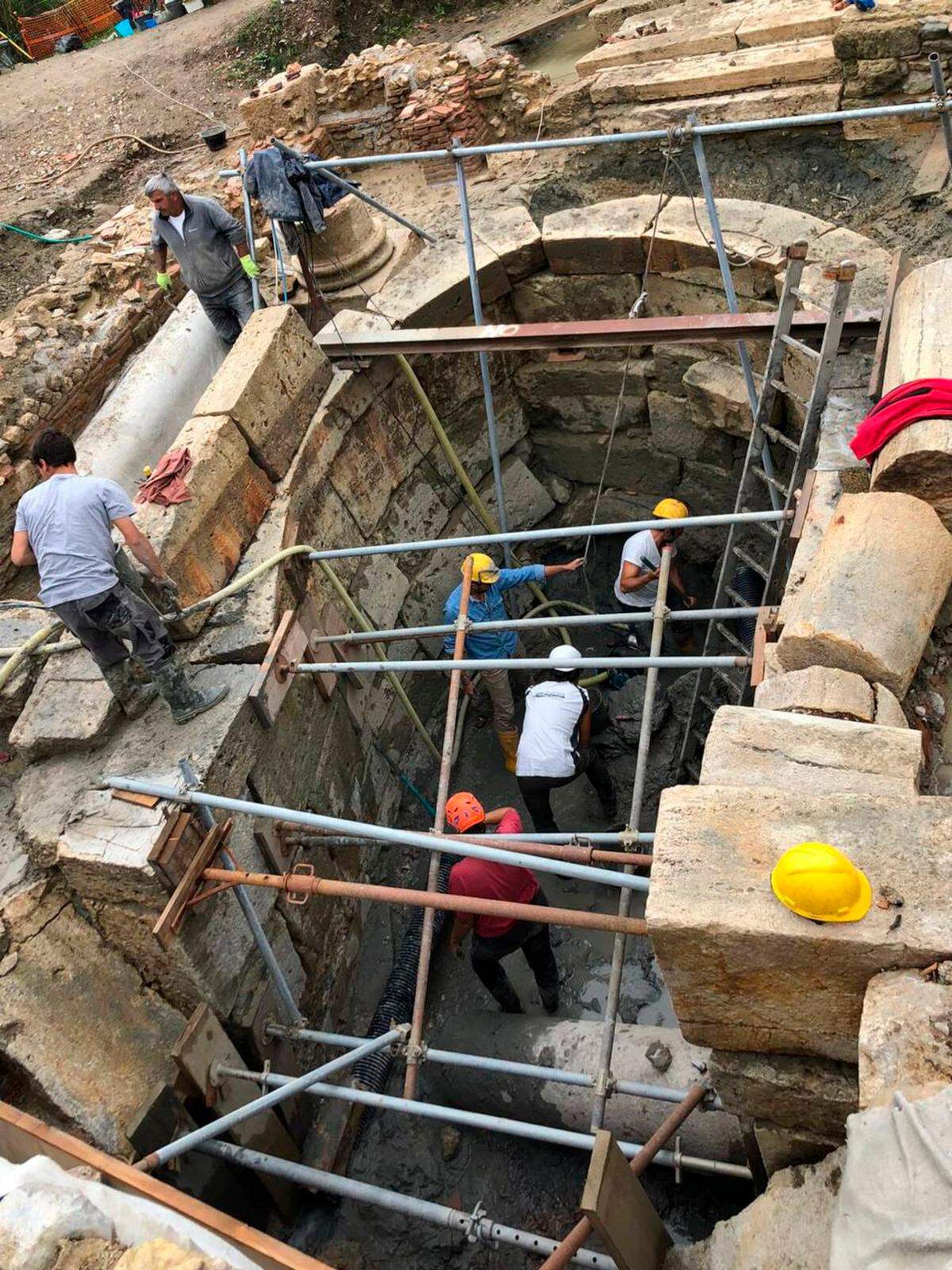
Italy’s Ministry of Culture and Director General of Museums said a new museum and archaeological park dedicated to the bronzes will be created in the area.
Google Translate was used to translate the news release from Italy’s Ministry of Culture. Facebook Translate was used to translate the ministry’s video.
This story was originally published November 8, 2022 at 12:19 PM with the headline "Hot muddy waters hid these bronze statues for almost 2,000 years, experts in Italy say."