
Mysterious ‘golden orb’ found on seafloor in 2023 has been identified, NOAA says
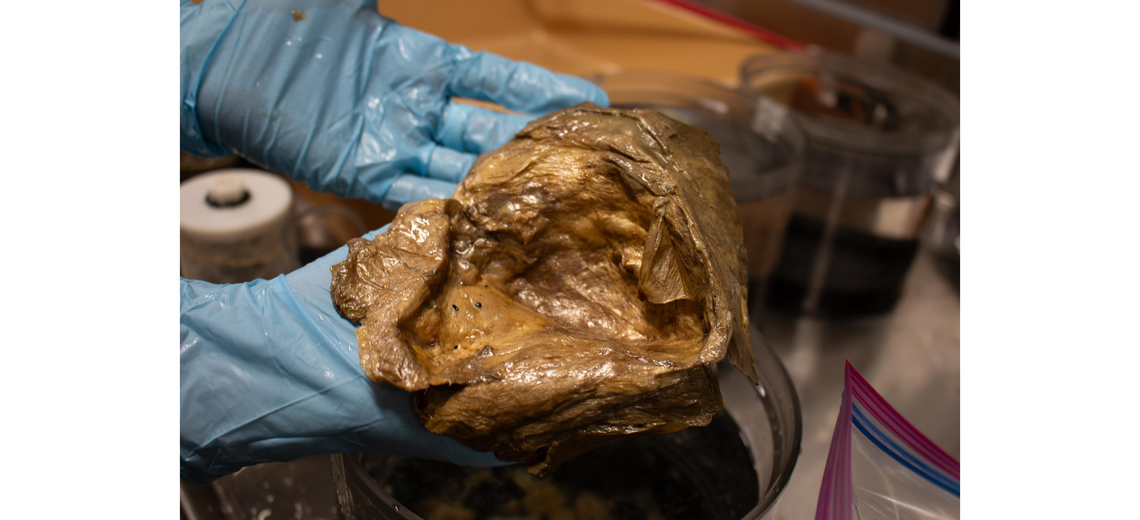
A mysterious shiny “golden orb” found attached to the seafloor off Alaska in 2023 has finally been identified by scientists, according to NOAA Ocean Exploration.
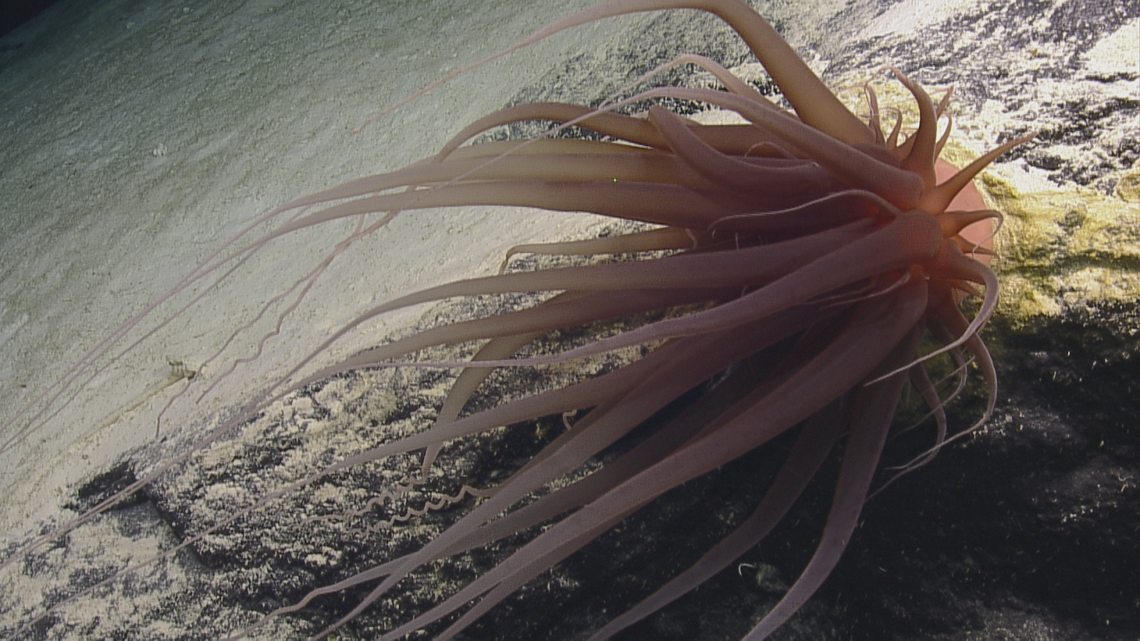
The fleshy glob, which resembled a hatched egg, has been linked to a giant deep-sea anemone with tentacles that reach seven feet in length.
“The now two-and-a-half-year-old mystery of the ‘golden orb,’ an unidentified object that captured significant public interest when it was collected during a 2023 NOAA expedition, has finally been solved,” NOAA reported in an April 22 news release.
“The mysterious golden mass, discovered at a depth of 3,250 meters (over 2 miles) in the Gulf of Alaska, is a remnant of the dead cells that formed at the base of a giant deep-sea anemone, Relicanthus daphneae. It was the part of the anemone that attached to the rock substrate.”
Scientist can’t be blamed for not recognizing the fleshy glob, because Relicanthus daphneae baffled experts for decades, the American Museum of Natural History reports.
“First discovered in the 1970s, and found living around the periphery of deep-sea hydrothermal vents around the world, the marine species now known as Relicanthus daphneae is unusually large for an anemone,” the museum says.
The backstory
NOAA Ocean Exploration expeditions frequently find organisms that aren’t immediately familiar, but most of the mysteries are quickly solved by consulting with experts around the world.
“However, some discoveries turn into real puzzles — like in the case of the ‘golden orb’,” NOAA reported in a release. “Identifying the ‘golden orb’ was a multi-year, complex effort. ... Initial DNA barcoding was inconclusive.”
It was discovered 250 miles off the coast, as NOAA’s Okeanos Explorer explored the floor of the Gulf of Alaska.
Adding to the mystery: a remotely operated camera revealed the orb had a hole in it.
“Scientists were puzzled. Was it an egg case? A dead sponge? Had something crawled into it … or out of it?” NOAA reported.
Media outlets around the world covered the discovery, with the Washington Post calling it a “golden egg” and the New York Post likening the discovery to “the beginning of a horror movie.”
“Golden egg or Alien relic?” Business Today asked in a headline.
Unraveling a scientific mystery
Identifying the glob was a complex effort that included scientists with NOAA Fisheries and the Smithsonian National Museum of Natural History, officials said.
“Initial examination found the object lacked typical animal anatomy but was a fibrous material with a layered surface packed with cnidocytes (stinging cells), suggesting it was a cnidarian (like corals or anemones),” NOAA officials said.
It was later learned a similar specimen had been found by the Schmidt Ocean Institute’s Research Vessel Falkor in 2021, officials said.
DNA sequencing on both specimens confirmed they “contained a large amount of genetic material from the giant deep-sea anemone,” officials said.
“We work on hundreds of different samples and I suspected that our routine processes would clarify the mystery,” NOAA Fisheries’ National Systematics Laboratory Director Allen Collins said a release.
“But this turned into a special case that required focused efforts and expertise of several different individuals. This was a complex mystery that required morphological, genetic, deep-sea and bioinformatics expertise to solve.”
This story was originally published April 22, 2026 at 6:06 AM with the headline "Mysterious ‘golden orb’ found on seafloor in 2023 has been identified, NOAA says."