‘I found something big.’ SC student unearths prehistoric predator in Wyoming
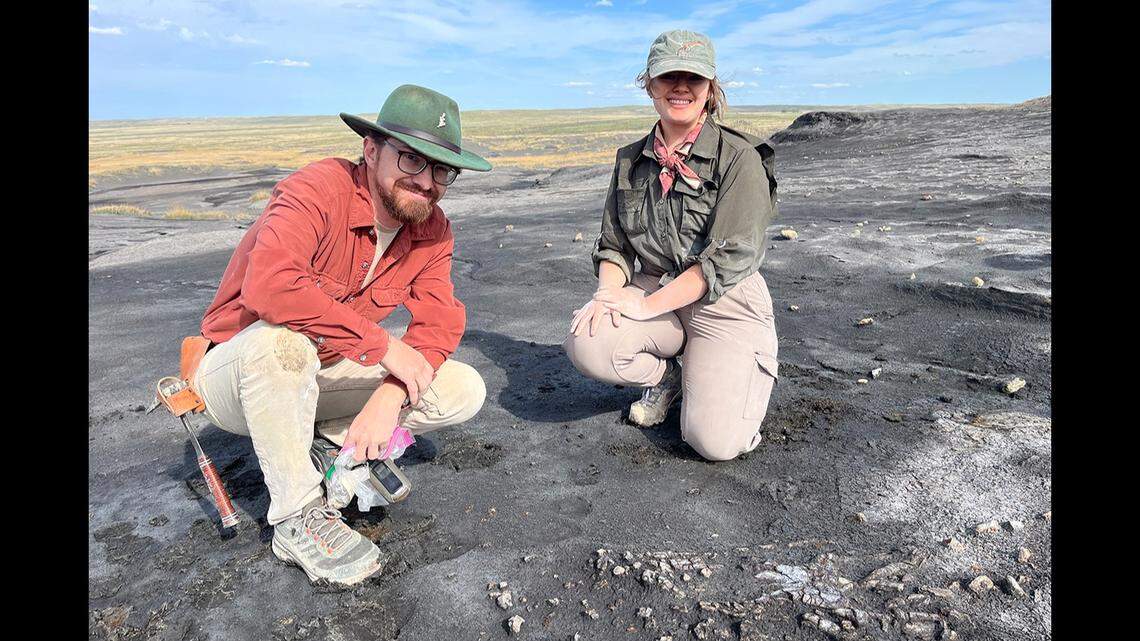
A sharp-eyed South Carolina college student was on a school trip when she made an “extraordinary” discovery.
“‘I think I found something BIG!’” Monika Angner said, according to College of Charleston professor Scott Persons. “Well … I could hear the excitement in her voice.”
Angner spotted the fossil of a prehistoric predator, believed to have once been more than 25 feet long. It happened on a Dinosaur Expedition to the rugged Badlands of Wyoming.
“Tired, hungry and in need of a shower, most of the field team was wilting,” Persons told the college in a June 19 news release. “But Monika was hiking way out in front and was still carefully scanning the shale beds for fossils.”
That’s when she spotted the bones of a mosasaur, described as a “giant marine lizard that swam in the prehistoric seas at the same time dinosaurs were roaming the land.”
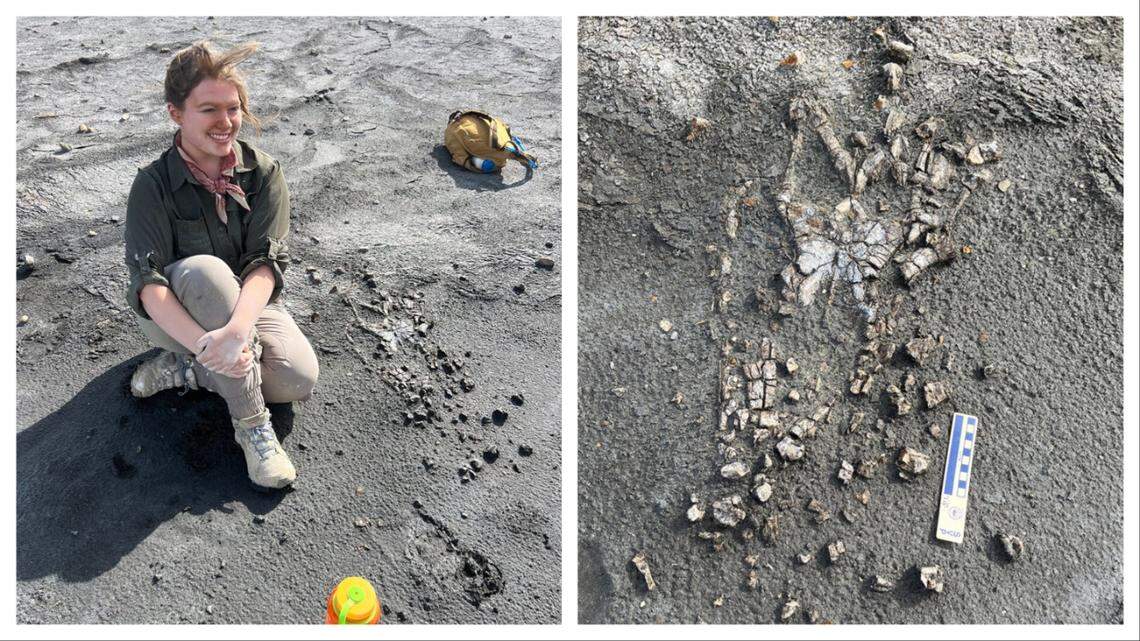
“Broken vertebrae and teeth are frequently collected, right on the surface,” said Persons, a professor of paleobiology and leader of the expedition. “But Monika found what looks to be a nearly complete skull, with the neck, back, limbs and tail all fully articulated. A skeleton in that good of condition is extraordinary. Plus, it’s a contender for the largest mosasaur yet found at the site.”
Mosasaurs lived in the Badlands region roughly 75 to 69 million years ago. They moved through the water using their tails, which sometimes took up most of their bodies, according to experts.
“When they were alive, mosasaurs could reach lengths of up to 50 feet, which is roughly the length of a bus,” the National Park Service wrote on its website. “Mosasaurs were top predators of the world’s oceans and would eat anything they could catch.”
After Angner unearthed the bones in May, they were taken to the College of Charleston’s Mace Brown Museum of Natural History for examination. The rising senior, who is majoring in geology, named the specimen Jillian to honor her sister, a spokesperson wrote in a separate news release.
This story was originally published June 27, 2025 at 5:54 AM with the headline "‘I found something big.’ SC student unearths prehistoric predator in Wyoming."