
Deep-sea coral reef extends hundreds of miles from Florida to South Carolina, study says
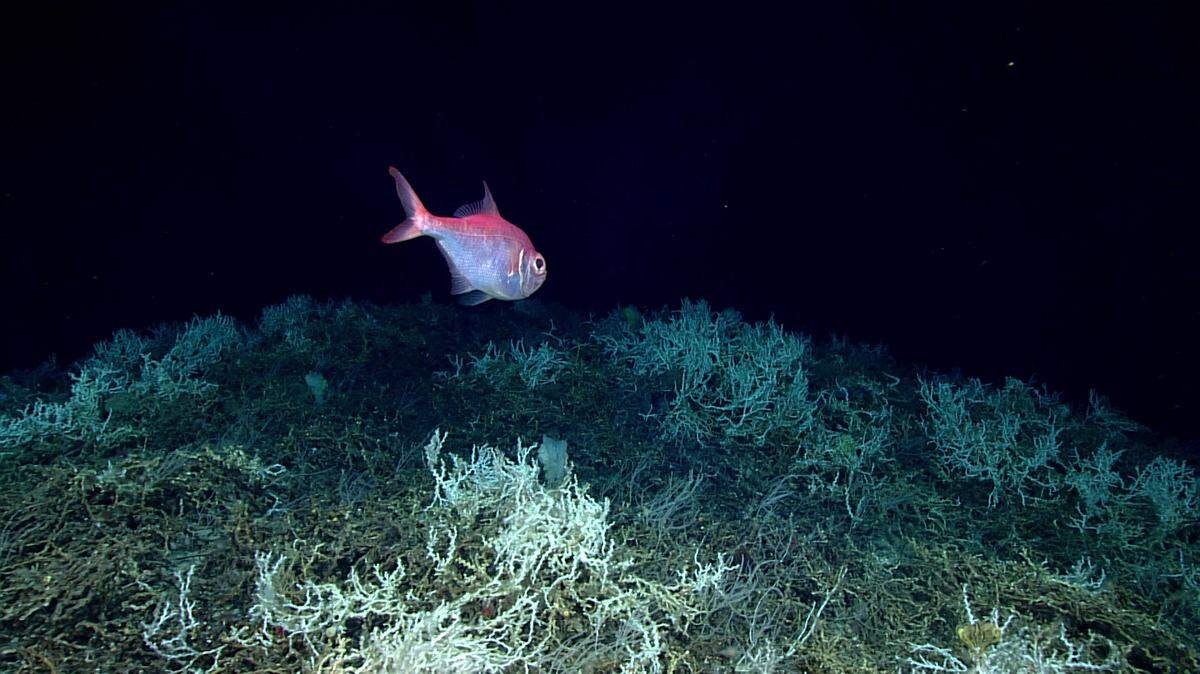
The world’s largest deep-sea coral reef has been discovered off the East Coast: a massive 6.4 million acre seascape that stretches from Florida to South Carolina, according to National Oceanic and Atmospheric Administration Ocean Exploration.
That makes it larger than Vermont, NOAA says.
The discovery, published Jan. 12 in the journal Geomatics, disproves some long held theories about the region, NOAA scientists say.
“For years we thought much of the Blake Plateau was sparsely inhabited, soft sediment,” NOAA Ocean Exploration Operations Chief Kasey Cantwell said in a news release.
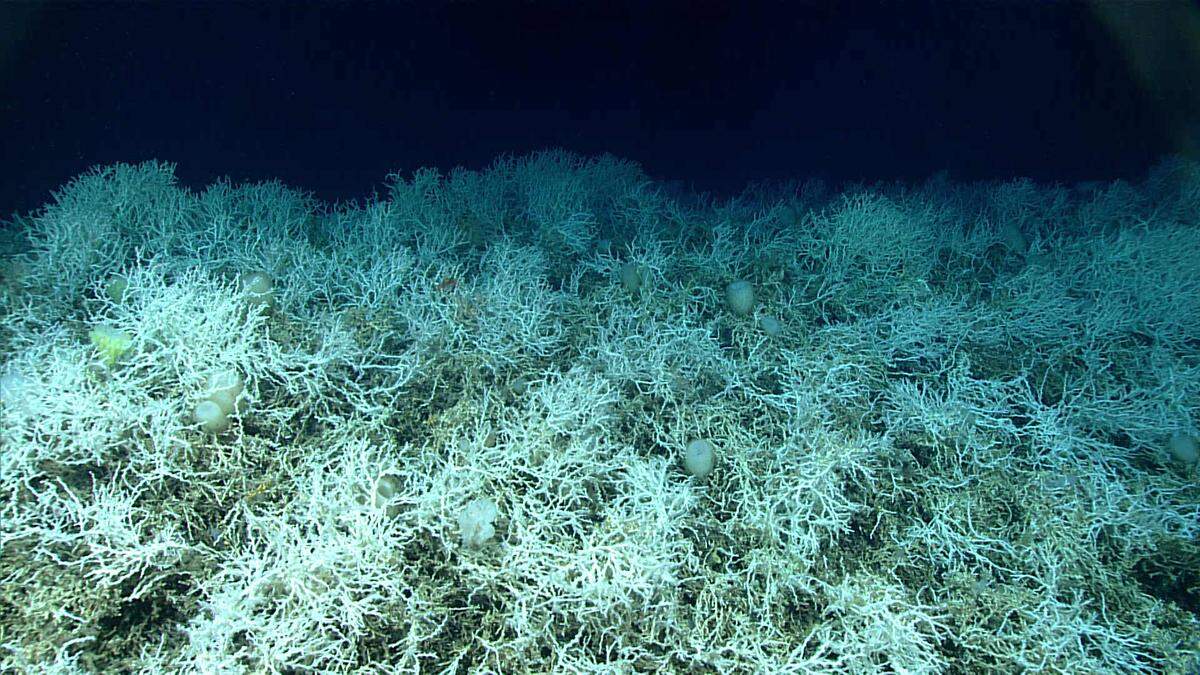
“Past studies have highlighted some coral in the region, particularly closer to the coast and in shallower waters, but until we had a complete map of the region, we didn’t know how extensive this habitat was, nor how many of these coral mounds were connected.”
The reef’s borders are between 35 and 75 miles off the coastline, beginning southeast of Miami, Florida, and moving north to Charleston, South Carolina, NOAA says.
One spot, nicknamed “Million Mounds” by scientists, accounts for the largest part of the reef. It is made up primarily of “a stony coral” commonly found at depths of 656 to 3,280 feet, where temperatures average about 39 degrees, the study reports.
“Cold-water corals such as these grow in the deep ocean where there is no sunlight and survive by filter-feeding biological particles,” the scientists reported.
“While they are known to be important ecosystem engineers, creating structures that provide shelter, food, and nursery habitat to other invertebrates and fish, these corals remain poorly understood.”
Hints of a massive reef were found in 2019, but scientists waited until a multi-agency effort had mapped the reef before announcing the discovery.
Data from than 30 multi-beam sonar mapping surveys (and 23 submersible dives) was combined to create a nearly complete map. In the process, the team “identified 83,908 individual coral mound peak features,” according to the news release.
“The study documents the massive scale of the coral province, an area composed of nearly continuous coral mound features that span up to 500 kilometers (310 miles) long and 110 kilometers (68 miles) wide,” the scientists reported.
A “core area” has high-density mounds up to 158 miles long and 26 miles wide, the report states.
In addition to NOAA Ocean Exploration, the exploration campaign included the Ocean Exploration Trust, the University of New Hampshire, the Bureau of Ocean Energy Management, Temple University and the U.S. Geological Survey.
“This strategic multiyear and multi-agency effort to systematically map and characterize the stunning coral ecosystem ... is a perfect example of what we can accomplish when we pool resources,” the study’s lead author Derek Sowers said in the news release.
“Approximately 75% of the global ocean is still unmapped in any kind of detail, but many organizations are working to change that.”
This story was originally published January 17, 2024 at 11:57 AM with the headline "Deep-sea coral reef extends hundreds of miles from Florida to South Carolina, study says."