
City of SLO wants more water from Lake Nacimiento
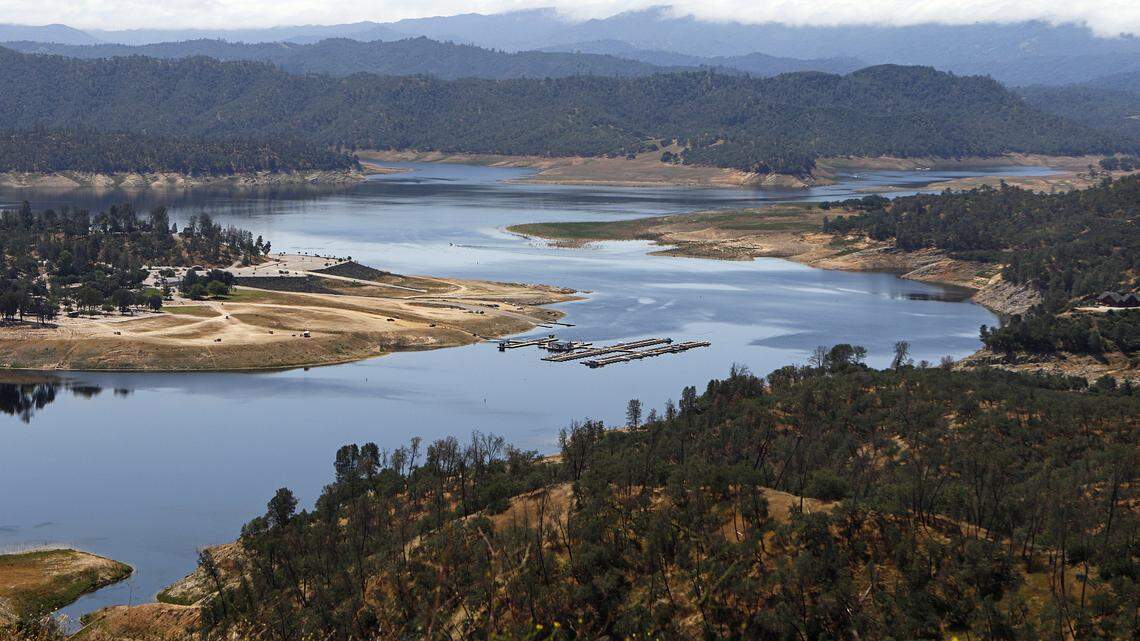
San Luis Obispo is seeking hundreds of thousands of gallons of additional water from Lake Nacimiento, which local officials say would reduce pressure on the city’s other water sources and extend them during future droughts.
Other local communities that receive water from Lake Nacimiento may join the city in asking the San Luis Obispo County Flood Control and Water Conservation District for more water. It doesn’t appear that most ratepayers would foot the bill for the extra water.
But one resident, a former San Luis Obispo planning commissioner, has questioned why the city needs the extra water and who would pay for it.
The need for more water seems at odds with city documents that say current water resources are reliable during prolonged droughts, resident Richard Schmidt wrote to the city. In emails with some other concerned residents, he suggested the city is trying to pave the way for more development.
But San Luis Obispo officials said those water supply assessments were completed before the city found itself in a worst-case drought scenario.
“The severe drought has changed the assumptions in the city’s water projection models and we don’t know the end of it,” Utilities Services Manager Ron Munds said. “We haven’t seen El Nino yet so we’re still kind of in that limbo.”
This is a rare chance to acquire additional water for the long-term well-being of the city, he said.
San Luis Obispo is one of five communities that receive water from the $176.1 million Nacimiento Water Project, a massive pipeline stretching from the lake, just west of Paso Robles, 45 miles south to San Luis Obispo.
The pipeline was designed to boost water supplies for Atascadero, part of Cayucos, Paso Robles, San Luis Obispo and Templeton. Collectively, the communities pay for 11,405 acre-feet of water a year out of the 17,500 acre feet available — which leaves a reserve of 6,095 acre feet. (An acre-foot is equal to 325,851 gallons; an average single-family home uses about a third of an acre-foot a year.)
Currently, most of the communities are starting the process to apply for more water from the reserve.
The San Luis Obispo City Council voted unanimously Sept. 15 to authorize City Manager Katie Lichtig to sign a joint letter of intent to the county water conservation district to acquire additional water.
It has already been signed by Paso Robles City Manager Jim App. That city could receive an additional 2,532 acre feet.
The Templeton Community Services District board will consider the issue on Oct. 6 and may apply for another 158 acre-feet, General Manager Jeff Briltz said.
Atascadero Mutual Water Co. directors will consider authorizing General Manager John Neil to sign the letter of intent at its meeting Wednesday. This is Sept. 23. Atascadero Mutual could receive another 1,263 acre-feet, which would be paid by revenue the district receives from new meter connections.
Mark Hutchinson, the county’s deputy public works director, said the county Board of Supervisors has not yet discussed whether to request more water for Cayucos.
San Luis Obispo, which receives 3,380 acre-feet a year, would receive another 2,130 acre feet.
At the council’s Sept. 15 meeting, Councilman John Ashbaugh noted that the letter of intent was the first of many steps that will be required “with full accountability and environmental review of any growth-inducing impacts or physical impacts,” he said.
The Nacimiento water could serve the entire city if its other sources — the Salinas and Whale Rock reservoirs — went dry, said Aaron Floyd, the city’s deputy director of water in its Utilities Department.
A water projection model updated earlier this year showed the city had about 3.5 years’ worth of water as of April. That means the city currently has about three years left, if the community uses about 100 gallons per person per day and drought conditions continue.
Average annual per capita water use was 119 gallons a day from 2003-2012 and that has now fallen to about 98 gallons, Munds said.
The city’s updated land use and circulation element (LUCE) estimates the city’s population at build-out in 2035 at 58,626 — raising demand to about 7,815 acre-feet of water a year. The city currently uses about 5,500 acre feet a year.
The water assessment concluded that the city would have sufficient water supplies available to serve future development.
“So, if the city has all the water it needs for all plans it has for future use, why do we need 2,100 acre feet more?” Schmidt wrote to the council. “Is it part of a secret plan to bust the general plan’s buildout wide open?”
An additional 2,100 acre-feet of water would be enough to supply another 19,000 people beyond the city’s buildout population, he wrote. And who pays for it?
“The intent is not to foster additional growth beyond what the LUCE says, it’s to be responsible water managers,” Munds said.
Aaron Floyd, the city’s deputy water director, said the city likely has the money to pay for the water. A bond refinancing in August lowered the city’s debt service on the Nacimiento project by about $380,000 a year. The additional water is estimated to cost about $377,000.
“We do not intend to raise rates because of this,” he said.
The project partners could actually make money by selling surplus water on a short-term basis.
Ashbaugh said: “The fact is there’s probably no place in the state — maybe in the country — where a local agency like ours could potentially acquire rights to this amount of water at a cost of less than $400,000. It’s an unbelievable deal.”
This story was originally published September 22, 2015 at 5:11 PM with the headline "City of SLO wants more water from Lake Nacimiento."