SLO County hopes to wring more rain out of the sky by cloud seeding again over Lopez Lake
Over the next three years, the county of San Luis Obispo will pay more than $1 million to make it rain more over Lopez Lake’s watershed in an effort to fill the lake back up.
Under a contract with the county approved by the Board of Supervisors in October, North American Weather Consultants, a Utah company, will conduct cloud seeding during the rainiest months of the year from December to April.
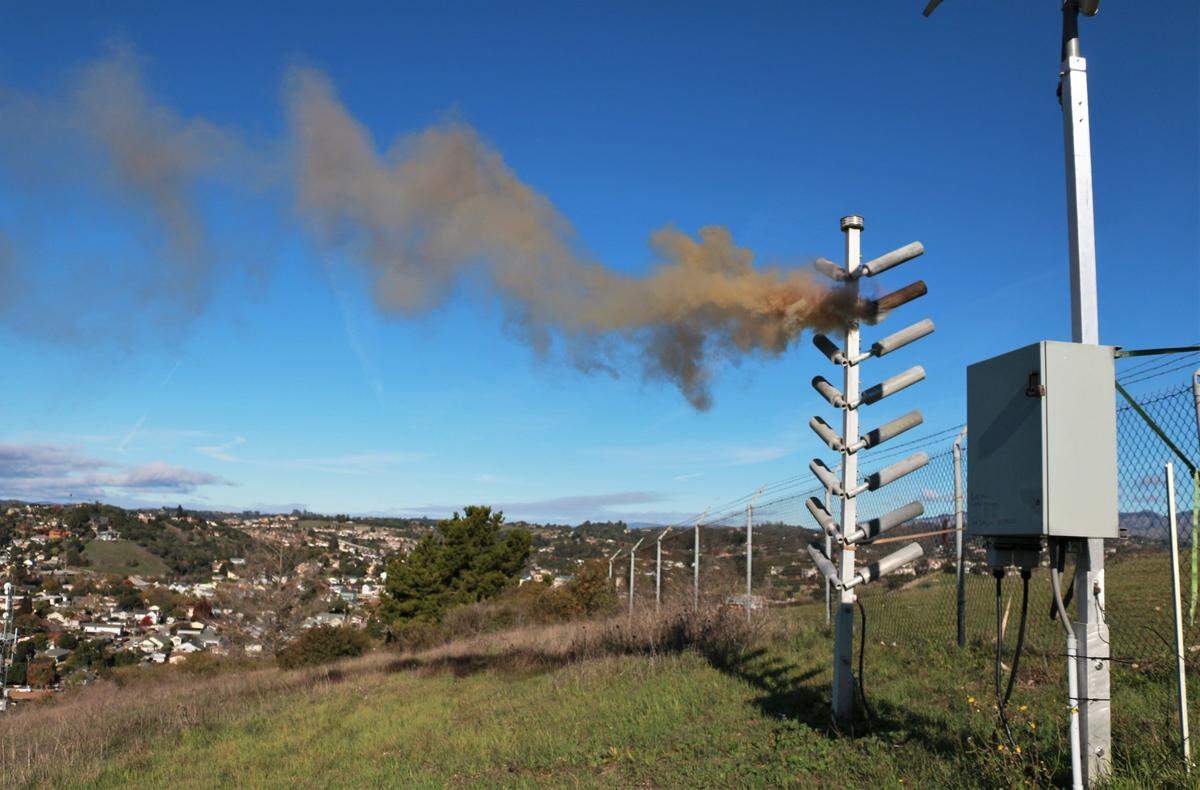
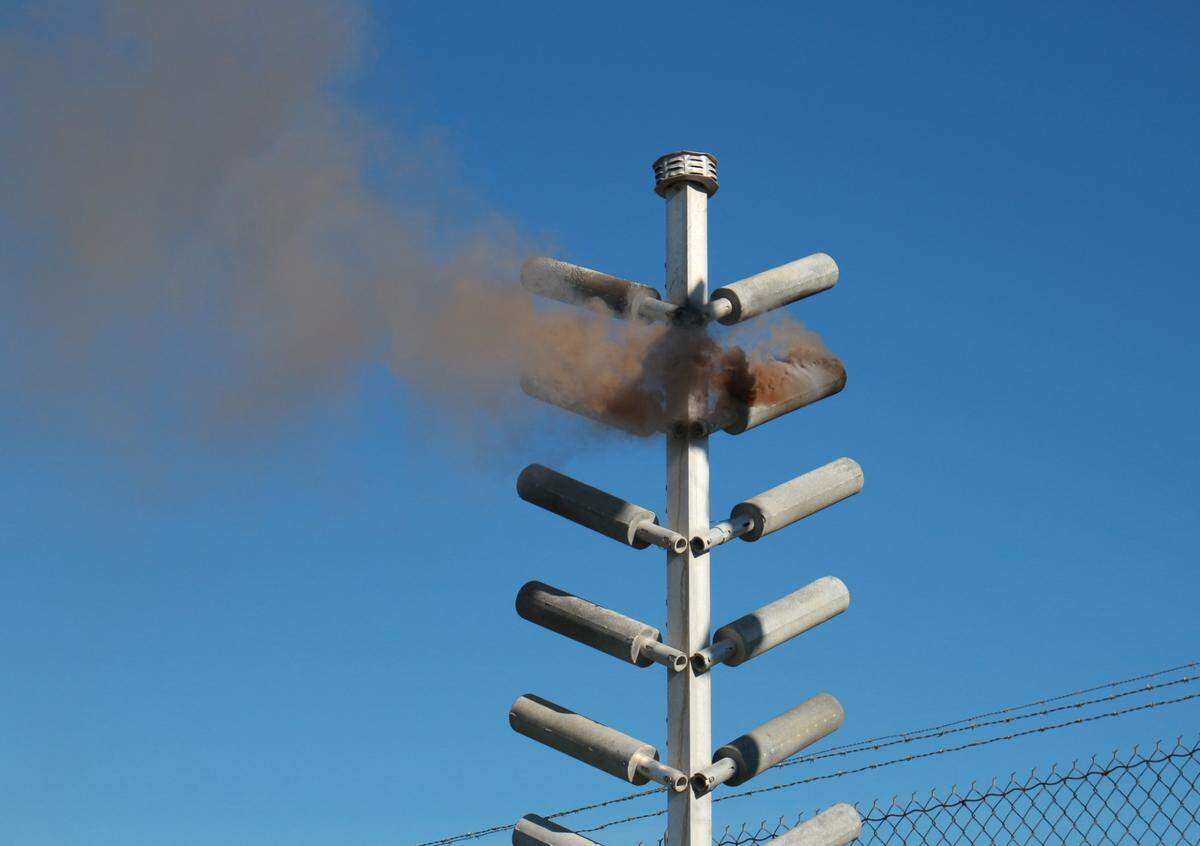
Cloud seeding is a process where silver iodide is burned in a strategic location during a storm. The smoke then drifts into the clouds and, if conditions are right, the silver iodide acts essentially as a magnet to frozen water droplets in the clouds, which then gather together until they’re heavy enough to fall to the ground as rain.
“All the rain is in the clouds already, we’re just making it fall,” said David Spiegel, an engineer for San Luis Obispo County Public Works Department.
This will be the county’s fourth year contracting with North American Weather Consultants for the cloud seeding work. Previously, the company had a $849,400 contract spanning 2019 to 2021.
Cloud seeding isn’t a new technology — North American Weather Consultants has worked with Santa Barbara County to conduct the work over the Twitchell Reservoir and upper Santa Ynez River watersheds.
There, the company has seen at least 10% more rain fall over the watersheds during the cloud-seeding operations, said Garrett Cammans, president of North American Weather Consultants.
The hope for the cloud seeding program over the Lopez Lake watershed is that it will help save the reservoir from dropping too low.
The lake, which historically would overflow on occasion during the rainy season, is sitting at incredibly low levels not seen since the drought in 2016. The lake is about 23% full, with 11,373 acre-feet of water.
Lopez Lake is an important reservoir for the county, feeding the communities of Arroyo Grande, Pismo Beach, Grover Beach, Avila Beach and Oceano. Water not delivered to people is released to maintain flows in Arroyo Grande Creek, which is important habitat for the threatened California red-legged frog and steelhead trout.
At more than 11,000 acre-feet (one acre-foot is about 325,851 gallons), the South County communities have been required to cut deliveries by 10%. Should the reservoir drop below 10,000 acre-feet, deliveries would have to be cut by 20%.
The low levels can largely be chalked up to the ongoing and severe drought conditions impacting the region.
Lopez Lake typically sees about 20 inches of rain annually, according to the San Luis Obispo County Public Works Department.
In the 2021-22 rainy year, which runs July 1 through June 30, the reservoir saw only 13 inches of rain fall. The two years before, a combined 27 inches fell, according to the county’s rainfall data.
Plus, Lopez Lake needs several back-to-back storms bringing in at least a total of nine inches of rain before it will start to see measurable increases in the amount of water flowing into it, according to Spiegel. Dry soils tend to soak up precipitation — damp soils allow it to run off into the reservoir.
The drought conditions are expected to continue through at least March, according to the National Weather Service.
So, by cloud seeding over the reservoir and therefore hopefully causing more rain to fall, Lopez Lake could fill up more than it would naturally.
“Typical storm systems only drop about 10% of their available moisture,” North American Weather Consultant’s Cammans said. “So that process of creating rainfall is very inefficient.”
With cloud seeding, Cammans said they can possibly increase the rainfall over Lopez Lake by 10 to 20%.
The conditions to cloud seed have to be just right. Cammans said it mainly comes down to temperature and wind speed and direction.
Generally, winds blowing southwest to northeast at about 30 to 40 miles per hour and temperatures 10,000 feet high in the clouds at about 5 to 23 degrees Fahrenheit provide for good cloud-seeding conditions, Cammans said.
If those conditions are present, like they were in the rainstorm that hit the county on Dec. 10 and 11, Cammans will remotely set off the silver iodide flares sitting on top of a hill in eastern Arroyo Grande.
From there, the flares send out the smoke, which should drift into the clouds over Lake Lopez and cause more rain to fall.
During the rain year ending in 2020, North American Weather Consultants estimated that cloud seeding caused 468 more acre-feet of water to run into Lopez Lake, for a total of 3,098 acre-feet of water flowing into the lake during the rain year. In other words, cloud seeding was estimated to increase Lopez Lake’s inflow by about 15%, according to the company.
The cloud-seeding program is safe, Spiegel noted.
Should there be any ongoing or threat of flooding, North American Weather Consultants cannot cloud seed. Additionally, silver iodide is non-toxic, so residents do not need to be concerned about the compound floating in the clouds, he said.
“This is just a really cool program,” Spiegel said. “We’re pretty excited to be a part of it and are excited about the benefits we could see.”
This story was originally published December 20, 2022 at 8:30 AM.