
Sleepy Templeton was known by a name less favorable
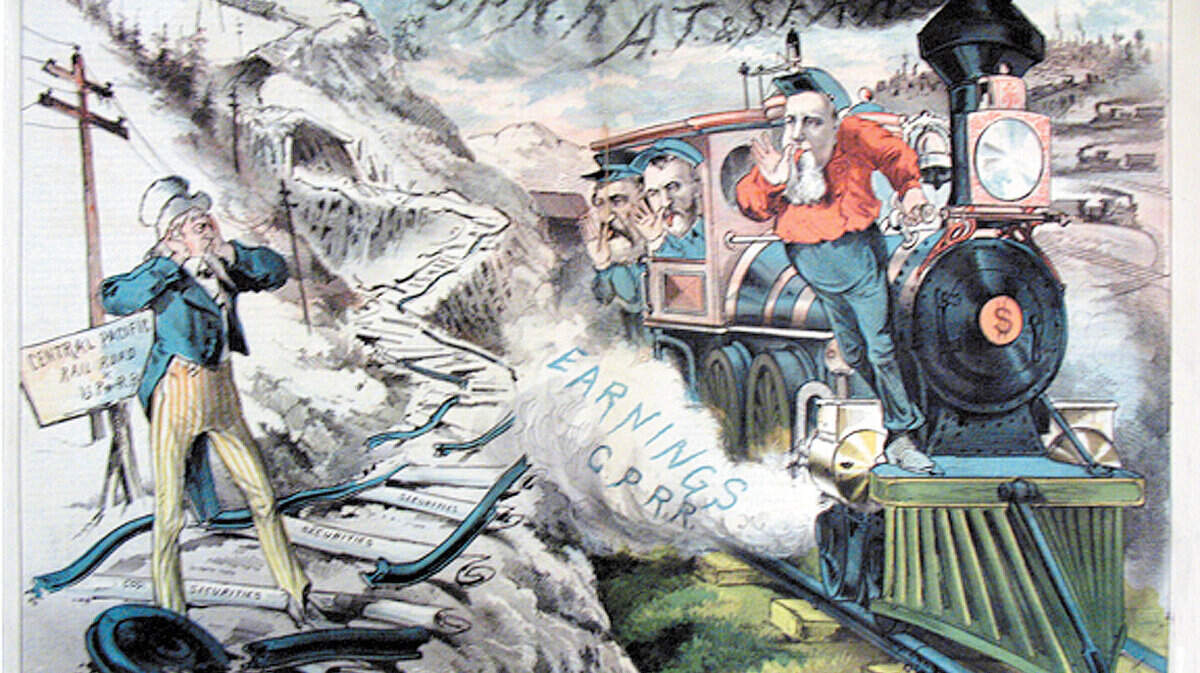
Who would buy lots in a town named for the “villain of Mussel Slough?”
The Southern Pacific Railroad was regarded as the enemy of the small farmer and businessman throughout the 1880s. Because of this reputation, Southern Pacific had to work through companies with other names to develop properties along its ever-expanding tracks.
The West Coast Land Company was formed in 1886 to lay out Templeton and other town sites as the railroad tracks went further south. It was the creation of Ohio-born Chauncey Hatch Phillips.
R. E. Jack of Jack House and Cholame Ranch fame was a major partner and served as treasurer.
Phillips had come to California in 1864. He settled in Napa where he studied law and served as a deputy county clerk.
He also became a deputy collector of internal revenue for the federal government. For the next six years, he served in the latter position, which didn’t prevent him from working for the large mercantile banking firm of J. H. Goodman and Company.
In 1871, he came to San Luis Obispo County and opened a bank with Horatio M. Warden, a Los Osos Valley rancher who later constructed two of the largest buildings in San Luis Obispo’s downtown business district.
The Bank of Warden and Phillips later merged into the Bank of San Luis Obispo. It was so well-managed that it remained open when the panic of 1875 ruined William Chapman Ralston’s giant Bank of California (resulting in Ralston’s suicide) and closed virtually every other bank in the state.
In 1878, Phillips “retired” from banking and went into real estate, first with Captain Cass at the Rancho Moro y Cayucos.
He also promoted the “Phillips Addition,” a subdivision just off Palm Street in northern San Luis Obispo, and land on the Corral de Piedra in the Edna Valley, Arroyo Grande and Pismo ranches.
His largest early development was the Rancho Huerhuero, where he laid out the town of Creston, offering ranches for as little as $20 an acre.
He also promoted land sales along the narrow-gauge Pacific Coast Railroad’s right of way at the town sites of Los Alamos and Los Olivos in northern San Barbara County.
Southern Pacific Railroad’s “Coast Route” put San Luis Obispo County on the map.
By the mid-1880s local investors were beginning to speculate in what became our region’s first land boom.
The arrival of the Southern Pacific Railway turned James Blackburn and Drury James’ resort spa at Paso Robles into a boomtown in 1886-87. Enthusiastic speculators predicted a series of “Paso Robles” as the railroad moved south to the railhead at Elwood, just north of present day Goleta.
Southern Pacific, affectionately called the “Espee” by some rail fans, traveled south to the town site of Crocker.
The town had been laid out by the West Coast Land Company and was named for one of the most hated men in California.
Only seven years before, Crocker had been involved in the Mussel Slough tragedy. This was a bloody shootout near Hanford on May 11, 1880, arising out of a land dispute between Southern Pacific and local settlers.
The name Mussel Slough became synonymous with the sharp land sale practices of the railroad. And Charles Crocker was widely portrayed as “the villain of Mussel Slough.”
When potential purchasers expressed reluctance to buy lots in a town named for the “villain of Mussel Slough,” Chauncey Philips changed the name to Templeton.
Few buyers knew that was the middle name of Crocker’s grandson, Charles Templeton Crocker.
Shortly after the renaming, Charles Crocker was severely injured in a New York City carriage accident. He never fully recovered, and he died in 1888.
And the one-time land development known as Crocker has retained much of its original appearance of a western railroad town under its “new” name of Templeton.
This story was originally published June 27, 2015 at 6:09 PM with the headline "Sleepy Templeton was known by a name less favorable."